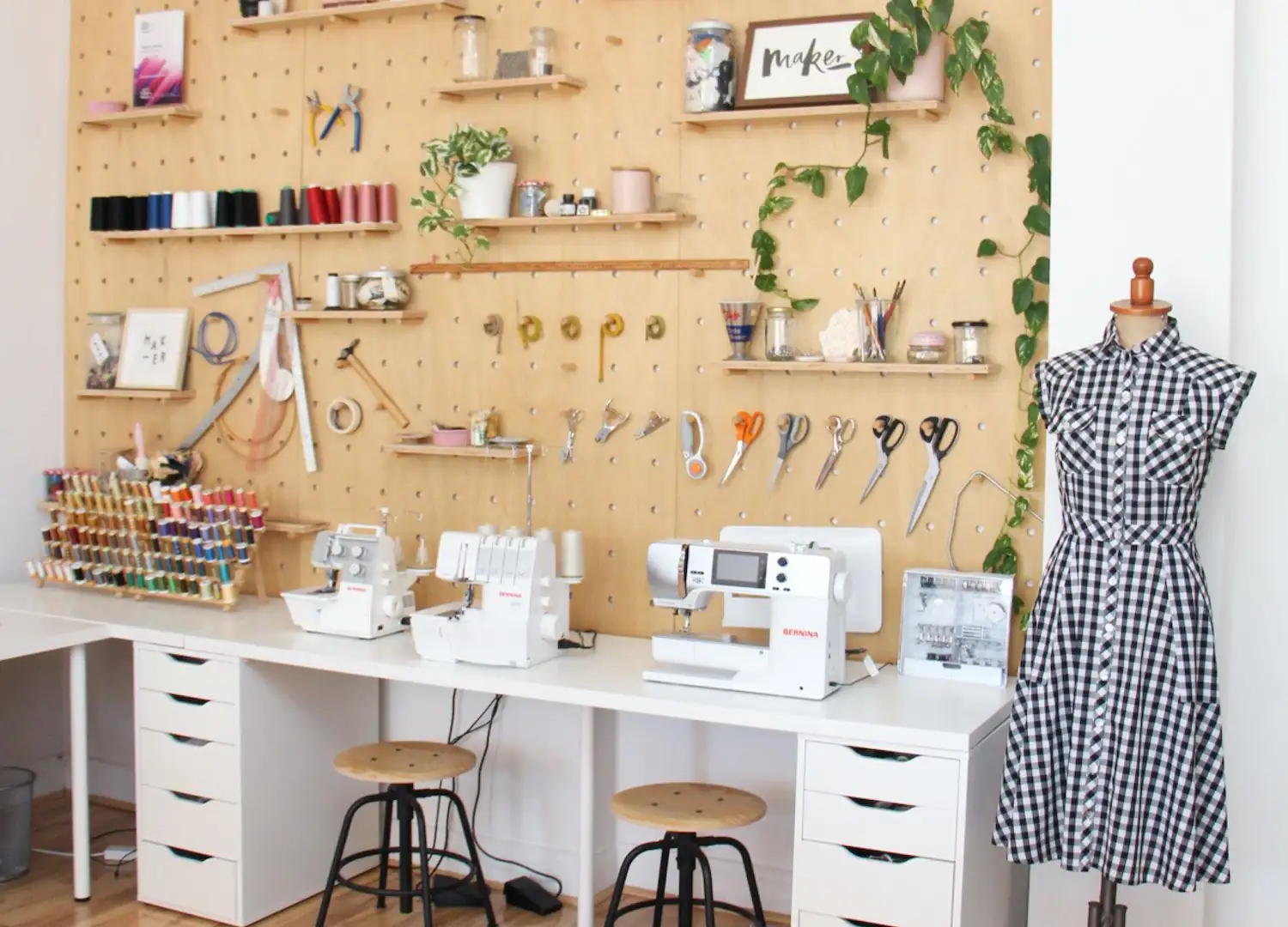
A dedicated sewing room can transform the way you create, organize, and enjoy your favorite hobby. Whether you’re a professional seamstress, a fashion designer, a quilting enthusiast, or someone who enjoys occasional DIY projects, having a well-designed sewing space makes a huge difference. The right setup improves productivity, keeps supplies organized, and provides inspiration every time you walk into the room.
If you’re looking for 10 Sewing Room Ideas that combine style, comfort, and practicality, this guide will help you create the sewing room of your dreams. From storage solutions to decorating tips, these ideas work for both large craft rooms and small sewing corners.
Why a Well-Designed Sewing Room Matters
Before exploring these sewing room ideas, it’s important to understand why a dedicated workspace is beneficial. A thoughtfully designed sewing room helps you:
- Stay organized and reduce clutter.
- Increase efficiency during projects.
- Protect fabrics and tools.
- Improve creativity and motivation.
- Create a comfortable environment for long sewing sessions.
Whether you have an entire room or just a small nook, the following ideas can help maximize your space.
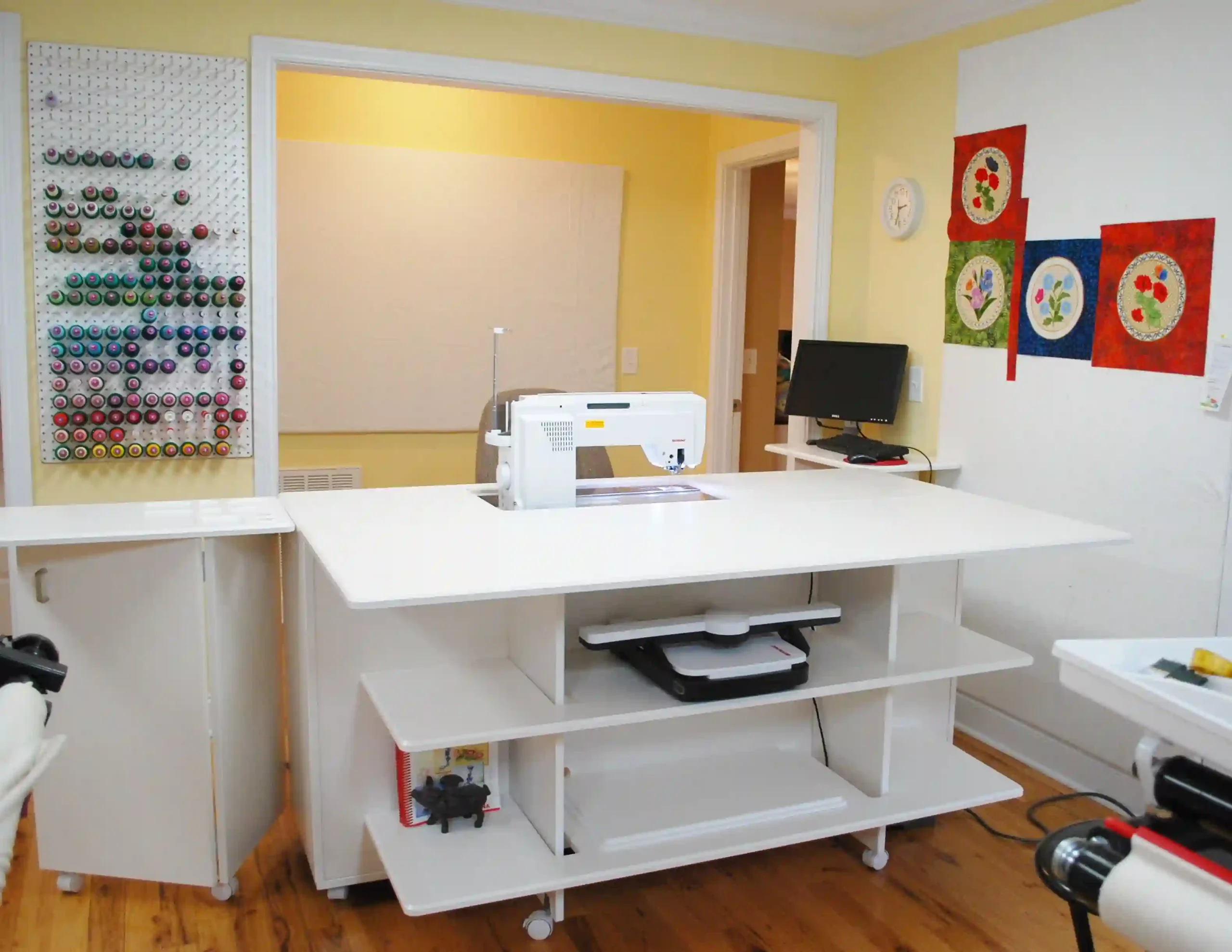
1. Create a Sewing Station with a Large Worktable
The heart of every sewing room is the worktable. A spacious table provides room for cutting fabric, pinning patterns, measuring materials, and completing projects comfortably.
When choosing a worktable:
- Select a sturdy surface.
- Ensure adequate height for comfortable standing or sitting.
- Choose a table larger than your average project size.
- Consider foldable options for smaller rooms.
A central cutting table not only improves workflow but also makes the room feel professional and organized.
Benefits of a Large Worktable
- Better fabric handling
- Reduced back strain
- Easier pattern cutting
- More efficient sewing process
If space allows, position the table in the center of the room for easy access from all sides.
2. Install Floor-to-Ceiling Storage
One of the biggest challenges in any sewing room is managing supplies. Fabric, thread, notions, scissors, rulers, patterns, and sewing machines can quickly create clutter.
Floor-to-ceiling shelving is one of the most practical sewing room ideas because it maximizes vertical space.
Store items by category:
- Fabrics
- Thread collections
- Patterns
- Craft supplies
- Seasonal materials
Use labeled bins and baskets to keep everything easy to find.
Storage Tips
- Transparent containers help identify contents instantly.
- Decorative baskets maintain a stylish appearance.
- Adjustable shelves accommodate different supply sizes.
A well-organized storage system saves time and keeps your sewing room looking neat.
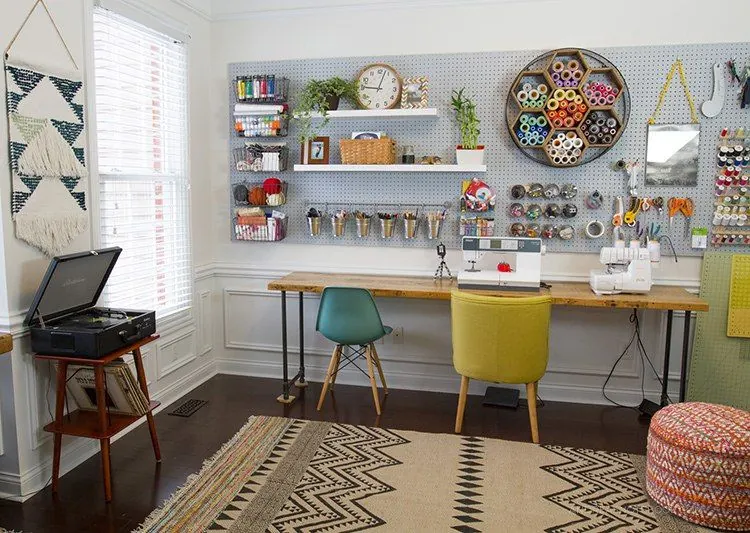
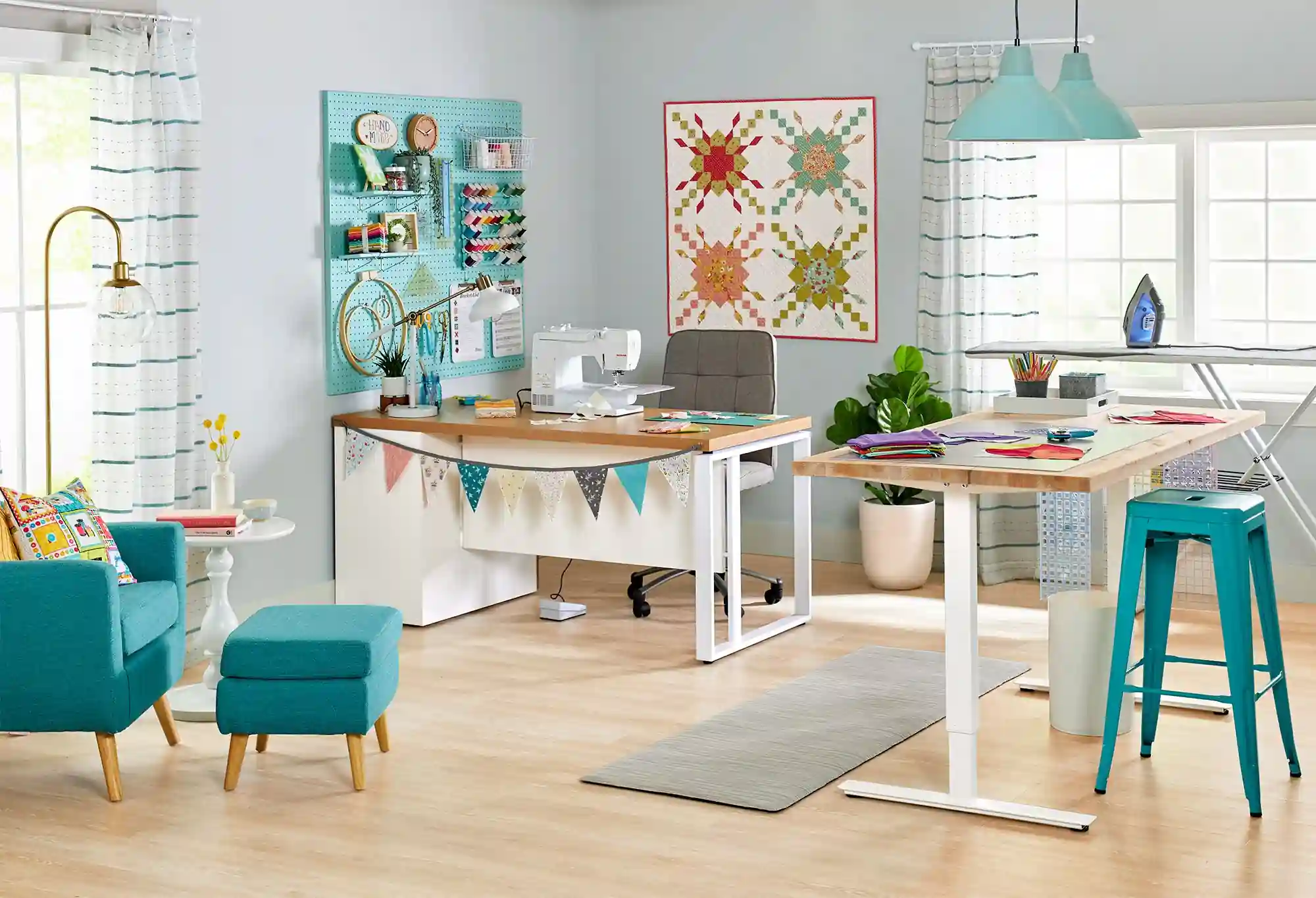
3. Add a Pegboard Wall for Tools
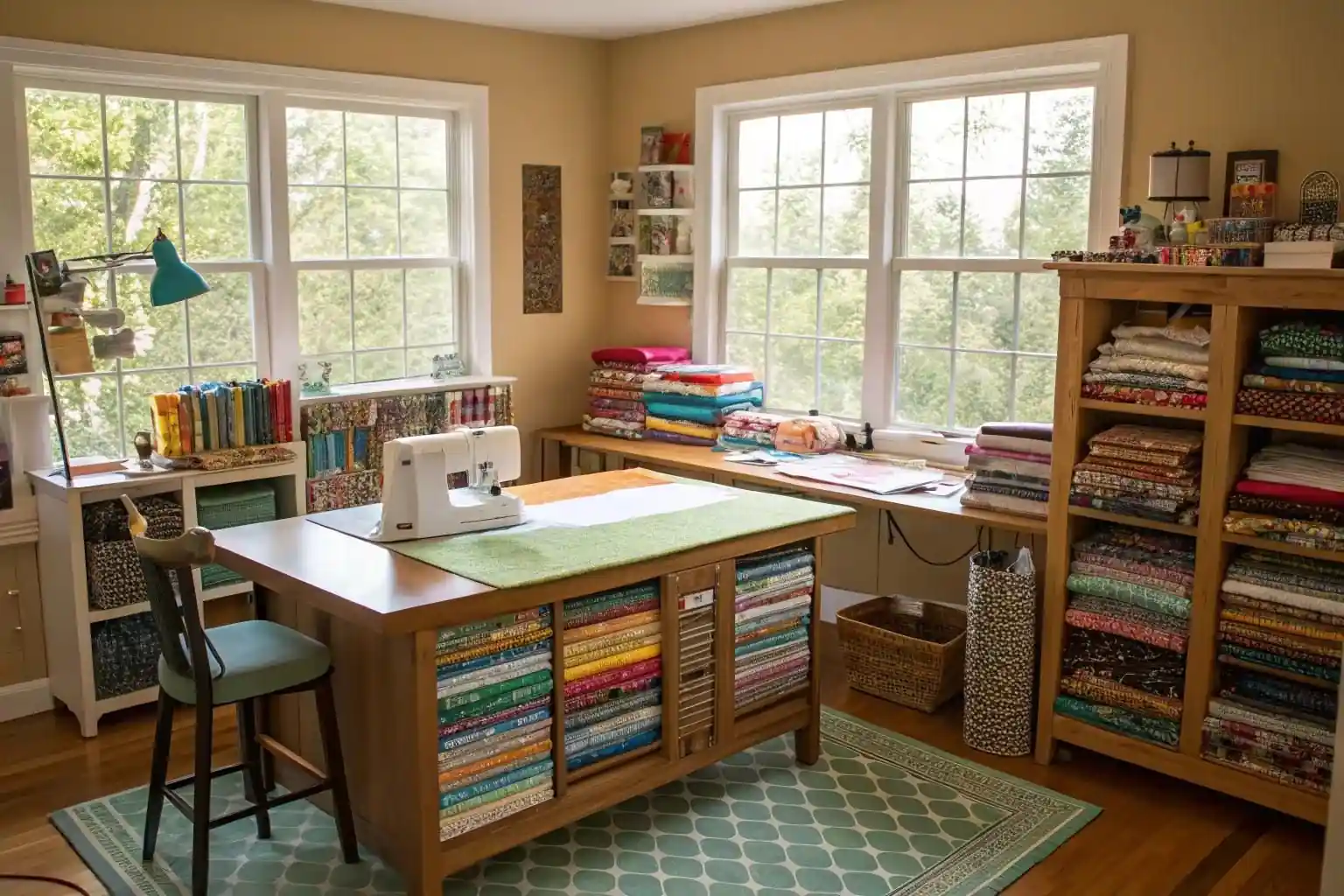
Pegboards are a favorite among sewing enthusiasts because they provide visible, accessible storage.
Install a pegboard above your sewing desk and use hooks to hang:
- Scissors
- Measuring tapes
- Rotary cutters
- Thread spools
- Rulers
- Sewing tools
This keeps essential items within reach while freeing up desk space.
Why Pegboards Work So Well
Pegboards are flexible and customizable. As your collection grows, you can easily rearrange hooks and storage accessories without major changes.
Paint the pegboard in a coordinating color to match your room’s décor for a cohesive look.
4. Design a Bright and Airy Sewing Room
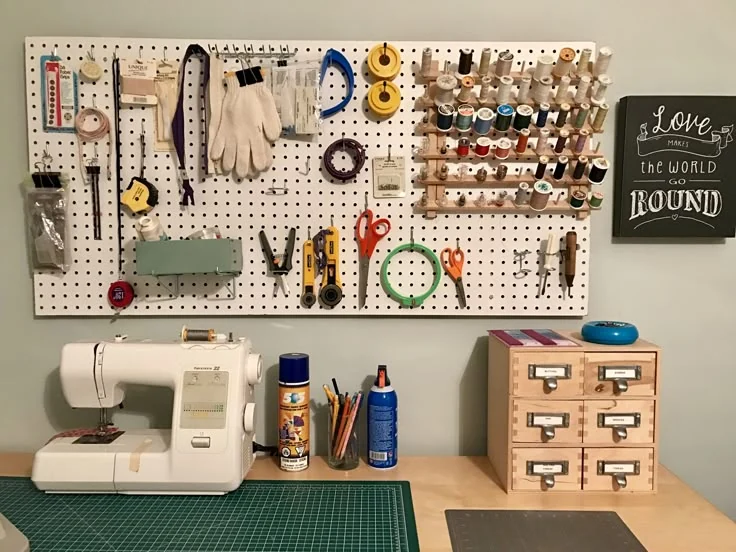
Lighting is one of the most overlooked aspects of sewing room design. Proper illumination improves accuracy and reduces eye strain.
Whenever possible:
- Position your sewing station near a window.
- Maximize natural sunlight.
- Use light-colored walls to reflect brightness.
Natural light helps distinguish fabric colors accurately and creates a pleasant working atmosphere.
Artificial Lighting Options
Supplement daylight with:
- Adjustable task lamps
- LED desk lights
- Ceiling-mounted fixtures
- Under-shelf lighting
Combining multiple light sources ensures excellent visibility throughout the room.
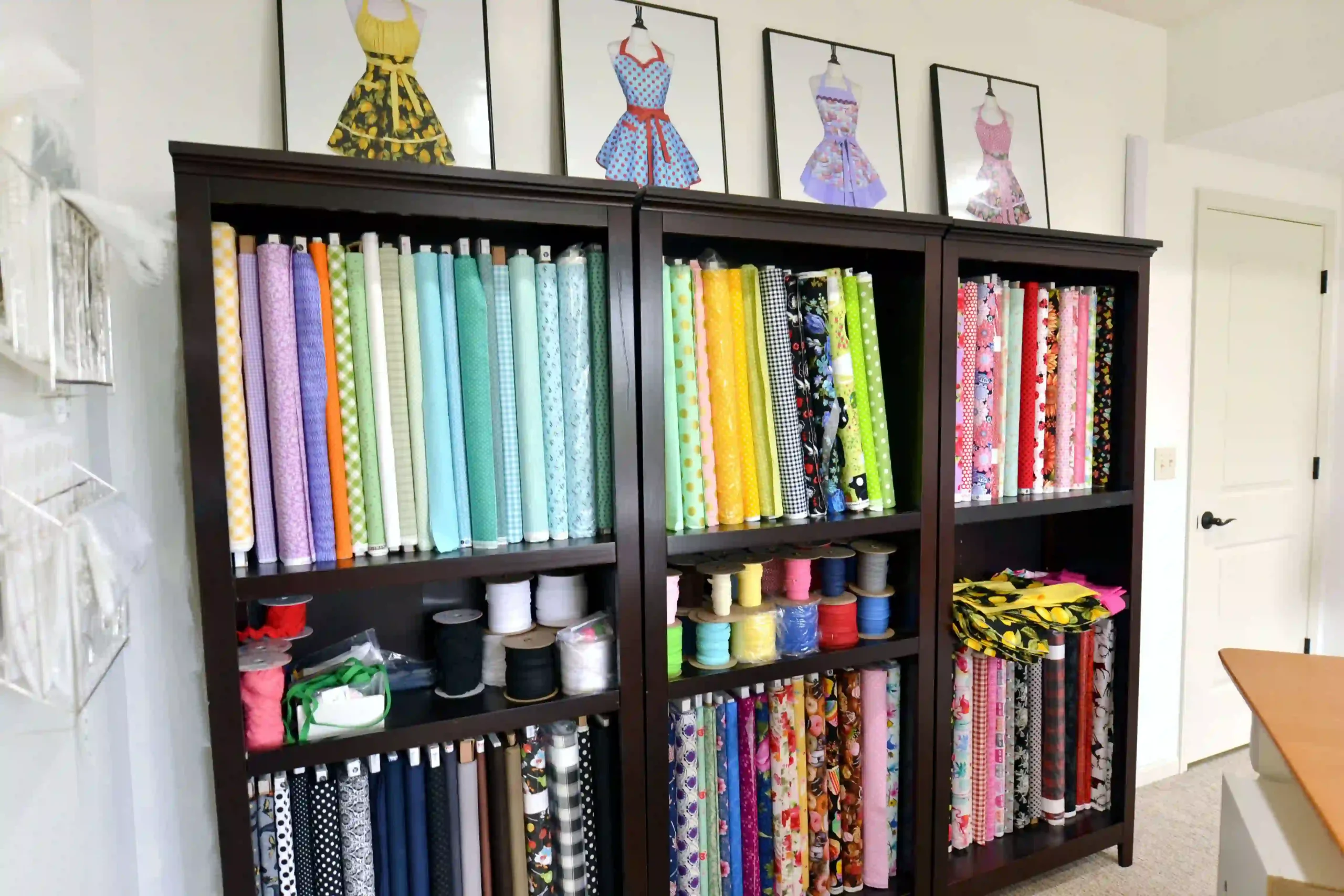
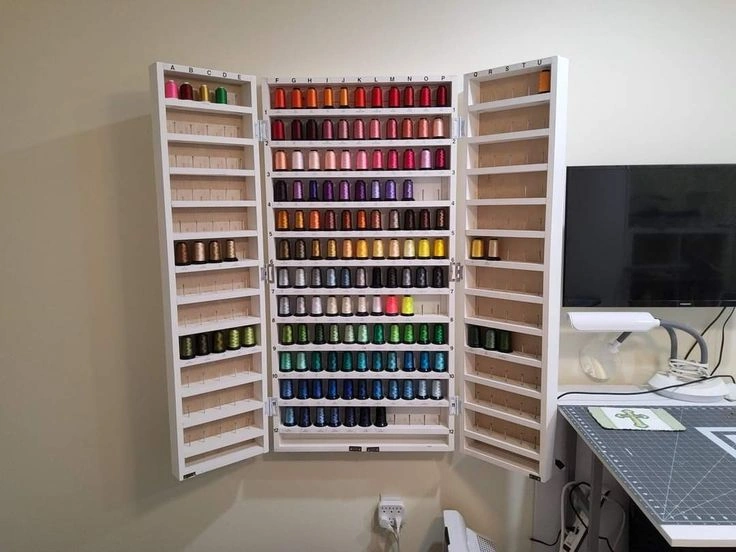
5. Organize Fabric by Color
Fabric storage can become overwhelming if not managed properly. Organizing fabric by color creates both functionality and visual appeal.
Arrange fabrics like a rainbow display:
- Reds
- Oranges
- Yellows
- Greens
- Blues
- Purples
- Neutrals
This method turns your fabric collection into decorative wall art while making it easier to find materials.
Advantages of Color Organization
- Faster fabric selection
- Improved room aesthetics
- Easier inventory management
- Enhanced creativity
Many sewing enthusiasts find color-coordinated fabric storage inspiring and motivating.
6. Include Comfortable Seating
Long sewing sessions require supportive seating. Investing in a quality chair can significantly improve comfort and posture.
Look for chairs that offer:
- Adjustable height
- Lumbar support
- Cushioned seating
- Smooth mobility
An ergonomic chair reduces fatigue and allows you to focus on creative projects.
Additional Seating Ideas
If space permits, add:
- A small reading chair
- A cozy bench
- An upholstered stool
These provide alternative seating options for planning projects, reading patterns, or relaxing.
7. Create Dedicated Zones for Different Tasks
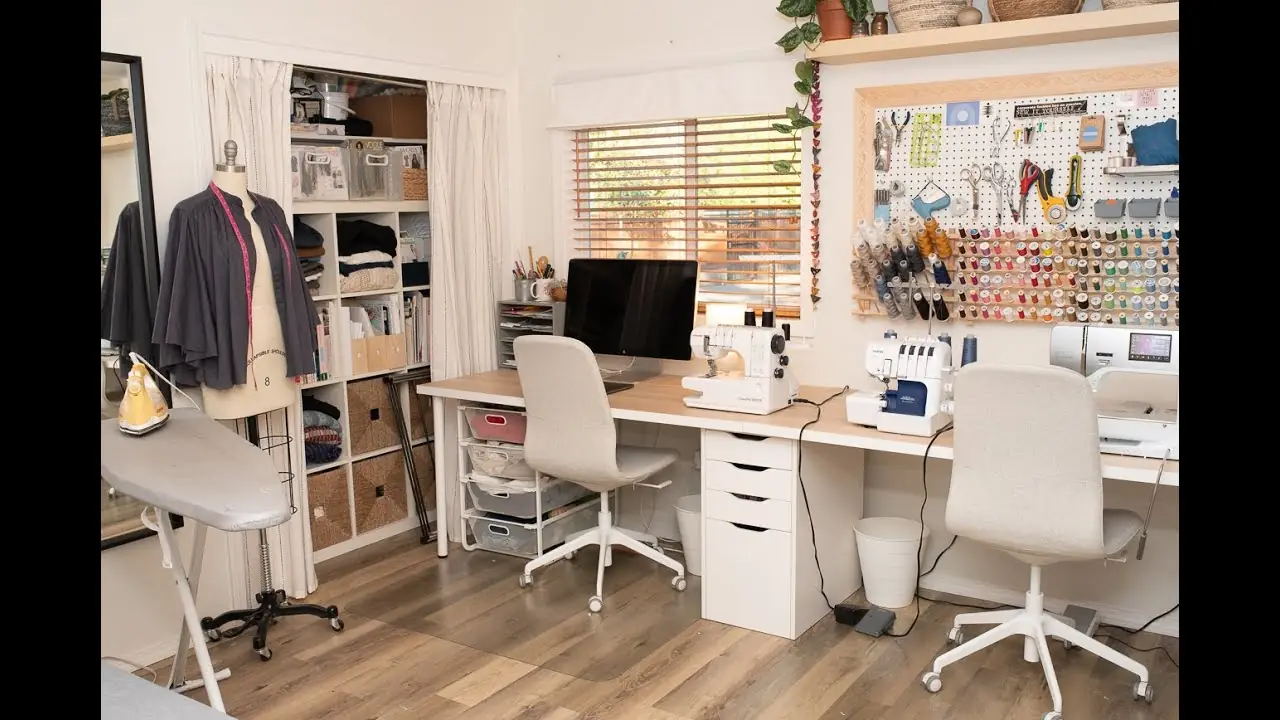
Professional sewing spaces often separate activities into designated areas.
Consider creating zones for:
Sewing Zone
Contains:
- Sewing machine
- Thread storage
- Essential tools
Cutting Zone
Includes:
- Cutting mat
- Worktable
- Measuring tools
Ironing Zone
Features:
- Ironing board
- Steam iron
- Pressing tools
Storage Zone
Houses:
- Fabric inventory
- Notions
- Patterns
Task-specific zones streamline workflow and reduce unnecessary movement around the room.
8. Decorate with Creative Sewing-Themed Décor
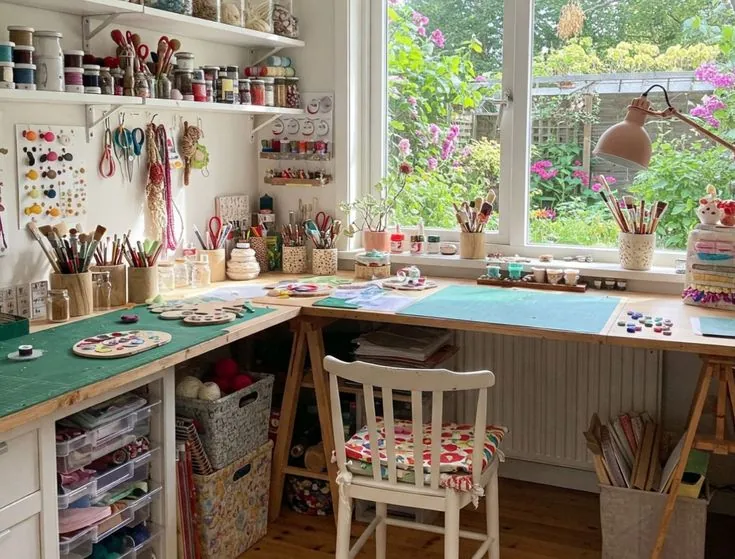
A sewing room should inspire creativity. Decorative touches can make the space feel personal and inviting.
Popular sewing-themed décor includes:
- Vintage sewing machine displays
- Framed fabric samples
- Inspirational quotes
- Thread spool artwork
- Quilted wall hangings
These elements reflect your passion while enhancing the room’s character.
Budget-Friendly Decorating Ideas
- Repurpose vintage sewing tools.
- Frame favorite fabric scraps.
- Display handmade projects.
- Create DIY wall art using embroidery hoops.
Personalized décor adds warmth and individuality to your sewing space.
9. Utilize Hidden Storage Solutions
Not every sewing room has unlimited square footage. Hidden storage helps maximize every inch of available space.
Consider:
- Storage ottomans
- Drawer organizers
- Rolling carts
- Under-table cabinets
- Wall-mounted fold-down desks
These solutions keep supplies accessible without creating visual clutter.
Small Sewing Room Strategies
For compact spaces:
- Use vertical storage.
- Choose multifunctional furniture.
- Install floating shelves.
- Utilize closet organizers.
Even a small room can become highly efficient with smart planning.
10. Build an Inspiring Inspiration Board
Every creative space benefits from a source of inspiration. An inspiration board helps organize ideas and maintain motivation.
Use a corkboard, magnetic board, or wall display to showcase:
- Fabric swatches
- Pattern ideas
- Color palettes
- Fashion sketches
- Project goals
- Magazine clippings
Having visual inspiration nearby encourages creativity and helps guide future projects.
Keeping Your Board Fresh
Update your inspiration board regularly by:
- Removing completed projects.
- Adding new ideas.
- Displaying seasonal trends.
- Incorporating favorite designs.
An evolving inspiration board keeps your sewing room dynamic and exciting.
Bonus Tips for the Perfect Sewing Room
Beyond these 10 Sewing Room Ideas, a few extra considerations can elevate your workspace even further.
Choose Durable Flooring
Sewing rooms experience significant foot traffic and occasional spills.
Recommended flooring options include:
- Vinyl plank flooring
- Laminate flooring
- Hardwood flooring
- Low-pile carpet tiles
These materials are easy to clean and maintain.
Keep Frequently Used Tools Nearby
Store everyday essentials close to your sewing machine, including:
- Pins
- Scissors
- Seam rippers
- Measuring tapes
- Marking tools
Convenient access improves efficiency during projects.
Maintain Cable Organization
Multiple machines and lighting fixtures can create cord clutter.
Use:
- Cable clips
- Cord sleeves
- Under-desk organizers
This improves safety and maintains a clean appearance.
Incorporate Plants
Indoor plants bring life and freshness into a sewing room.
Good options include:
- Snake plants
- Pothos
- ZZ plants
- Peace lilies
Plants improve the atmosphere and add natural beauty to your creative space.
Common Sewing Room Mistakes to Avoid
When designing your sewing room, avoid these common pitfalls:
Poor Lighting
Insufficient lighting can lead to mistakes and eye strain.
Lack of Storage
Without proper organization, supplies quickly become overwhelming.
Inadequate Workspace
Small work surfaces limit productivity and comfort.
Ignoring Ergonomics
Uncomfortable furniture can lead to physical discomfort during extended sewing sessions.
Overcrowding the Room
Leave enough open space to move freely and enjoy your workspace.
Final Thoughts
Creating the perfect sewing room doesn’t require a massive budget or a large house. With thoughtful planning and creative organization, any area can become a beautiful and productive sewing space.
These 10 Sewing Room Ideas offer practical solutions for storage, comfort, efficiency, and inspiration. Whether you’re setting up a dedicated craft room or transforming a spare corner into a sewing station, the right design choices can make every project more enjoyable.
Focus on functionality first, then add decorative elements that reflect your personality and creative style. A well-designed sewing room becomes more than just a workspace it becomes a place where ideas come to life, skills grow, and creativity flourishes.
Start with one or two of these ideas and gradually build the sewing room you’ve always dreamed of. Your future sewing projects will thank you.