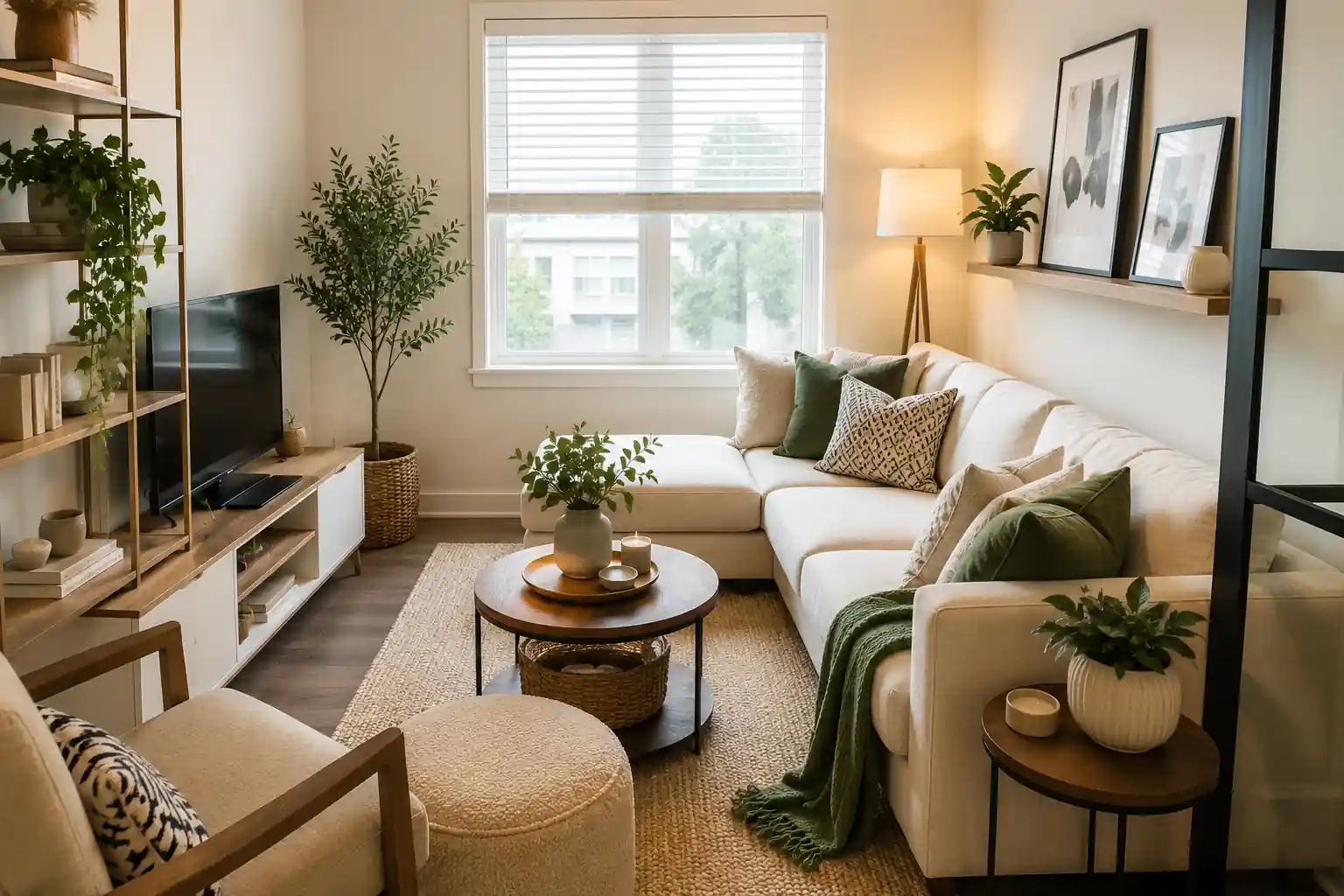
A small living room doesn’t have to feel cramped or limiting. In fact, with the right layout, furniture choices, colors, and décor, even the tiniest space can become warm, inviting, and surprisingly functional. Whether you live in a small apartment, condo, townhouse, or cozy home, thoughtful design can completely transform your living area.
The secret isn’t having more square footage it’s making the most of what you already have. From clever storage solutions to space-saving furniture and lighting tricks, there are countless ways to create a living room that feels bigger while reflecting your personal style.
In this guide, we’ll explore 10 Small Living Room Ideas that combine beauty, comfort, and practicality. These easy-to-apply ideas will help you maximize every corner without sacrificing style.
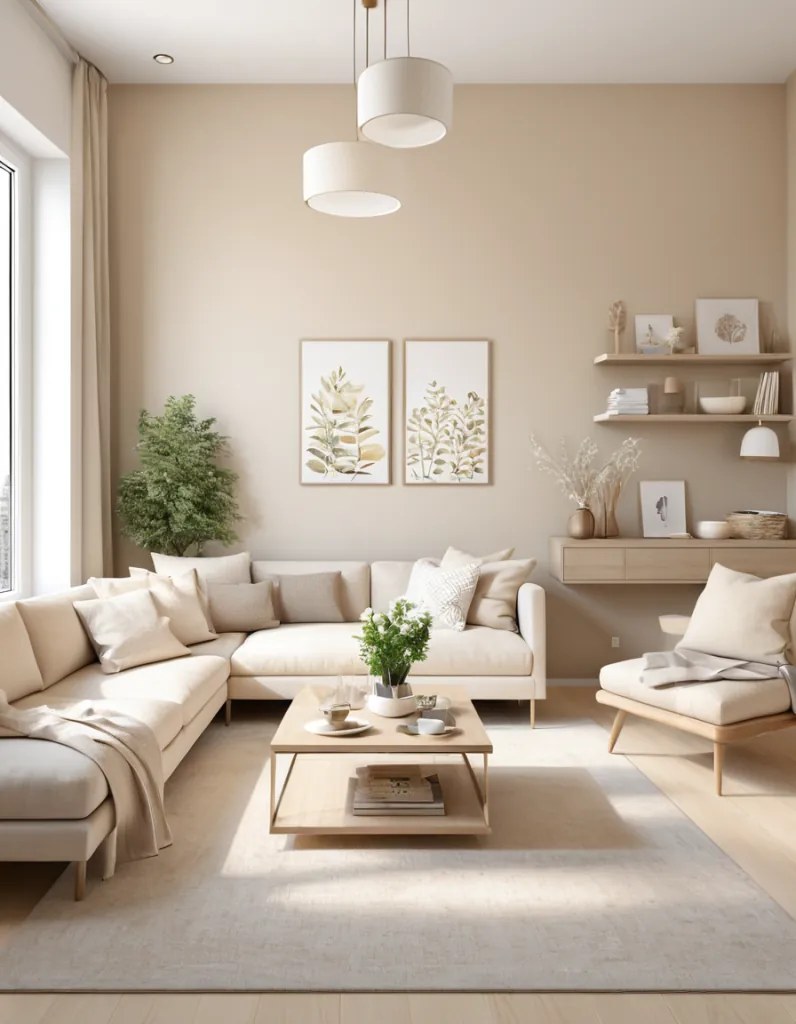
1. Choose Light Colors to Create an Open Feel
Color has one of the biggest impacts on how large or small a room appears. Light shades naturally reflect more light, making a space feel brighter and more open.
Consider using:
- Soft white
- Warm beige
- Light gray
- Cream
- Pale sage
- Dusty blue
Painting both the walls and ceiling in similar light tones creates a seamless look that visually expands the room. If you want a little contrast, introduce darker colors through pillows, artwork, or decorative accessories instead of large furniture.
Natural wood finishes also pair beautifully with neutral walls, adding warmth without making the room feel heavy.
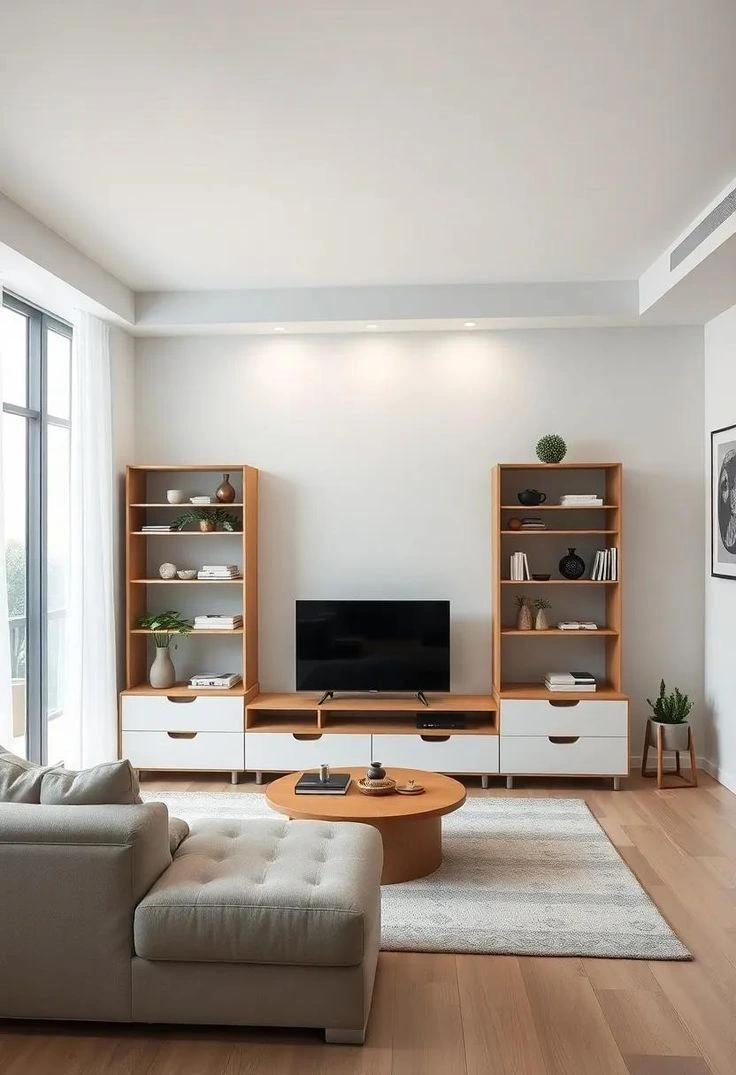
2. Invest in Multi-Functional Furniture
Every piece of furniture should earn its place in a small living room.
Look for furniture that serves multiple purposes, such as:
- Storage ottomans
- Nesting coffee tables
- Sofa beds
- Lift-top coffee tables
- Benches with hidden storage
- Side tables with shelves
A storage ottoman can hold blankets, magazines, or toys while doubling as extra seating. Likewise, a coffee table with hidden compartments helps reduce clutter without adding more furniture.
Choosing practical furniture keeps your living room organized while maximizing valuable floor space.
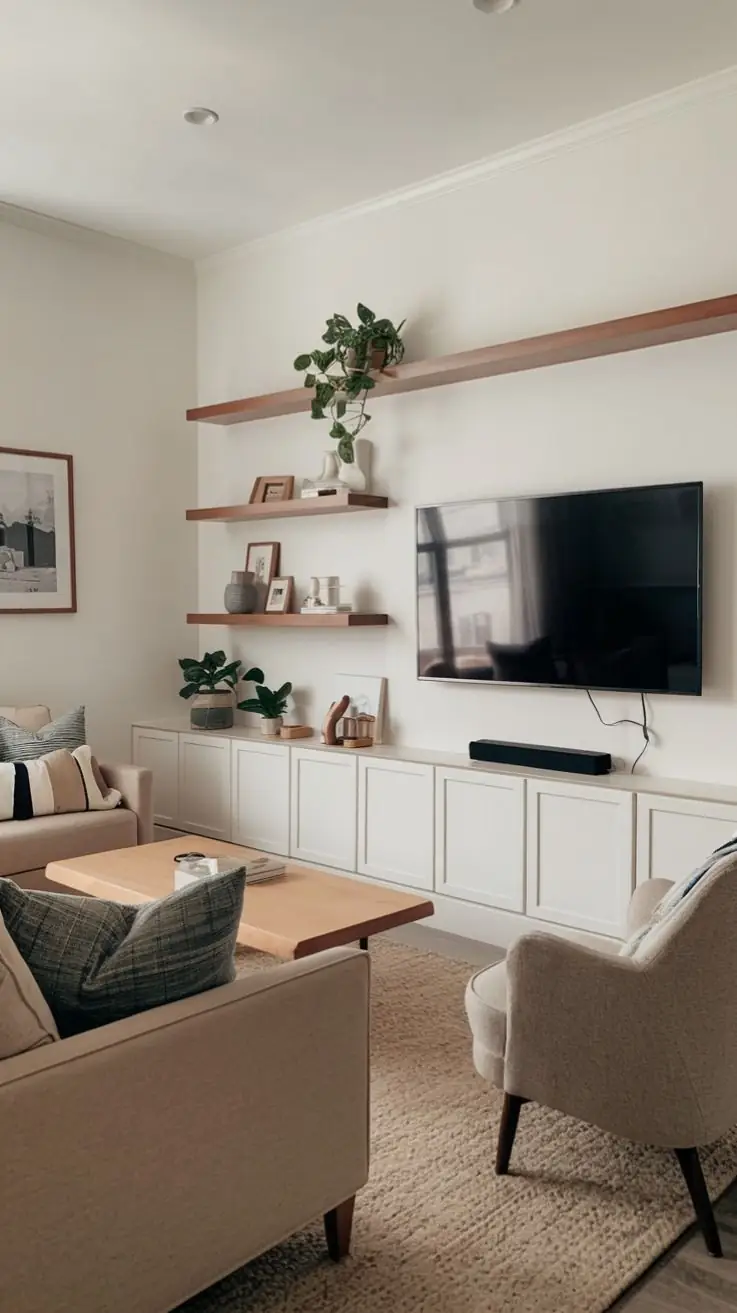
3. Float Your Furniture Instead of Pushing Everything Against the Wall
Many people assume pushing furniture against every wall makes a room feel bigger. Surprisingly, the opposite is often true.
Pulling the sofa a few inches away from the wall creates visual breathing room and improves traffic flow. If your layout allows, placing a slim console table behind the sofa adds both function and style.
Arrange seating to encourage conversation rather than focusing solely on the television. A thoughtfully designed furniture layout makes the room feel intentional and spacious.
Even in very small spaces, creating a balanced arrangement can dramatically improve comfort.
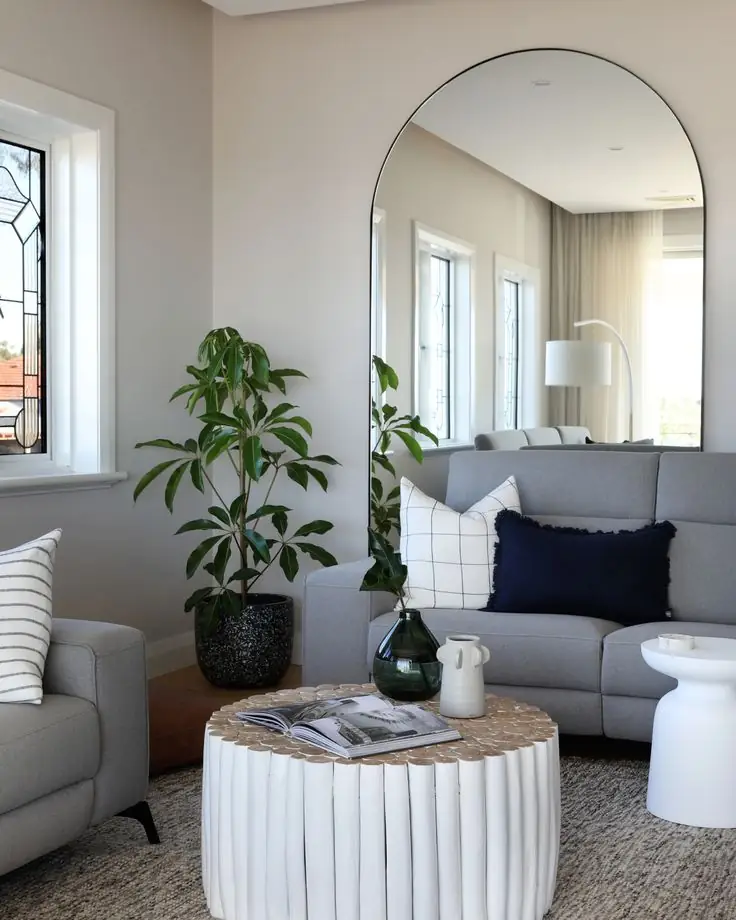
4. Use Mirrors to Reflect Light
Mirrors are one of the oldest interior design tricks for making rooms appear larger.
A large mirror positioned across from a window reflects natural light throughout the room, creating depth and brightness.
Popular mirror ideas include:
- Oversized round mirrors
- Black-framed mirrors
- Arch mirrors
- Gold accent mirrors
- Floor-length leaning mirrors
Instead of using several small mirrors, one large statement mirror often creates a cleaner and more expansive appearance.
Mirrors also become beautiful decorative features while increasing the room’s perceived size.
5. Choose Furniture with Visible Legs
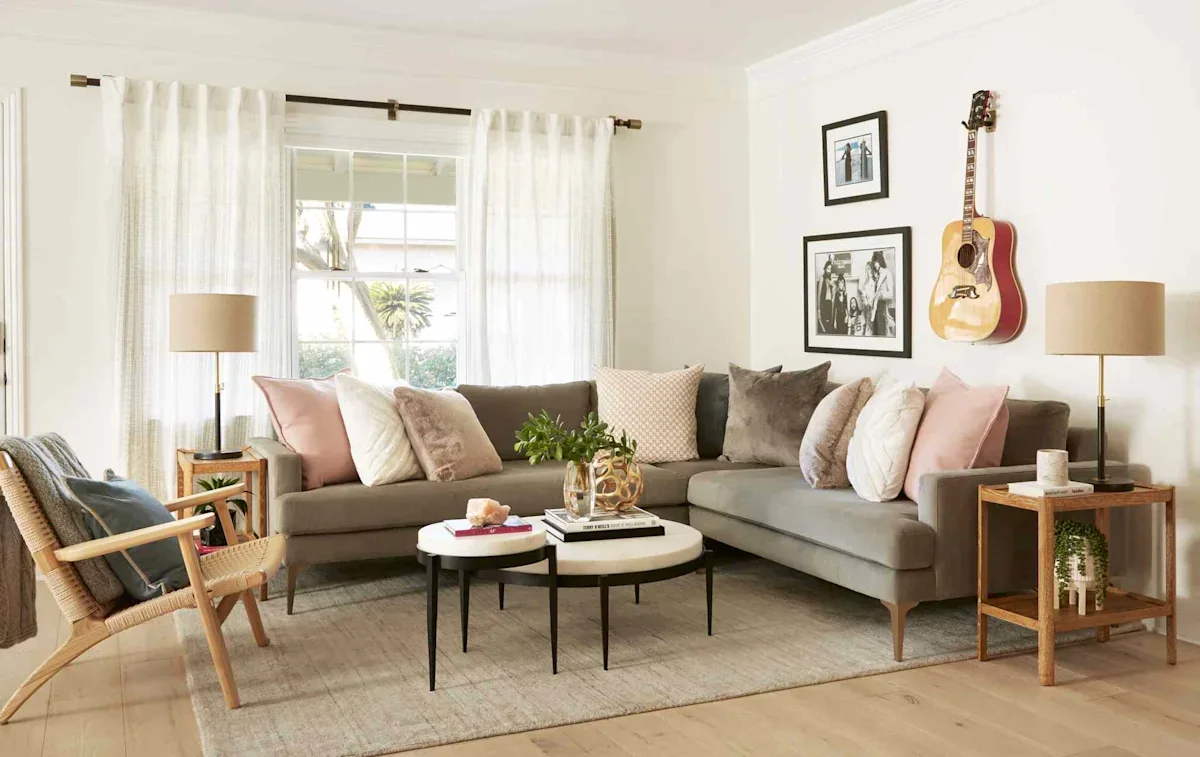
Furniture that sits directly on the floor can make a room feel heavier.
Pieces with exposed legs allow you to see more of the flooring, making the space feel larger and less crowded.
Great options include:
- Mid-century modern sofas
- Accent chairs with wooden legs
- Raised TV consoles
- Open-frame coffee tables
- Floating cabinets
Glass coffee tables are another excellent choice because they maintain functionality without visually blocking the room.
The more visible floor area you have, the more spacious your living room appears.
6. Add Vertical Storage
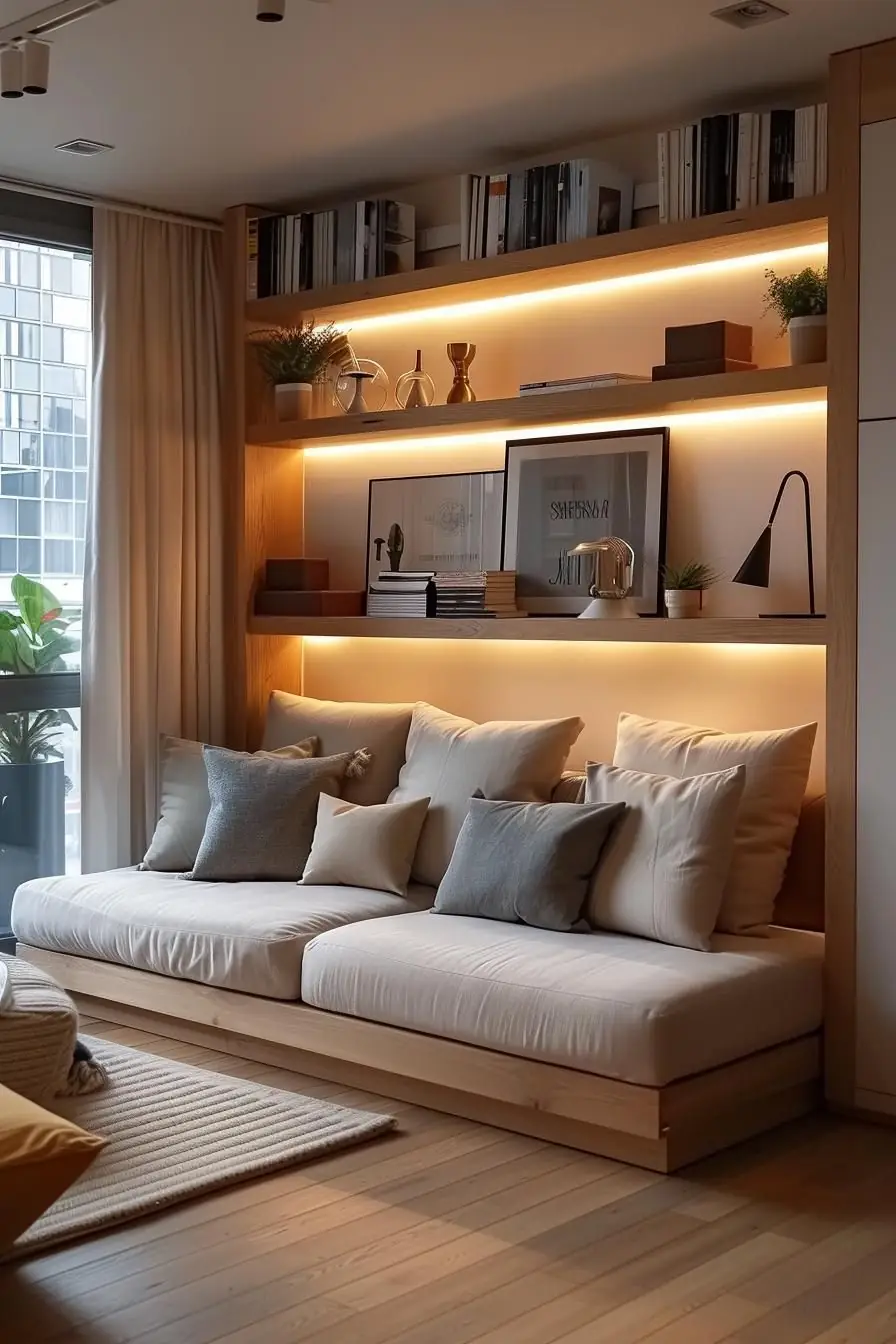
When floor space is limited, think upward.
Vertical storage helps maximize every inch while keeping the room organized.
Ideas include:
- Floating shelves
- Tall bookcases
- Built-in shelving
- Wall-mounted cabinets
- Picture ledges
Floating shelves work especially well above sofas, televisions, and reading corners.
Use them to display:
- Books
- Small plants
- Framed artwork
- Candles
- Decorative baskets
Keeping décor balanced prevents shelves from looking overcrowded.
Vertical storage draws the eye upward, making ceilings feel taller.
7. Keep Window Treatments Light and Airy
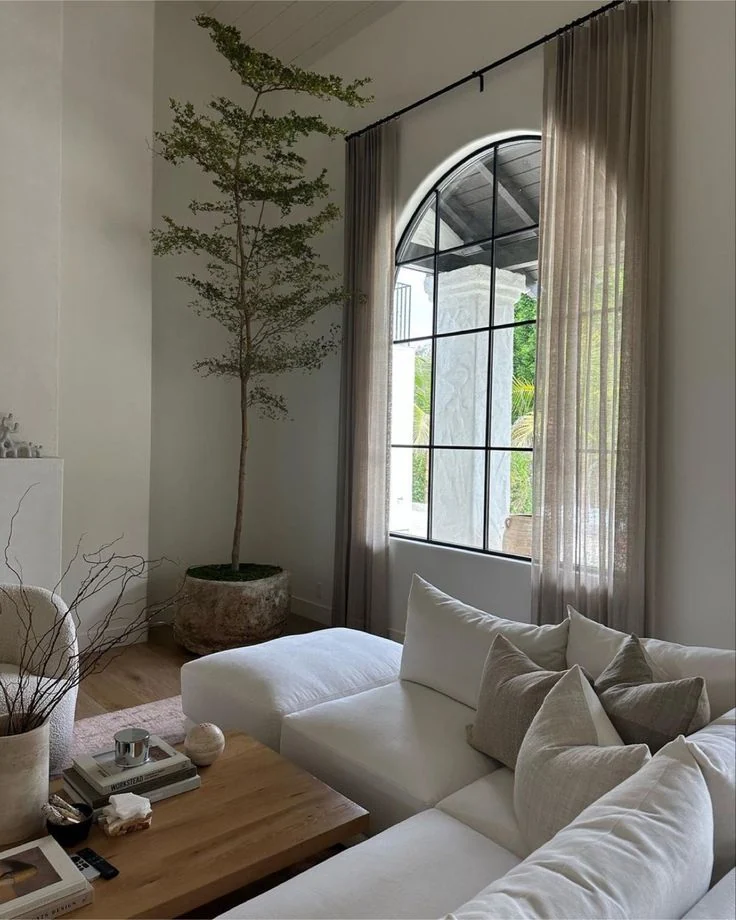
Heavy curtains can overwhelm a compact room.
Instead, choose lightweight window treatments that allow sunlight to fill the space.
Some excellent options include:
- Sheer curtains
- Linen drapes
- Roman shades
- Bamboo blinds
- White roller shades
Hang curtain rods closer to the ceiling rather than directly above the window frame. This simple trick makes windows appear taller and gives the illusion of higher ceilings.
Natural light remains one of the easiest ways to make a small room feel larger.
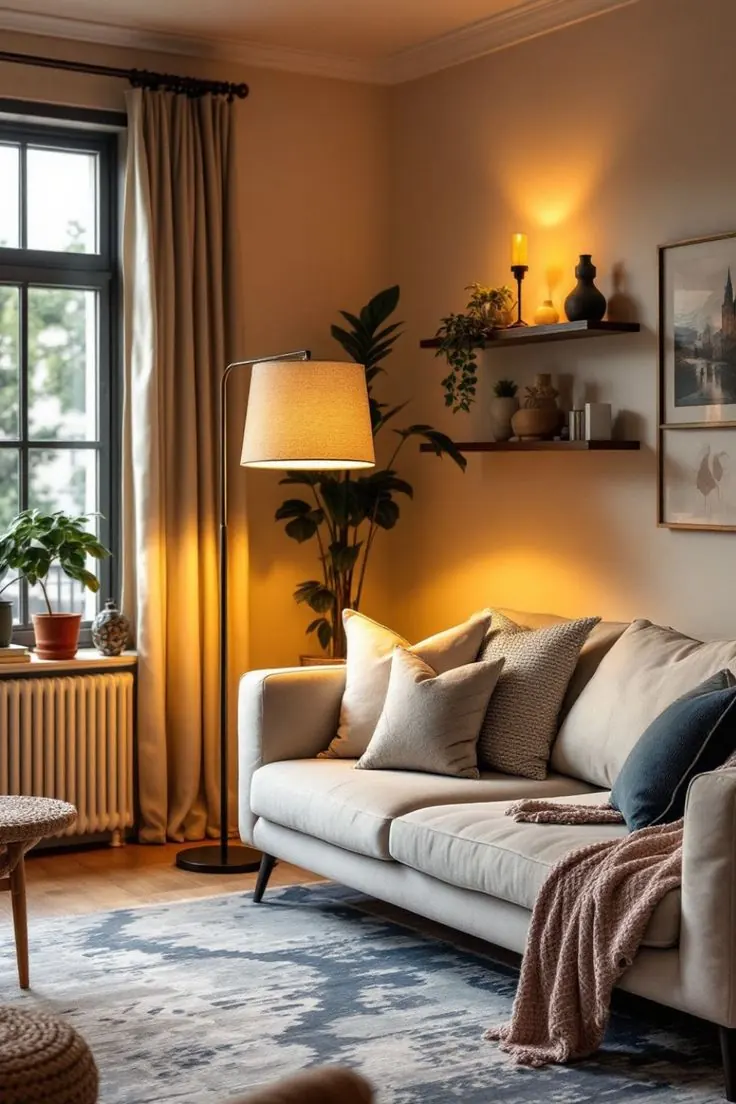
8. Layer Lighting for Warmth and Depth
Many small living rooms rely on a single overhead light, which often creates harsh shadows.
Instead, use multiple light sources throughout the room.
Try combining:
- Floor lamps
- Table lamps
- Wall sconces
- LED strip lighting
- Accent lighting
Warm lighting creates a cozy atmosphere while adding depth to different areas of the room.
If possible, use dimmable bulbs so you can easily adjust the mood for relaxing evenings or entertaining guests.
Lighting isn’t just functional it plays a major role in how spacious your room feels.
9. Keep Décor Simple and Intentional
Too many decorative items quickly create visual clutter.
Instead of filling every surface, choose fewer but more meaningful pieces.
A balanced approach might include:
- One large artwork instead of several small frames
- A decorative tray on the coffee table
- One or two indoor plants
- Neutral throw pillows
- Cozy textured blankets
Remember that empty space is an important design element.
Allow shelves, tables, and walls to breathe so the room feels calm and organized.
Minimal styling often looks more luxurious than excessive decoration.
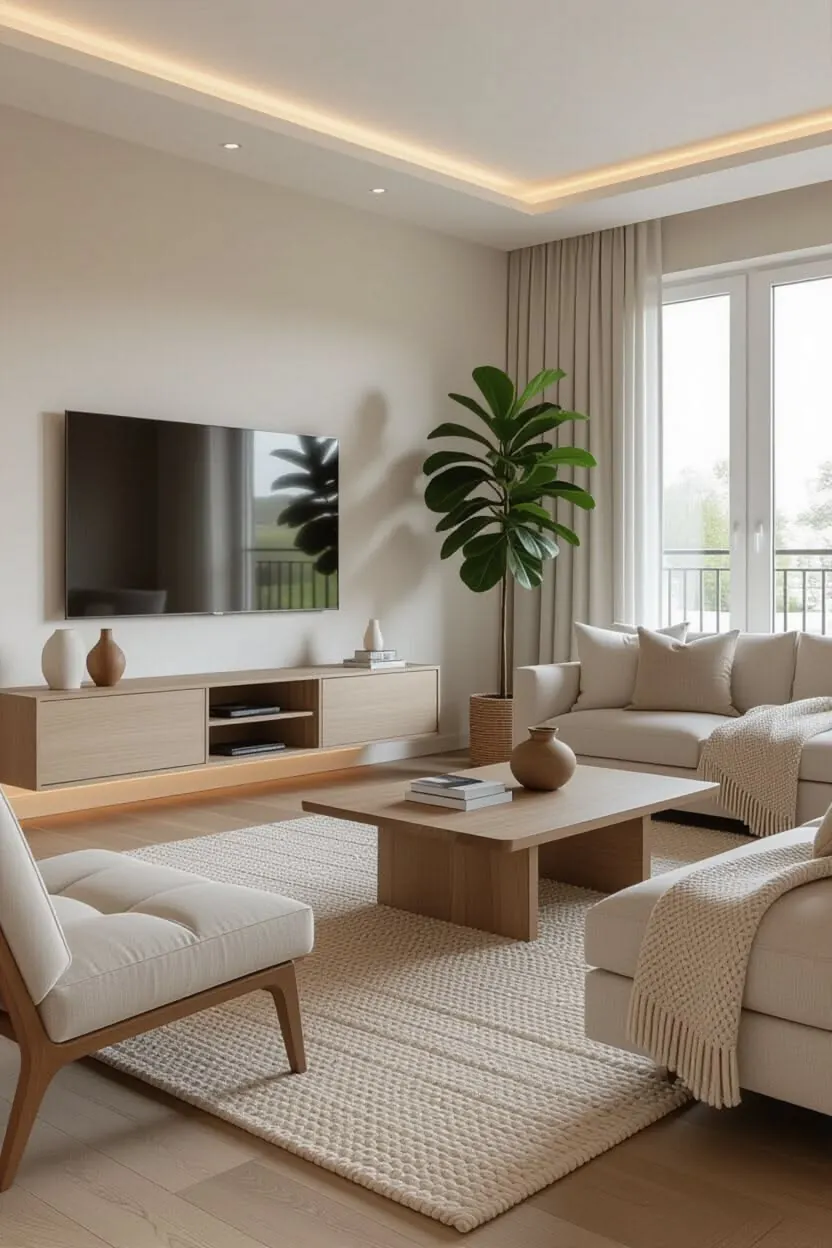
10. Define Spaces with an Area Rug
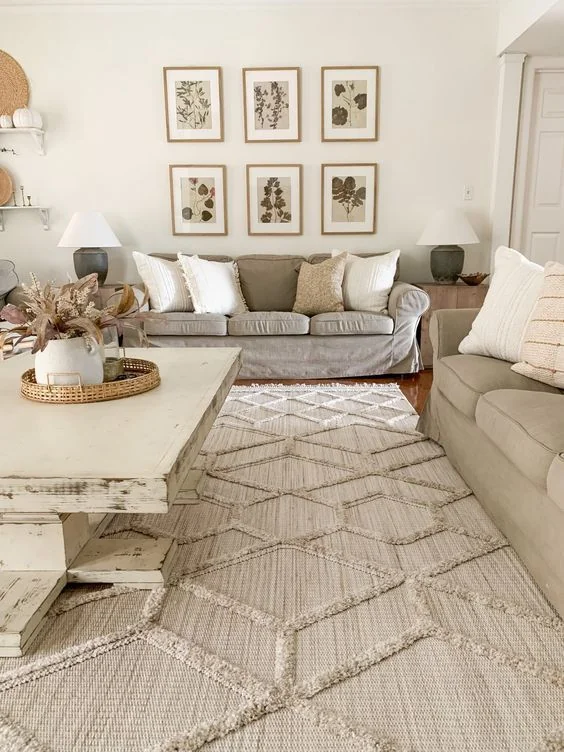
Even in compact rooms, an area rug helps establish a clear seating area.
Choose a rug that’s large enough for at least the front legs of your furniture to sit on it.
Popular rug choices include:
- Neutral woven rugs
- Vintage-inspired rugs
- Geometric patterns
- Soft textured rugs
- Low-pile wool rugs
Avoid rugs that are too small, as they can make the room appear disconnected.
A properly sized rug visually anchors the furniture while making the living room feel more cohesive.
Smart Storage Ideas for Small Living Rooms
Storage is often the biggest challenge in compact homes.
Fortunately, there are many stylish ways to reduce clutter without sacrificing design.
Consider incorporating:
- Storage baskets under side tables
- Decorative boxes on shelves
- Floating TV units
- Hidden storage benches
- Built-in cabinetry
- Wall hooks
- Slim console tables with drawers
Organized spaces naturally appear larger and more inviting.
The less visual clutter you have, the more peaceful your living room becomes.
Best Furniture Choices for Small Spaces
Furniture scale matters just as much as room size.
Oversized sectionals often dominate compact rooms, leaving little room to move.
Instead, choose furniture with slimmer profiles.
Excellent choices include:
- Apartment-sized sofas
- Armless accent chairs
- Nesting side tables
- Compact swivel chairs
- Small-scale media units
- Round coffee tables
Round furniture improves traffic flow because there are no sharp corners interrupting movement.
Always measure your room before purchasing furniture to ensure everything fits comfortably.
Decorating Tips That Make a Big Difference
Small design decisions often have the greatest impact.
Some easy upgrades include:
- Matching wall color with trim
- Using metallic accents sparingly
- Incorporating natural textures
- Keeping furniture proportions balanced
- Limiting bold patterns
- Adding greenery
- Using floating shelves instead of bulky cabinets
Even replacing oversized lamps with slimmer versions can free up valuable surface space.
Thoughtful decorating creates a polished look without overwhelming the room.
Common Mistakes to Avoid
Many homeowners unintentionally make small living rooms feel even smaller.
Avoid these common mistakes:
- Buying oversized furniture
- Using too many dark colors
- Blocking natural light
- Overdecorating shelves
- Choosing rugs that are too small
- Filling every wall with artwork
- Ignoring vertical storage
- Creating clutter on tables
Small improvements in these areas can dramatically improve both appearance and functionality.
Budget-Friendly Ways to Refresh Your Living Room
You don’t need a complete renovation to update your space.
Affordable improvements include:
- Repainting the walls
- Rearranging furniture
- Adding new throw pillows
- Installing floating shelves
- Updating curtain rods
- Replacing outdated lighting
- Incorporating woven baskets
- Hanging a large mirror
- Adding indoor plants
Even a few inexpensive changes can completely transform the atmosphere of your living room.
Frequently Asked Questions (FAQs)
1. How can I make a small living room look bigger?
Use light wall colors, mirrors, multifunctional furniture, and plenty of natural light. Keeping clutter to a minimum and choosing furniture with exposed legs can also make your living room feel more spacious.
2. What colors work best for a small living room?
Soft neutral shades like white, cream, beige, light gray, sage green, and pale blue are excellent choices. These colors reflect light and create the illusion of a larger, brighter space.
3. What type of furniture is best for a small living room?
Choose compact, multifunctional furniture such as storage ottomans, nesting tables, apartment-sized sofas, and lift-top coffee tables. These pieces maximize functionality without overcrowding the room.
4. Should I use a large rug in a small living room?
Yes. A properly sized area rug helps define the seating area and makes the room feel more cohesive. A rug that’s too small can actually make the space look smaller.
5. How can I add storage without making the room feel crowded?
Take advantage of vertical space by installing floating shelves, wall-mounted cabinets, and tall bookcases. Hidden storage furniture is another great way to keep clutter out of sight.
6. Are dark colors suitable for small living rooms?
Yes, but they should be used in moderation. Incorporate darker shades through accent pillows, artwork, or decorative accessories while keeping the walls and larger furniture in lighter tones.
7. What is the biggest mistake to avoid in a small living room?
The most common mistake is choosing oversized furniture. Large pieces can overwhelm the room and reduce movement. Instead, opt for furniture that is scaled appropriately for your space.
Final Thoughts
Designing a beautiful small living room is all about making smart choices rather than filling every available inch. With the right combination of light colors, multifunctional furniture, thoughtful storage, layered lighting, and intentional décor, even the smallest space can feel open, comfortable, and elegant.
These 10 Small Living Room Ideas prove that great design isn’t determined by square footage. By focusing on functionality, organization, and visual balance, you can create a living room that feels welcoming, stylish, and perfectly suited to your everyday life.
Whether you’re updating a tiny apartment or refreshing a cozy family room, start with one or two of these ideas and build from there. Small changes often lead to the biggest transformations, helping you create a space you’ll enjoy for years to come.
Related Articles
Looking for more home décor inspiration? Explore these helpful guides:
- Coastal Home Decor – Discover simple ways to create a light, airy, beach-inspired home with timeless coastal decorating ideas.
- Fall Living Room Fireplace Decor – Find cozy fireplace styling tips and seasonal décor inspiration to make your living room warm and inviting this fall.
- Halloween Tablescape Ideas – Get creative Halloween table decorating ideas that will impress your guests and elevate your spooky celebrations.