Most people believe their dishwasher magically cleans itself. After all, it blasts hot water and detergent every day, right? But the truth is a little less glamorous.
Over time, food scraps, grease, soap residue, and minerals quietly build up inside your machine. That hidden grime leads to bad smells, cloudy dishes, and poor washing results—hardly the vibe of a modern decor haven where everything feels fresh, clean, and well cared for.
The good news? Learning how to clean your dishwasher properly is surprisingly easy. You don’t need expensive cleaners, special tools, or hours of elbow grease. With a few household items and the right method, you can restore your dishwasher to peak performance and keep it that way.
This complete guide walks you through every part of the dishwasher, explains why each step matters, shares expert-backed tips, and helps you avoid common mistakes—so your dishes come out spotless every time.
Why Cleaning Your Dishwasher Regularly Is So Important
Your dishwasher works harder than most appliances in your home. Every cycle pushes leftover food, grease, and detergent residue through its system. While much of it drains away, a surprising amount gets trapped in hidden areas.
Here’s what happens when you skip regular cleaning:
-
Food debris clogs the filter and spray arms
-
Grease coats the interior walls and door seals
-
Hard water minerals form chalky deposits
-
Bacteria and mold create unpleasant odors
This buildup doesn’t just smell bad—it reduces water pressure, blocks spray coverage, and shortens the life of your dishwasher.
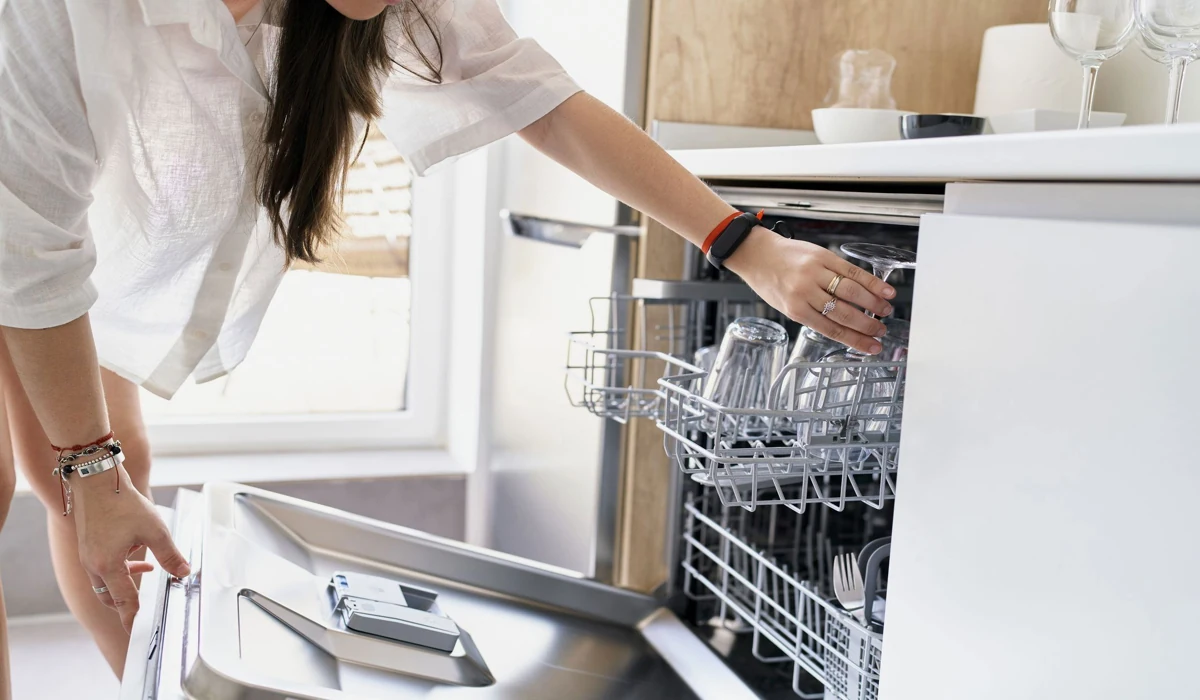
How Often Should You Clean Your Dishwasher?
-
Weekly: Rinse the filter quickly
-
Monthly: Full deep clean
-
Every 2–3 weeks: If you have hard water or heavy daily use
If you notice cloudy glasses, gritty residue, or a musty smell, your dishwasher is overdue for cleaning.
What You’ll Need Before You Start
No fancy products required. Most of these are already in your kitchen:
-
White vinegar
-
Baking soda
-
Dish soap
-
Soft brush or old toothbrush
-
Microfiber cloth or sponge
-
Toothpick or thin wire
-
Small bowl (dishwasher-safe)
These items are gentle, effective, and safe for all dishwasher types.
How to Clean Your Dishwasher Properly: Step-by-Step
Step 1: Empty the Dishwasher Completely
Start with an empty machine. Remove all dishes, racks (if possible), and utensil holders so you can reach every surface easily.
Step 2: Remove and Deep Clean the Filter
The filter is the heart of your dishwasher’s cleaning system—and also the dirtiest part.
-
Locate it at the bottom of the tub
-
Twist or lift it out (check your manual if unsure)
-
Rinse under warm water
-
Use a brush to remove grease and food particles
Pro tip: If the filter smells bad or feels slimy, soak it in warm soapy water for 10–15 minutes before scrubbing.
Step 3: Unclog and Clean the Spray Arms
Spray arms distribute water throughout the dishwasher. When holes get blocked, dishes don’t get clean.
-
Remove upper and lower spray arms
-
Use a toothpick to clear clogged holes
-
Rinse thoroughly under running water
-
Shake gently to remove trapped debris
Clean spray arms = stronger water pressure and better results.
Step 4: Scrub the Door, Gasket, and Hidden Edges
Grime loves hiding where water doesn’t reach.
-
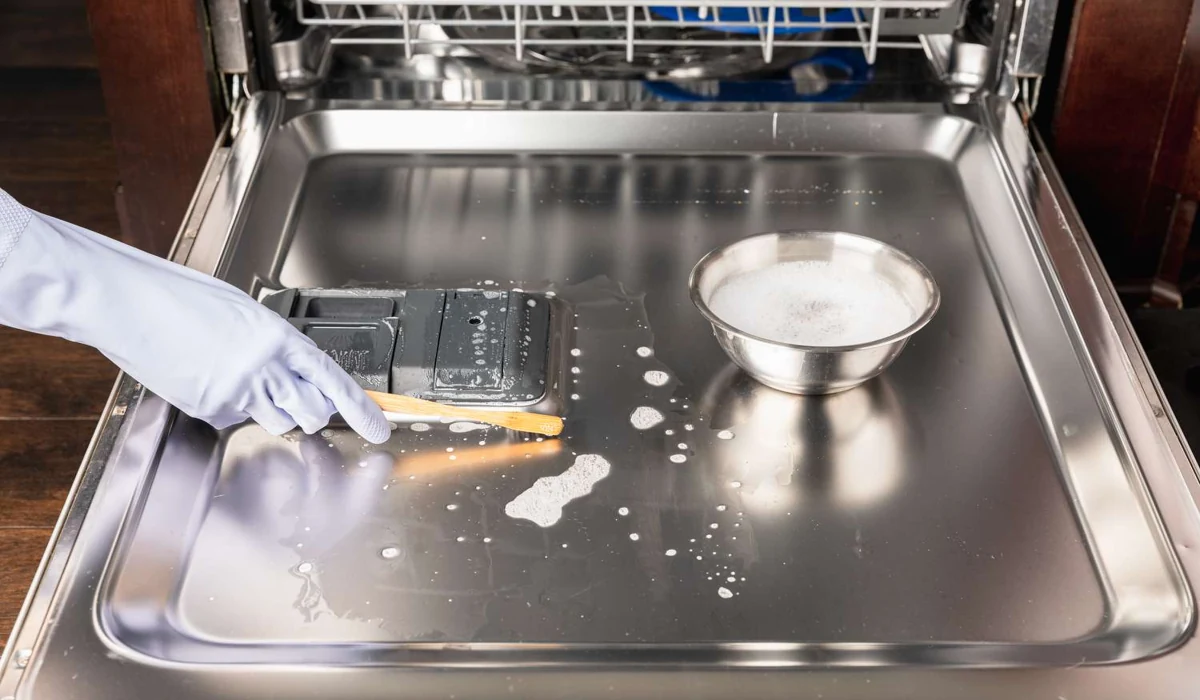
Dip a cloth in warm soapy water
-
Wipe around the door edges, corners, and hinges
-
Gently clean the rubber gasket
Avoid harsh scrubbing here—the gasket is delicate but crucial for preventing leaks.
Step 5: Run a Hot Vinegar Cleaning Cycle
Now for the deep interior clean.
-
Place a bowl with 2 cups of white vinegar on the top rack
-
Run a hot water cycle (no dishes)
Vinegar dissolves grease, removes mineral buildup, kills odor-causing bacteria, and freshens the entire machine.
Step 6: Finish with a Baking Soda Cycle
After the vinegar cycle ends:
-
Sprinkle 1 cup of baking soda across the bottom
-
Run a short hot cycle
This removes stains, neutralizes lingering smells, and leaves the dishwasher sparkling clean.
Step 7: Clean the Exterior for a Finished Look
A clean dishwasher should look good inside and out.
-
Wipe the control panel and handle with a damp cloth
-
Use mild soap for fingerprints
-
For stainless steel, wipe with the grain to avoid streaks
How to Clean a Dishwasher with Hard Water Buildup
Hard water leaves white, chalky residue that regular cleaning may not fully remove.
Extra Steps for Mineral Deposits
-
Pause the vinegar cycle halfway and let it soak for 30 minutes
-
Use citric acid (3–4 tablespoons) for stubborn buildup
-
Soak the filter separately in vinegar-water
-
Increase deep cleaning to every 2 weeks
-
Always keep rinse aid filled
Hard water requires consistency—but these steps make a big difference.
Common Dishwasher Cleaning Mistakes to Avoid
Even well-meaning habits can damage your machine.
-
Using bleach or harsh chemicals
-
Skipping the filter entirely
-
Running cleaning cycles with dishes inside
-
Using dish soap instead of dishwasher detergent
-
Ignoring the door gasket
-
Running cold cycles for cleaning
Stick to gentle cleaners and hot water for safe, effective results.
Simple Habits to Keep Your Dishwasher Cleaner Longer
Prevention saves time and effort:
-
Scrape off large food bits before loading
-
Run hot water at the sink before starting
-
Leave the door slightly open after cycles
-
Use the right amount of detergent
-
Clean the filter weekly
-
Check spray arms monthly
Small habits = fewer deep cleans.
Frequently Asked Questions (FAQs)
1. How often should I deep clean my dishwasher?
Once a month for regular use, more often if you have hard water or heavy use.
2. Can I clean my dishwasher without vinegar?
Yes. Citric acid or baking soda alone can work, but vinegar is most effective.
3. Is baking soda safe for dishwashers?
Absolutely. It’s gentle, non-abrasive, and great for odors.
4. Why does my dishwasher still smell after cleaning?
Check the filter, gasket, and drain area—odor often hides there.
5. Can I use lemon instead of vinegar?
Lemon helps with smell but isn’t as effective at breaking down grease.
6. Do dishwasher cleaners work better than vinegar?
Commercial cleaners work, but vinegar is cheaper and just as effective.
7. Should I remove racks during cleaning?
If removable, yes—it helps you clean thoroughly.
8. Why are my dishes still cloudy?
Hard water minerals or low rinse aid are common causes.
9. Is it safe to clean a dishwasher weekly?
Yes—especially the filter and gasket.
10. Can a dirty dishwasher damage dishes?
Yes. Residue and bacteria can redeposit onto clean dishes.
11. Does cleaning improve dishwasher lifespan?
Definitely. Regular maintenance prevents clogs and mechanical strain.
Final Thoughts: A Cleaner Dishwasher, A Happier Home
Now you know exactly how to clean your dishwasher the right way—without stress, special products, or wasted time. Just a few simple steps each month keep your machine fresh, efficient, and long-lasting.
Clean dishes, no odors, better performance—and a kitchen that truly feels like home.
Start with the filter today. You’ll notice the difference after the very next cycle. ✨