12 Living Room TV Designs & Ideas to Transform Your Space
The living room is the heart of the home a place where families gather, guests are entertained, and everyday moments unfold. At the center of this space, the television often plays a major role. Whether it’s movie nights, sports events, or casual background viewing, the TV naturally becomes a focal point. That’s why choosing the right TV design is just as important as selecting sofas, rugs, or lighting.
A well-designed TV area doesn’t just hold a screen; it enhances the overall aesthetic of the living room, improves functionality, and creates visual harmony. From sleek modern walls to cozy, storage-friendly setups, the possibilities are endless. In this guide, we’ll explore 12 Living Room TV Designs & Ideas that suit a variety of home styles, room sizes, and personal preferences—helping you design a living room that feels both stylish and practical.
Why TV Design Matters in a Living Room
A television is often one of the largest objects in the living room. Without thoughtful planning, it can feel intrusive or disrupt the flow of the space. A good TV design ensures the screen integrates seamlessly with the décor rather than standing out awkwardly.
Beyond aesthetics, TV design affects comfort and usability. Proper placement reduces eye strain, thoughtful storage keeps clutter hidden, and good lighting enhances both viewing quality and ambiance. When planned well, the TV area becomes a natural extension of the room’s style rather than an afterthought.
1. Minimalist Wall-Mounted TV Design

Minimalist TV designs are all about clean lines, simplicity, and visual calm. In this setup, the TV is mounted directly onto a plain or subtly textured wall, often paired with a slim floating console below.
Neutral colors such as white, beige, or soft gray help the TV blend into the background. Hidden wiring and handle-less storage maintain a clutter-free appearance. This design works especially well in modern apartments and small living rooms, where visual openness is key.
The beauty of minimalist TV designs lies in restraint less décor, fewer colors, and a focus on balance rather than decoration.
2. Wooden Panel TV Wall for Warmth

Wooden TV panel designs bring warmth, texture, and timeless appeal to a living room. Whether you choose light oak for a Scandinavian look or dark walnut for a rich, elegant feel, wood instantly makes the space feel more inviting.
A wooden panel behind the TV helps frame the screen, making it feel intentional rather than randomly placed. When combined with soft lighting and minimal décor, this design strikes a perfect balance between modern and cozy.
Wooden TV walls work beautifully in both contemporary and transitional interiors, offering a natural contrast to sleek furniture and modern lighting.
3. Built-In Media Unit TV Design

Built-in media units are ideal for homeowners who want a custom, polished look. These designs integrate the TV with shelves, cabinets, and sometimes even display niches, creating a cohesive wall unit.
This approach maximizes storage while keeping everything visually organized. Closed cabinets hide electronics and accessories, while open shelves allow for decorative styling. Built-in units are particularly useful in family homes where storage needs are higher.
A well-designed built-in TV unit can become the main architectural feature of the living room.
4. Floating TV Console for a Modern Look

Floating TV consoles are a favorite in modern interiors. Mounted slightly above the floor, they create a light, airy feel while still providing functional storage.
This design keeps the floor visible, making the living room appear larger and less crowded. Floating consoles are often paired with wall-mounted TVs, creating a sleek and streamlined setup.
To enhance the effect, consider adding LED lighting underneath the console for a subtle glow that adds depth and sophistication.
5. Accent Wall TV Design
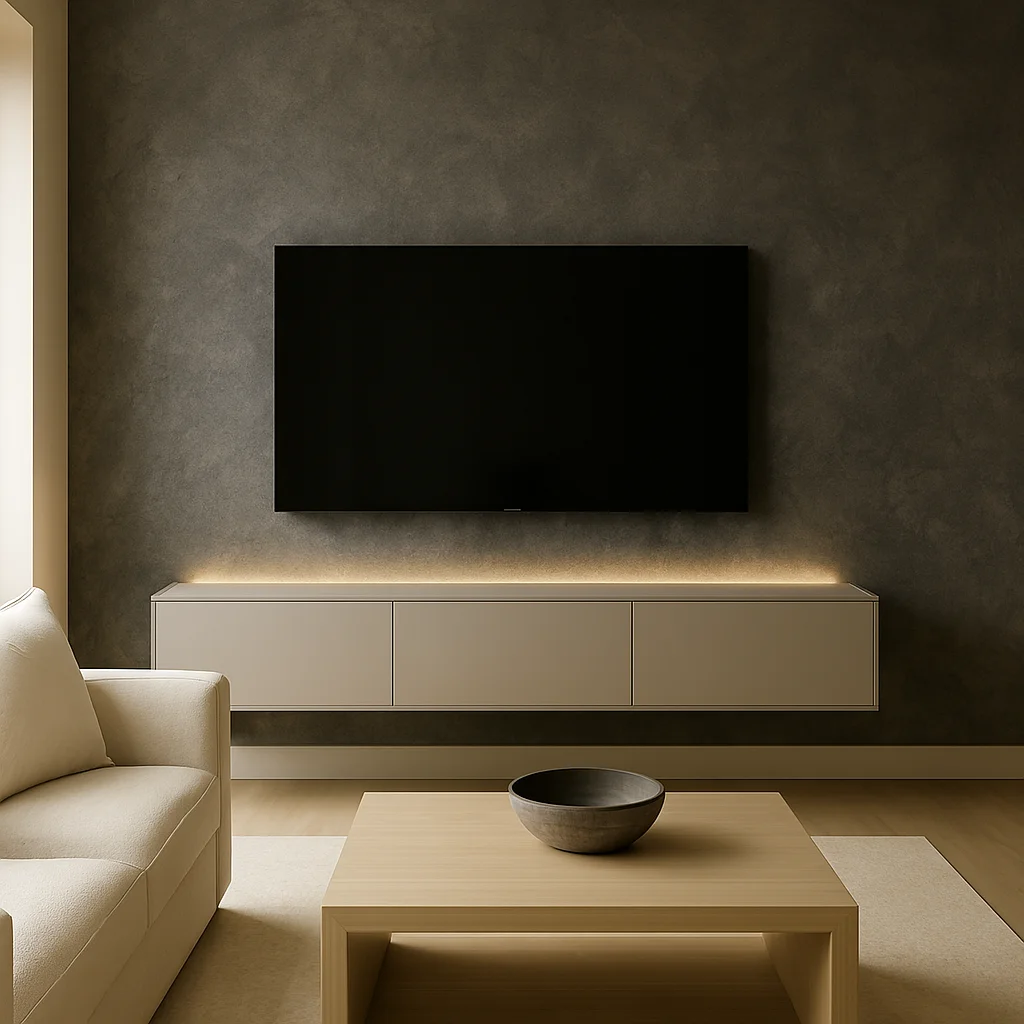
An accent wall TV design turns the TV area into a visual highlight. This can be achieved using textured paint, wallpaper, stone cladding, or patterned panels.
The key is to choose a material or color that contrasts with the rest of the room while still complementing it. Accent walls work best when the rest of the living room décor is kept relatively simple, allowing the TV wall to shine.
This design is ideal for homeowners who want a bold yet controlled statement without overwhelming the space.
6. TV Design with Open Shelving
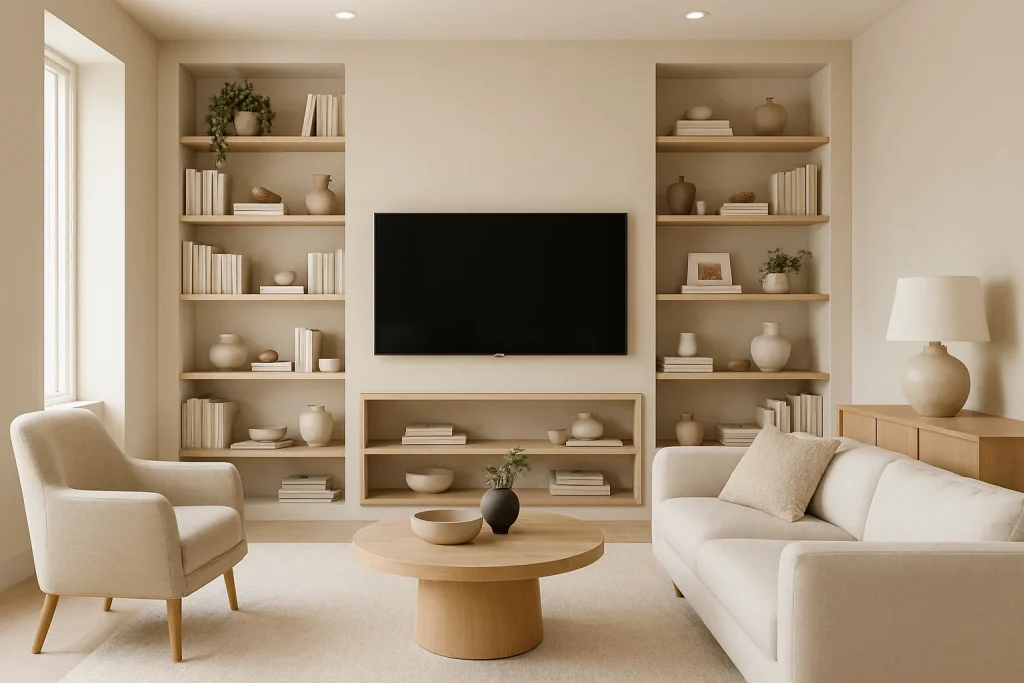
Open shelving around the TV adds personality and flexibility to the living room. Shelves can be used to display books, artwork, plants, or decorative objects, making the TV area feel more lived-in and expressive.
This design works well in casual or eclectic interiors. However, it requires thoughtful styling to avoid visual clutter. Keeping a consistent color palette and spacing items evenly helps maintain balance.
Open shelving TV designs are perfect for those who enjoy regularly updating their décor.
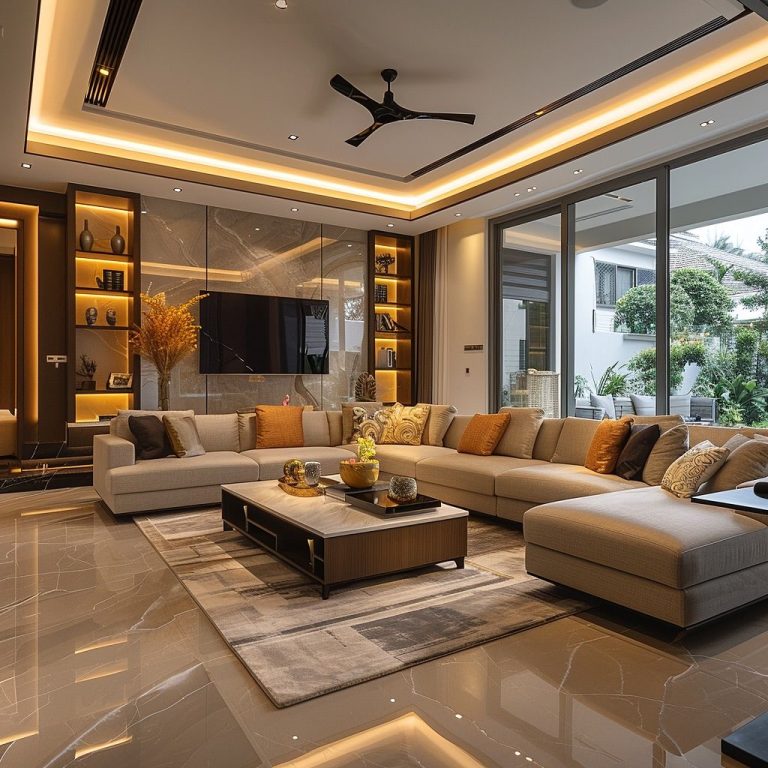
7. Luxury Marble or Stone TV Wall

For a high-end, sophisticated look, marble or stone-effect TV walls are a stunning choice. These materials add natural texture and elegance, instantly elevating the living room.
Stone TV walls work best in larger spaces where the material has room to breathe. Pairing them with neutral furniture and warm lighting prevents the space from feeling cold or overly formal.
This design is ideal for luxury homes or anyone looking to create a statement focal point with minimal décor.
8. Small Living Room TV Design Solutions

Designing a TV area for a small living room requires careful planning. The goal is to save space while maintaining comfort and style.
Wall-mounted TVs combined with slim floating units are the most practical solution. Light colors, glossy finishes, and minimal décor help reflect light and create a sense of openness.
Avoid bulky cabinets or oversized units, and focus on clean lines and multifunctional furniture to keep the space feeling uncluttered.
9. TV Design for Open-Plan Living Rooms

Open-plan living rooms often connect to dining or kitchen areas, making TV placement more challenging. The TV design must blend seamlessly with the rest of the space without disrupting flow.
Using a media unit as a subtle divider or designing the TV wall with cohesive materials helps maintain visual continuity. Neutral colors and simple finishes work best in open layouts.
The key is to define the TV area without fully separating it from the rest of the room.
10. Cozy TV Design with Soft Lighting

A cozy TV design focuses on comfort, warmth, and ambiance. Soft lighting plays a crucial role here, with LED backlighting behind the TV or warm wall sconces enhancing the atmosphere.
This style often incorporates textured materials, warm wood tones, and comfortable seating. The TV becomes part of a relaxing environment rather than the sole focus.
Cozy TV designs are perfect for homes that prioritize comfort and everyday living over formal aesthetics.
11. Traditional Living Room TV Design
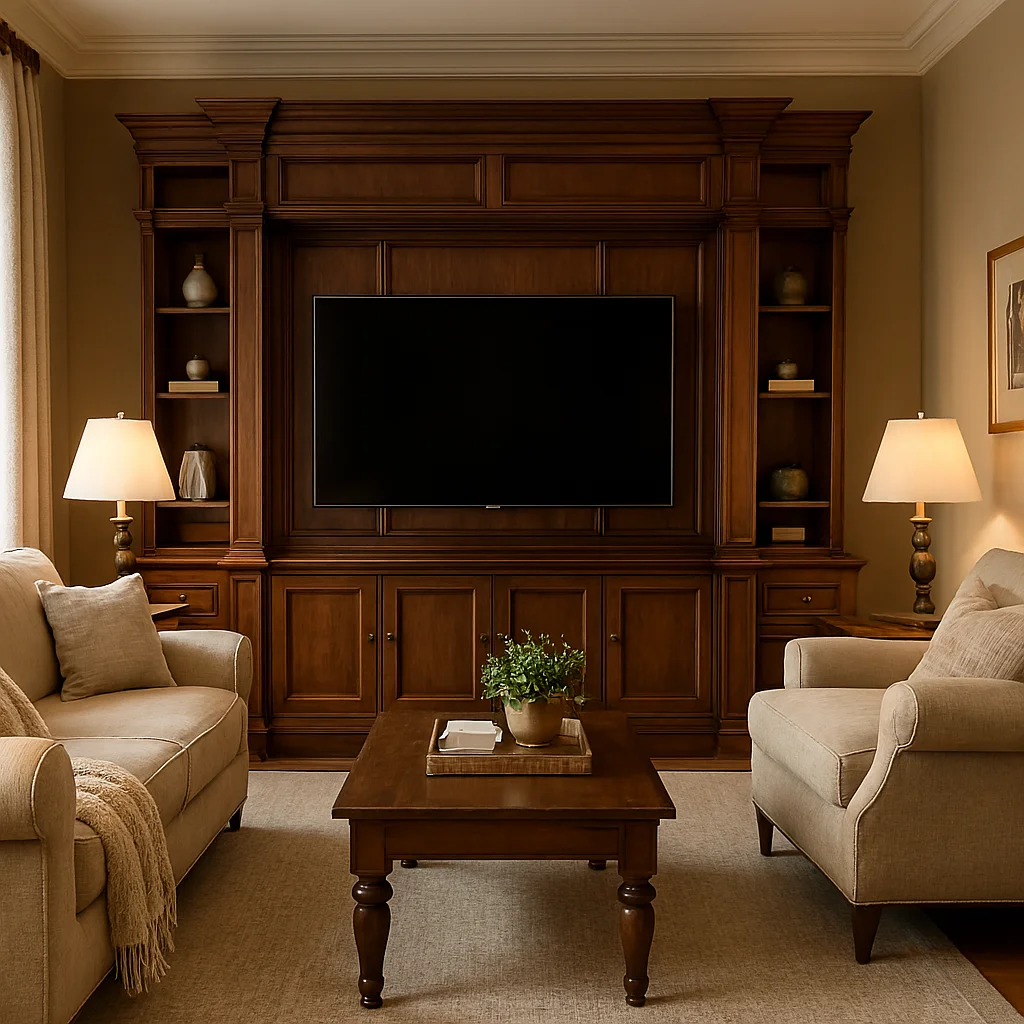
Traditional TV designs emphasize classic materials, symmetrical layouts, and detailed craftsmanship. Rich wood finishes, paneled cabinets, and decorative molding are common features.
In traditional interiors, the TV is often integrated into a cabinet or framed within a larger unit, helping it blend with the room’s timeless style.
This design works well in homes with classic furniture, warm color palettes, and a more formal layout.
12. Smart and Functional TV Design

Modern living rooms often require smart solutions that combine technology with design. Smart TV designs integrate sound systems, gaming consoles, and cable management seamlessly.
Hidden wiring, built-in speakers, and dedicated compartments for devices keep the space organized. Acoustic considerations, such as panel placement and furniture arrangement, enhance the overall viewing experience.
This design is ideal for tech-savvy households that value both performance and aesthetics.
Lighting Tips for TV Areas
Lighting plays a critical role in TV design. Poor lighting can cause glare or eye strain, while thoughtful lighting enhances both comfort and style.
Backlighting the TV reduces contrast between the screen and the wall, making viewing more comfortable. Recessed ceiling lights or adjustable spotlights can highlight the TV wall without reflecting on the screen.
Balancing functional and ambient lighting ensures the TV area feels inviting at all times of day.
Styling the TV Wall Without Clutter
Decorating around the TV requires balance. Too much décor can distract from the screen, while too little can make the wall feel empty.
Choose a few meaningful pieces such as framed art, sculptural objects, or plants—and arrange them thoughtfully. Keeping décor proportional to the TV size helps maintain visual harmony.
The goal is to complement the TV, not compete with it.
Common Mistakes to Avoid
Many living room TV designs fall short due to a few common mistakes. Mounting the TV too high can cause discomfort, while ignoring cable management disrupts the visual appeal.
Choosing a unit that’s too large or too small for the wall can throw off proportions. Overloading shelves with décor or failing to consider lighting are also frequent issues.
Being mindful of these pitfalls helps ensure your TV design remains functional and visually pleasing.
Final Thoughts
Designing a living room TV area is about more than just placing a screen on a wall. It’s about creating a balanced, comfortable, and stylish space that supports how you live and relax.
From minimalist wall-mounted setups to luxurious stone feature walls and cozy, light-filled designs, there’s a TV solution for every home and lifestyle. By considering layout, materials, lighting, and storage, you can transform your TV area into a cohesive part of your living room design.
With these ideas as inspiration, your living room can become a space where technology and design work together creating a welcoming environment you’ll enjoy every day.