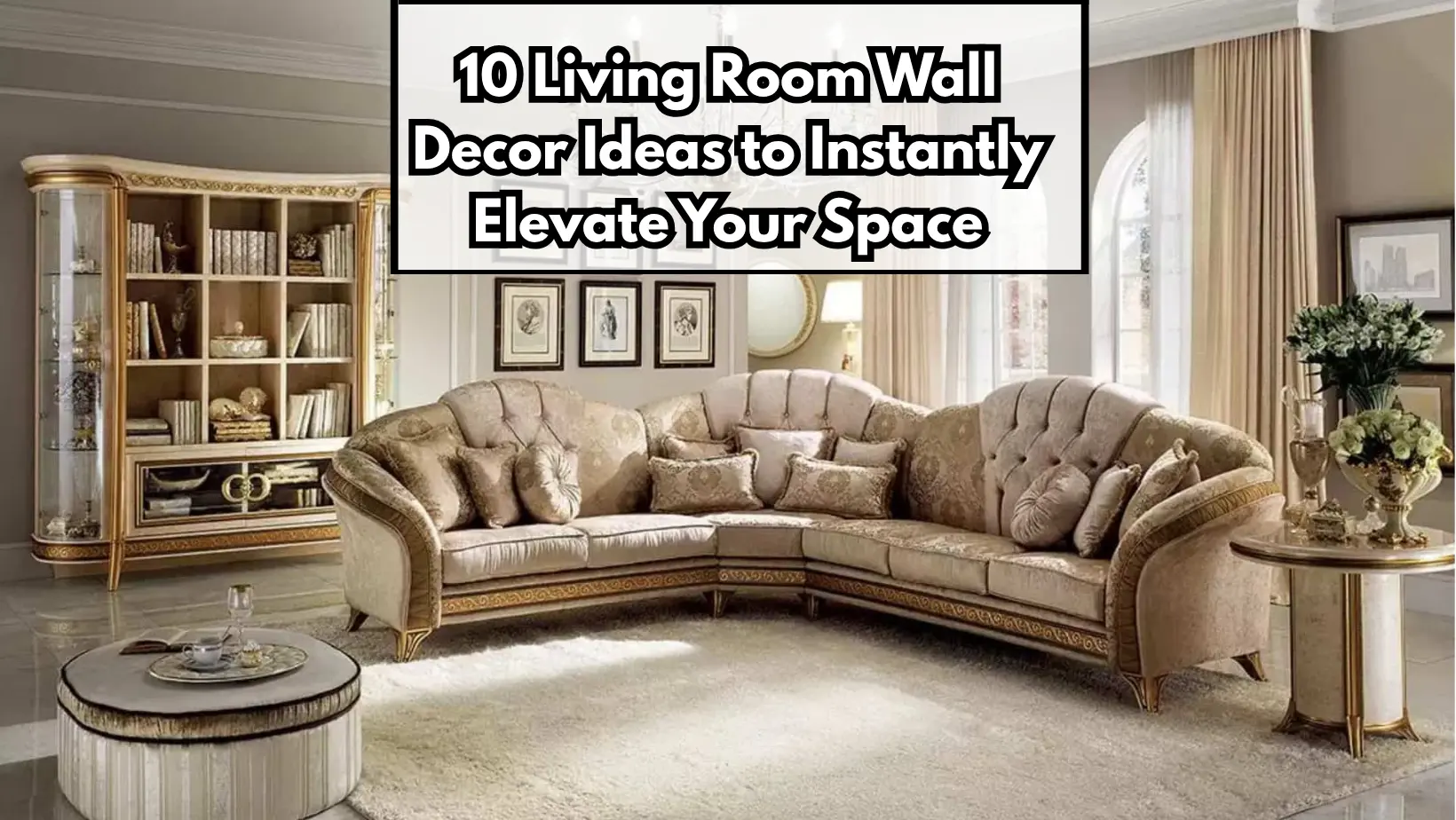
10 Living Room Wall Decor Ideas to Instantly Elevate Your Space
Your living room is the heart of your home the place where you relax after a long day, entertain guests, or cozy up with a good book. As such, it deserves décor that is both beautiful and meaningful. One of the simplest yet most transformative ways to uplift the room’s aesthetics is by thoughtfully decorating the walls.
In this post, I’ll walk you through 10 living room wall decor ideas that can bring personality, balance, and visual interest to your space. Whether your style is minimalist, bohemian, classic, or modern, there’s something here for you.
1. Gallery Wall with Mixed Art & Photos
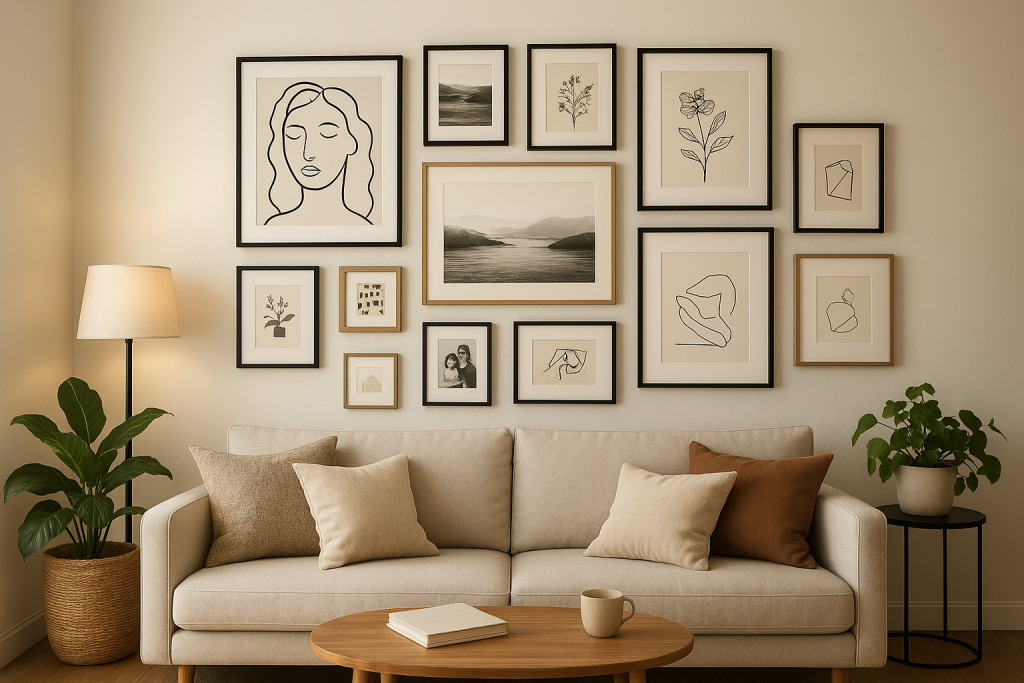
A gallery wall is a classic choice, and one that gives you great flexibility.
- Concept: Combine framed prints, photos, illustrations, and even three-dimensional pieces (like shadow boxes or small mounted objects) in an arrangement.
- Tips:
- Stick with a unifying element, such as consistent frames (same color or material) or a common theme (black-and-white photography, botanical prints, etc.)
- Lay out the arrangement on the floor first, or tape kraft paper templates on the wall to test positioning.
- Leave uniform spacing between each frame (e.g. 2–3 inches) to keep things cohesive.
- Why it works: A gallery wall becomes a personal statement displaying memories, art, and style in one curated ensemble.
You can use the phrase 10 living room wall decor ideas here by saying: When planning your gallery wall, keep in mind the overarching goal of the blog one of the best of the 10 living room wall decor ideas is mixing multiple framed pieces to tell a story.
2. Oversized Single Artwork or Statement Piece
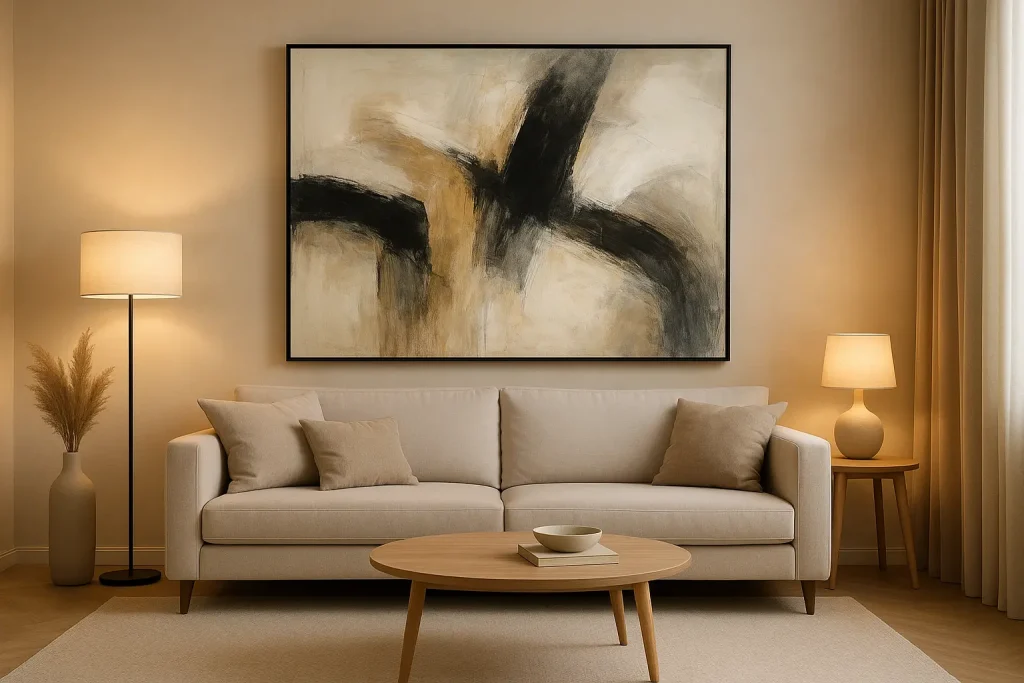
Sometimes less is more. A single dramatic piece can command attention and simplify décor choices.
- Concept: Hang one large painting, print, or tapestry as the focal point of the wall.
- Tips:
- Sticker to the “two-thirds rule”: the artwork should take up roughly two-thirds the width of the furniture beneath it.
- Mount it at eye level the center of the piece should ideally be around 57–60 inches from the floor (adjusted depending on ceiling height and furniture).
- If the artwork is too large, consider floating shelf ledges to support it from below.
- Why it works: It delivers punch without overwhelming the space. It simplifies the visual flow and helps anchor the room.
3. Accent Wall with Textured Materials
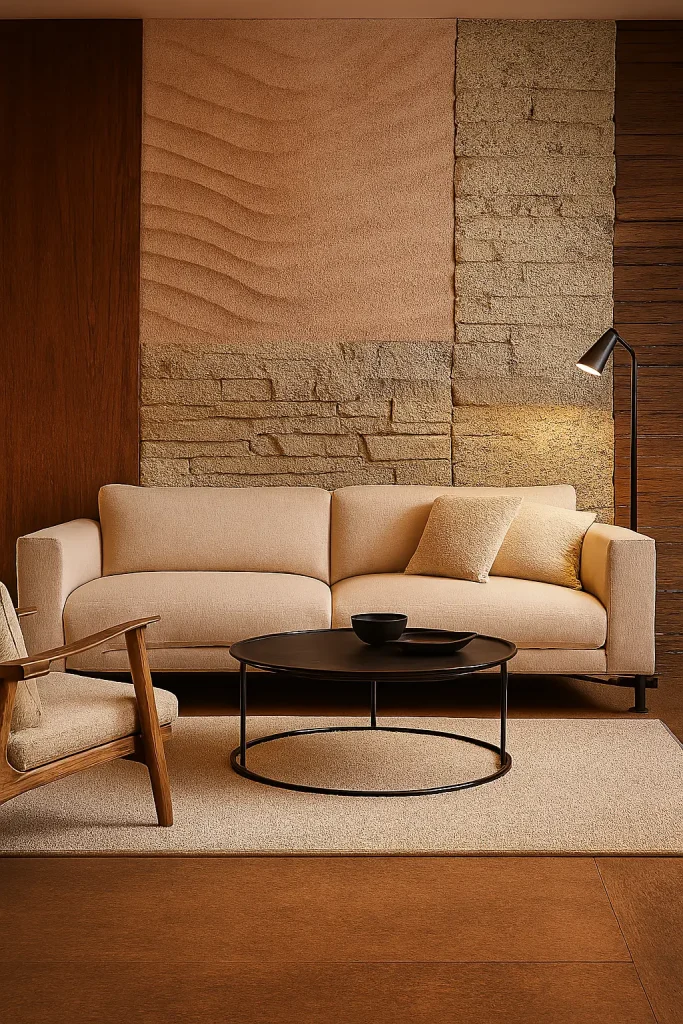
Adding texture to one wall can shift the entire ambiance of your living room.
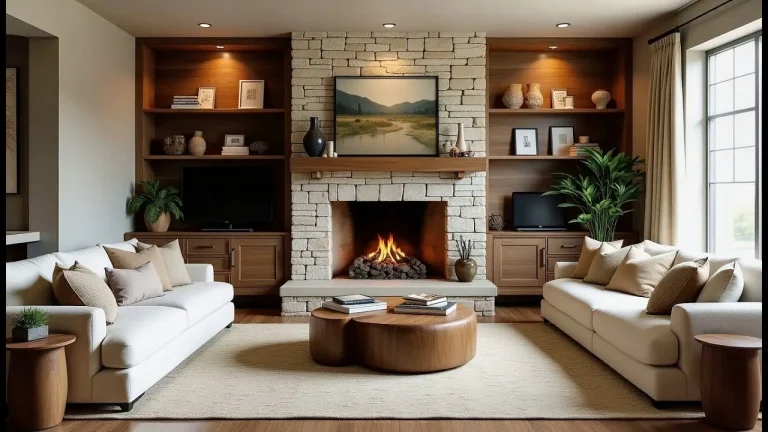
- Concept: Use materials like wood slats, shiplap, brick veneer, stone, textured wallpaper, or even woven wall hangings to create an accent wall.
- Tips:
- Choose a wall that already draws attention (for instance, the one behind the sofa or fireplace).
- Keep the color palette of the textured materials in harmony with the rest of the room don’t let it clash.
- Illuminate texture with directional lighting (picture lights, recessed fixtures) to maximize shadows and interest.
- Why it works: Texture adds depth and dimension without relying on color contrast alone. It’s tactile and visually rich.
4. Wall Mirrors for Light & Space Amplification
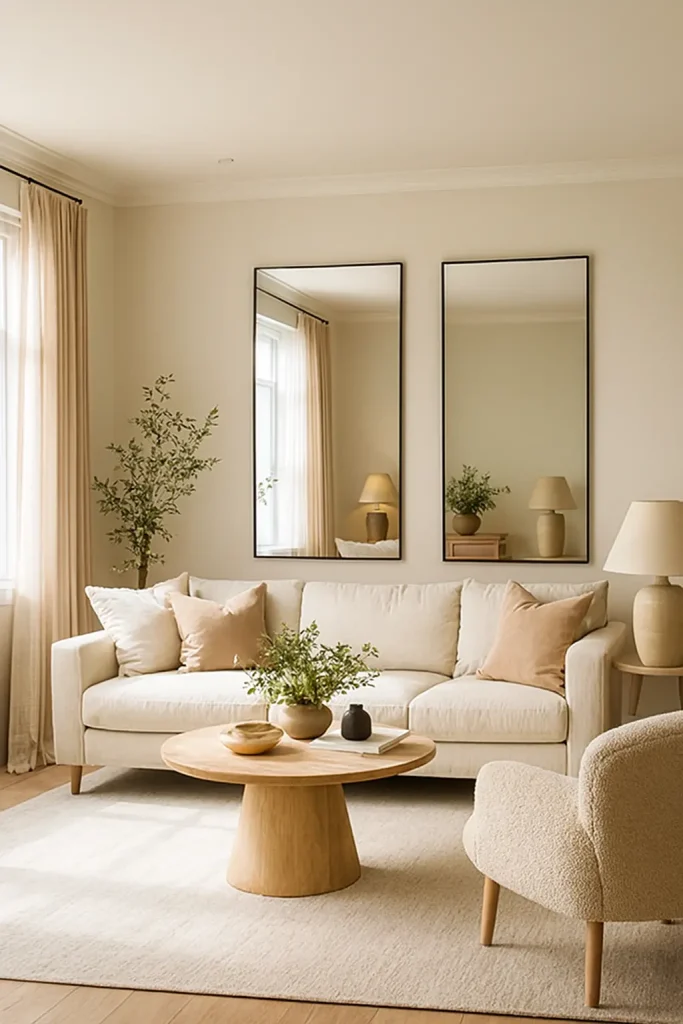
Mirrors are classic design tools for creating the sense of more space and increased light especially useful for smaller or darker living rooms.
- Concept: Install large decorative mirrors, mirror clusters, or one oversized mirror as a statement.
- Tips:
- Place mirrors opposite windows to reflect outdoor light deeper into the room.
- Use interesting frames (ornate, metallic, carved, or geometric) to treat the mirror as décor.
- If using multiple mirrors, cluster them in shapes or patterns (grid, radial, etc.)
- Why it works: Mirrors make a space feel bigger and brighter while doubling as decorative elements.
5. Wall Shelves & Floating Ledges
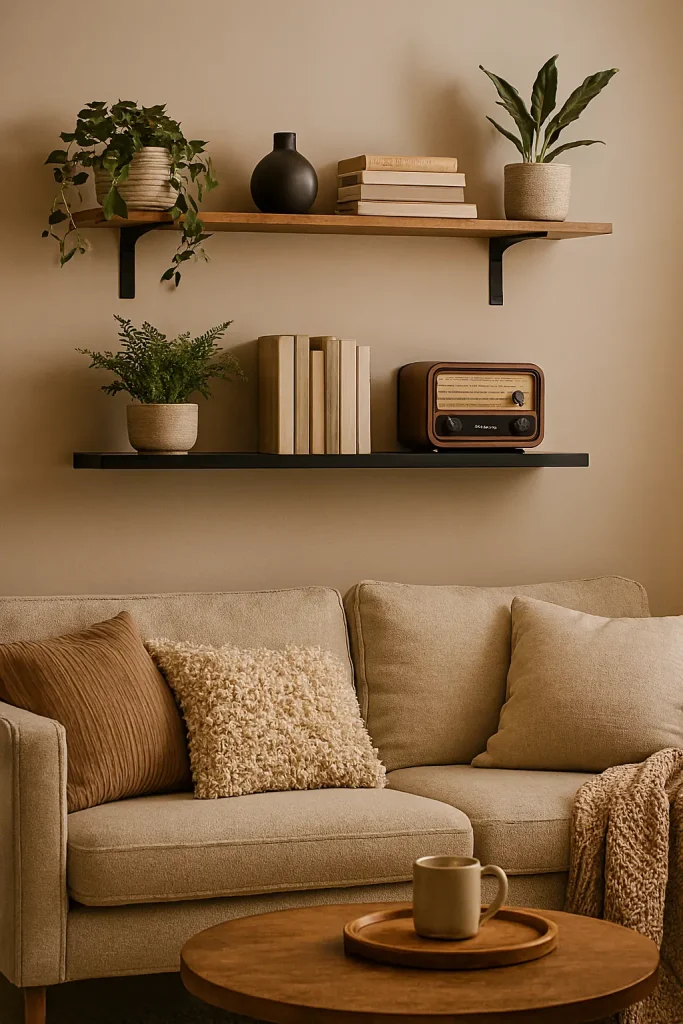
Shelves aren’t just functional they can be beautiful displays in their own right.
- Concept: Use floating shelves, picture ledges, or staggered shelves to display art, plants, books, collectibles, and small décor items.
- Tips:
- Keep shelf arrangements visually balanced: height variation, a mix of objects, negative space.
- Avoid overloading shelves; leave breathing room.
- Use the same material or finish as your room’s furniture or accent pieces for cohesion.
- Why it works: You combine utility (storage/display) with decorative opportunity, and shelves break up a blank wall effectively.
6. Wall Decals, Stickers & Murals
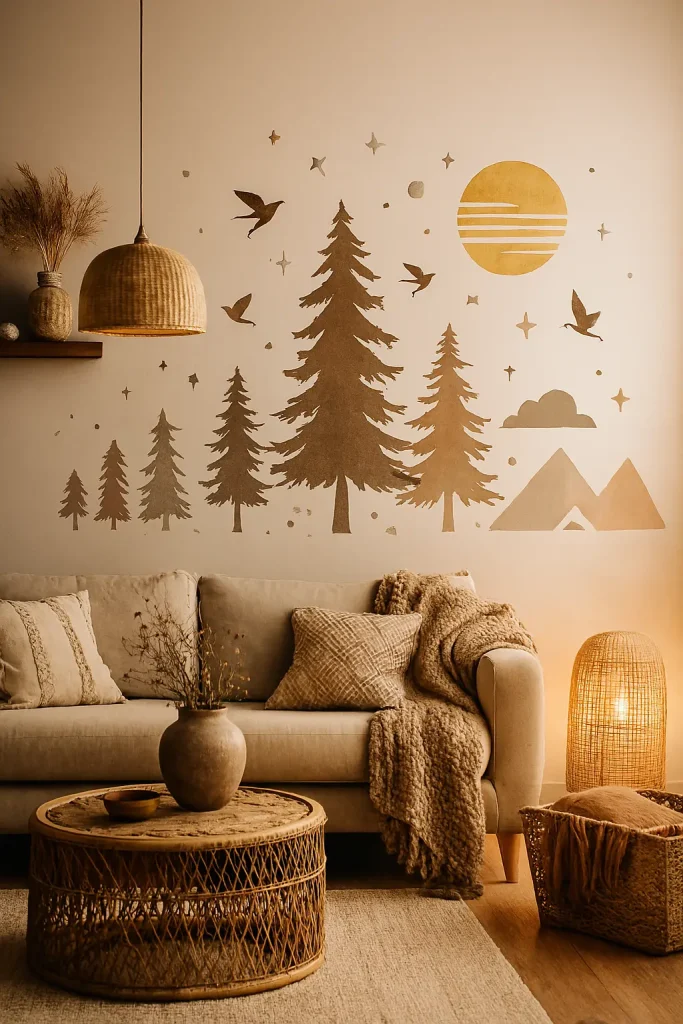
For renters or for a less permanent solution, wall decals or murals are an elegant alternative.
- Concept: Use vinyl wall decals, removable stickers, or even a painted mural for an artistic touch.
- Tips:
- Choose decals in neutral or accent colors that play off your room’s palette.
- Place decals at seated eye level they should be visible from a couch or chair.
- For murals, work with an artist or stencil kit to maintain proportions and visual flow.
- Why it works: They’re easy to install and switch out, and they offer bold visual statements at relatively low commitment.
7. Sculptural & 3D Wall Art
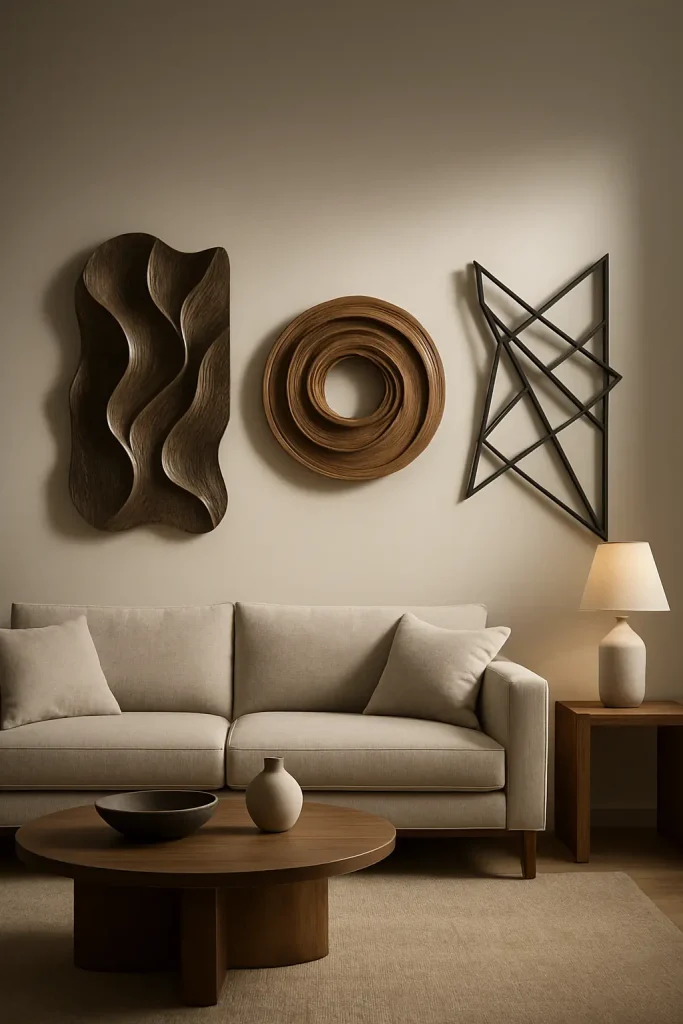
Bring in three-dimensional forms to stand out from flat decorations.
- Concept: Hang sculptures, metal art, woven baskets, ceramic platters, or other objects that project outward from the wall.
- Tips:
- Combine with accent lighting (spotlights, picture lights) to highlight shapes and shadows.
- Group smaller 3D pieces into clusters for visual density.
- Make sure wall anchors support the weight especially for heavier items.
- Why it works: It adds immediacy and physical depth. The shadows and structure create a dynamic interplay.
8. Indoor Plants & Greenery on the Wall
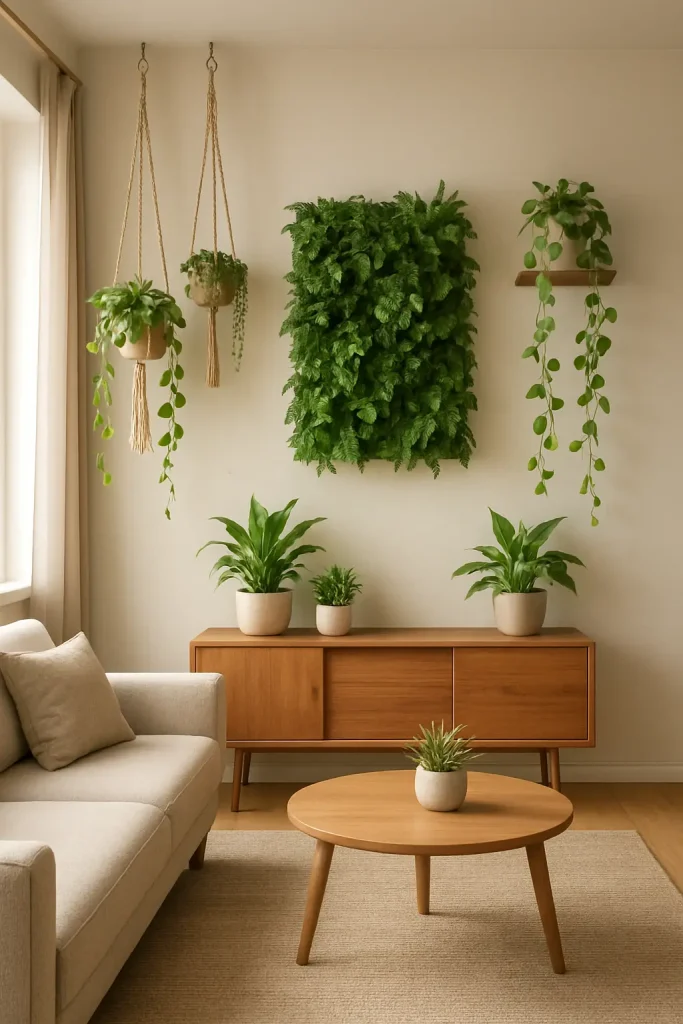
Plants are living decor, and mounting them can connect your interior to nature.
- Concept: Vertical planters, wall-mounted pots, macramé hangers, or living walls (moss panels, succulents) applied to walls.
- Tips:
- Choose plants suited to indoor light conditions (e.g. trailing pothos, ferns, small succulents).
- Use drip trays or waterproof backings to protect walls.
- Combine with other elements (shelves, artwork) for variety and layering.
- Why it works: Brings life, freshness, and texture. Greenery also improves mood and air quality.
9. Statement Wall Clock or Oversized Décor Piece
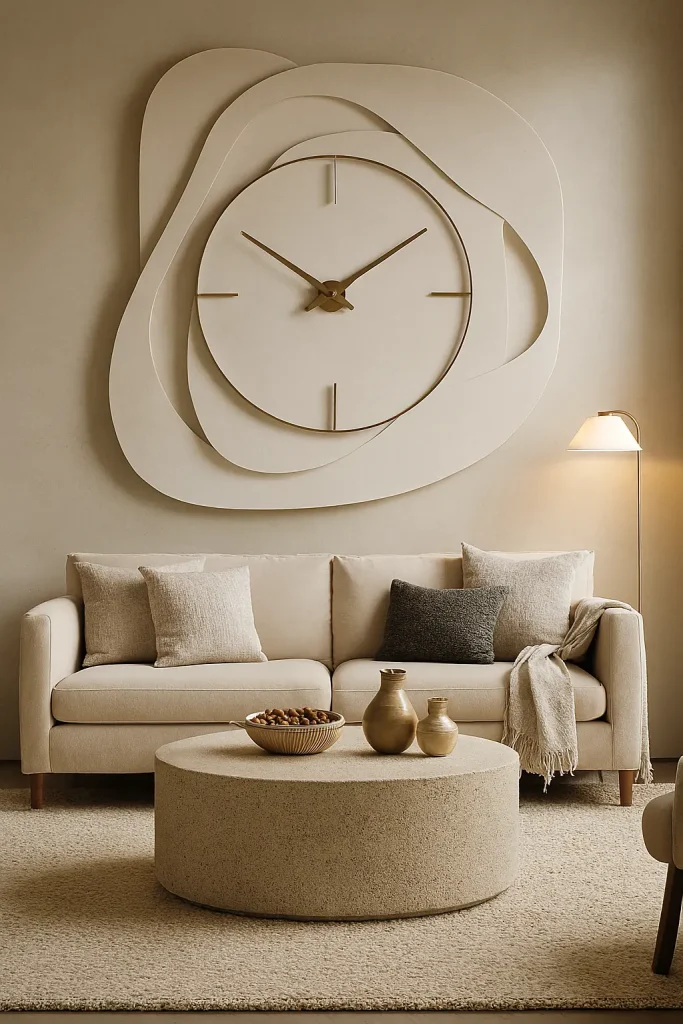
A large clock or a bold decorative object can act as both functional décor and focal point.
- Concept: Use a wall clock whose diameter is proportionally large relative to the wall or a singular bold piece (like a sunburst mirror, oversized metal medallion, or framed textile).
- Tips:
- The timepiece should be easily readable from various seating angles.
- Coordinate the material (metal, wood, brass) to tie in with other accents (lighting, hardware, furniture).
- Avoid too much clutter around the statement piece so it remains the visual anchor.
- Why it works: It fuses usefulness and artistry, making your wall both practical and chic.
10. Mixed Media & Layering
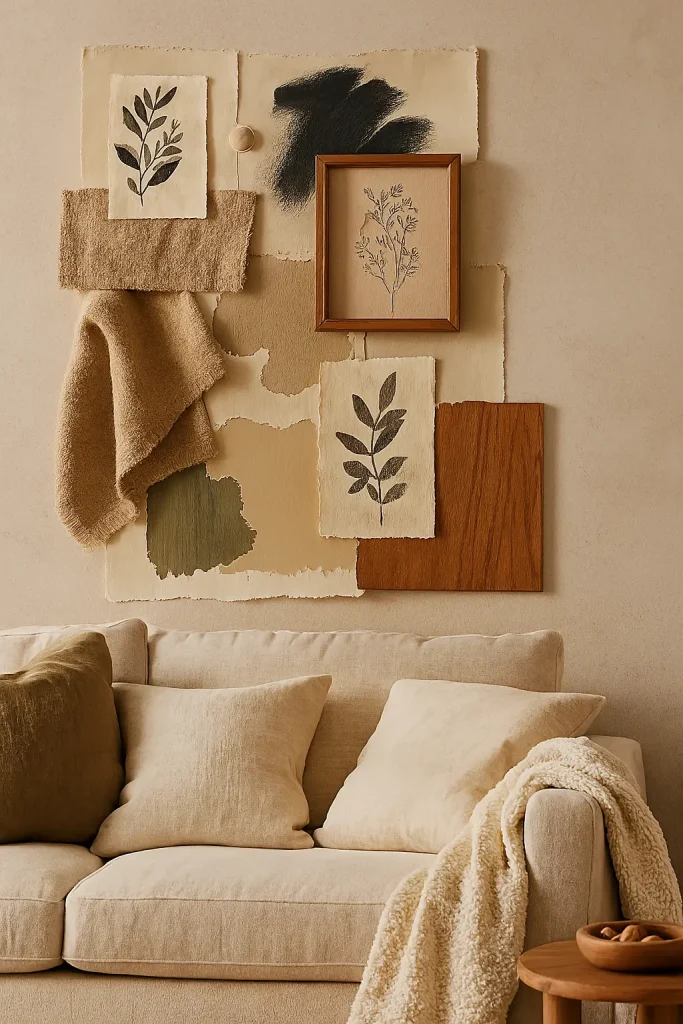
The final idea is a hybrid approach mixing frames, mirrors, plants, sculptures, and other elements to create a layered composition.
- Concept: Don’t restrict yourself to one medium combine paintings, shelves, mirrors, woven elements, and 3D objects in a cohesive layout.
- Tips:
- Start with your largest “anchor” piece and build outward.
- Use symmetry or asymmetry intentionally (mirrored clusters on both sides, or a cascading offset for organic flow).
- Repeat certain colors, materials, or shapes across media for continuity.
- Maintain negative space so the wall doesn’t read as cluttered.
- Why it works: This approach feels bespoke and unique it allows your personality to shine through in a layered, rich presentation.
How to Choose the Right Wall Decor Style for Your Living Room
Now that you have 10 living room wall decor ideas under your belt, how do you select which approach is right for your space? Here are some guiding principles:
1. Understand Your Room’s Layout & Focal Points
Identify where your eye is drawn: the sofa wall, the fireplace wall, or opposite a window? Choose that wall for your most dramatic piece (e.g. oversized art, accent texture).
2. Consider Lighting Conditions
If your room lacks natural light, mirrors and lighter decor reflect brightness back into the room. Meanwhile, textured and dimensional art benefit from directional lighting to enhance shadows.
3. Establish a Color & Material Palette
Pick two or three primary materials (wood, metal, ceramics) and tie them into your wall decor so your pieces feel cohesive rather than random.
4. Pick One Hero Piece + Supporting Elements
Even with a gallery or mixed-media wall, it’s best to anchor the composition with one defining piece then scale subsidiary pieces accordingly.
5. Keep Scale & Proportion in Mind
Small décor on a large wall looks lost. Oversized work on a small wall feels cramped. Measure carefully and leave space for breathing room.
6. Embrace Negative Space
Walls need visual rest. Avoid turning your space into a museum wall. Let elements “float” leave blank zones that give the eye room to move.
7. Mix Soft & Hard Elements
Break up rigid frames and geometry with organic shapes (plants, woven hangings), and balance soft décor with structured pieces. This creates visual harmony.
8. Change With Seasons or Moods
The beauty of many of these ideas (gallery walls, shelves, decals) is that they’re flexible. Swap out art seasonally, change accent plants, or re-arrange as your tastes evolve.
Practical Installation Tips & Tools
To successfully bring any of the above ideas to life, here are some practical tips:
- Use painter’s tape: Marking out widths or frame outlines on walls helps you visualize spacing.
- Level & center: Use a laser level or a normal level to ensure horizontals stay straight.
- Use proper hardware: Drywall anchors, masonry screws, or wall studs always use anchors rated to support the weight.
- Start at eye level: As a rule of thumb, aim the center of art or main pieces at 57–60 inches from the floor (unless ceilings are very low or very high).
- Test layouts first: Lay frames on the floor or on a large sheet of paper, then reposition before drilling into your walls.
- Plan for cords/fixtures: If decorative lighting or plants need electrical or watering access, map that in advance.
Before and After: Visualizing the Transformation
Imagine a bare wall behind your sofa flat, blank, and uninspiring. Now apply Idea #3: add a painted wood slat accent wall in a warm walnut finish, and mount Idea #2: a single dramatic abstract painting in white, black, and gold tones. Flank that with Idea #4: slim vertical mirrors on either side to bounce light. Then sprinkle Idea #5: two floating shelves below, with plants and ceramics, and Idea #9: an oversized modern metal clock tucked into one corner. The result: a rich, layered wall that feels intentional, balanced, and stylish.
You could also strip it back: overlay Idea #10 by combining a framed print, a small metal sculpture, and a trailing planter on the same wall, all tied together with harmonized tones still striking, but lighter in scale.
Common Mistakes to Avoid
When experimenting with wall decor, here are pitfalls to watch out for:
- Overcrowding: Don’t cram every inch of the wall. Leaving breathing space makes your pieces more powerful.
- Too much contrast: If every item competes (bold colors, loud shapes), the wall becomes chaotic.
- Ignoring scale: Small art on big walls or vice versa can look awkward.
- Wrong hardware: Not securing heavier pieces properly risks damage.
- Lack of cohesion: Random pieces with no color/theme connection look like leftovers, not a designed composition.
- Hanging too high: Art hung far above furniture becomes detached from the room’s living zone.
Budget-Friendly vs Premium Options
You don’t have to spend a fortune to achieve stunning walls.
- Budget-Friendly:
- Use free or inexpensive prints from online sources, then frame them affordably.
- DIY your own gallery wall with thrifted frames.
- Use peel-and-stick wallpapers or decals (easy and inexpensive).
- Block out cheap wood slats or pallet planks for accent walls.
- Visit flea markets or local craft fairs for small sculptures or ceramics.
- Premium Options:
- Commission custom artwork or original paintings.
- Buy large-scale imported tapestries or woven pieces.
- Hire a muralist or wall artist for bespoke murals.
- Invest in custom metalwork or sculptural installations.
Even with budget pieces, you can elevate them by thoughtful placement, lighting, and balance.
Real-Life Examples & Inspiration
Here are a few real-world inspirations you could adapt:
- In a minimalist space, a monochromatic gallery wall of black and white photos above a low profile sofa offers serene elegance.
- In a mid-century modern room, an oversized sunburst metal sculpture (Idea #9) paired with a single abstract painting makes for dramatic flair.
- In a boho living room, a mix of woven wall hangings, macramé, potted wall planters, and framed botanical prints brings natural texture and color.
- In a modern/industrial loft, a brick accent wall (Idea #3) topped with a massive metal framed mirror (Idea #4) plus floating shelves (Idea #5) gives structure and openness.
Summary & Final Thoughts
Decorating your walls is among the best ways to breathe life into your living room. With these 10 living room wall decor ideas, you have a rich toolkit for transforming bare walls into compelling focal points. Choose one approach or combine several remember to maintain harmony, scale, and visual breathing room.
If you approach your wall decor thoughtfully starting with an anchor piece, considering your room’s light, and balancing textures the results will make your living room feel complete, curated, and deeply personal.