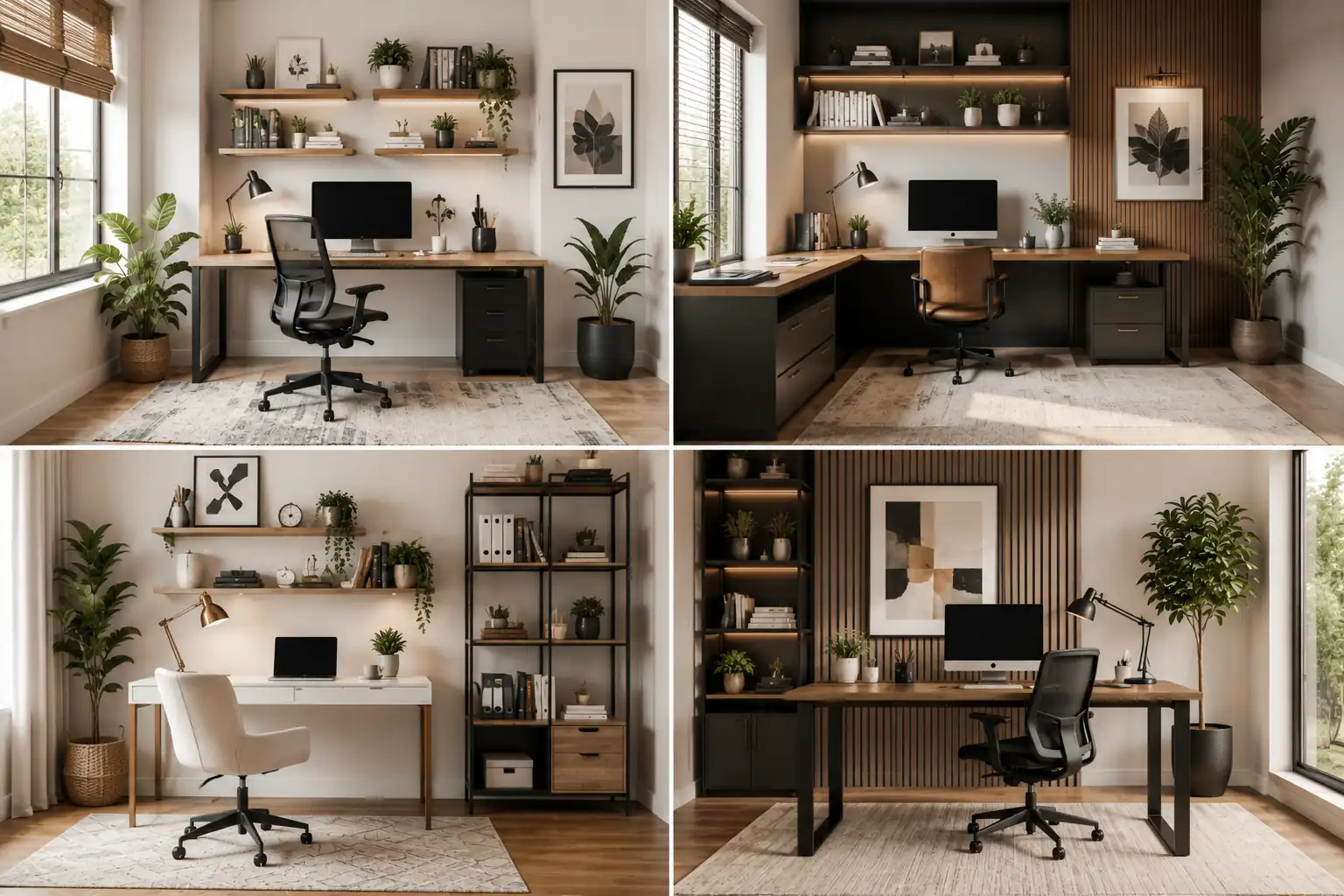
Working from home has become an important part of modern life, whether you run a business, work remotely, study, manage creative projects, or simply need a quiet place to organize your daily tasks. A well-designed home office can make a huge difference in how you work and how you feel throughout the day. The right combination of furniture, lighting, storage, colors, and personal touches can transform even a small corner into a functional and inspiring workspace.
If your current workspace feels cluttered, boring, or uncomfortable, it may be time for a refresh. You do not necessarily need a large room or an expensive renovation to create a beautiful office. With thoughtful planning, you can design a space that reflects your personality while supporting focus, creativity, and productivity.
In this guide, we are sharing 10 Home Office Ideas & Inspiration to help you create a workspace that feels organized, comfortable, and visually appealing. From minimalist desk setups and cozy corners to clever storage solutions and statement walls, these ideas can work in a variety of homes and interior styles.
1. Create a Minimalist Home Office
A minimalist home office is an excellent choice if you prefer a clean and peaceful environment. Too many objects, decorations, and piles of paperwork can make a workspace feel overwhelming. By keeping your desk simple and your storage organized, you can create an atmosphere that encourages concentration.
Start with a streamlined desk that offers enough space for your computer, notebook, and essential accessories. Choose a comfortable chair with a simple silhouette and avoid filling the desktop with unnecessary items. A small desk lamp, one decorative object, and a plant may be all you need to add personality.
Neutral colors such as white, beige, soft gray, warm taupe, and light wood can create a calming foundation. If you want a little contrast, introduce black metal accents through lighting, shelving, or desk accessories.
Wall-mounted shelves can provide storage without taking up valuable floor space. Use attractive boxes or baskets to hide items that you do not need every day. The goal is not to make the room completely empty but to ensure that every item has a purpose.
A minimalist office is especially useful for people who become distracted easily. When your surroundings are visually calm and organized, it can be easier to focus on the task in front of you.
2. Design a Cozy Home Office Corner
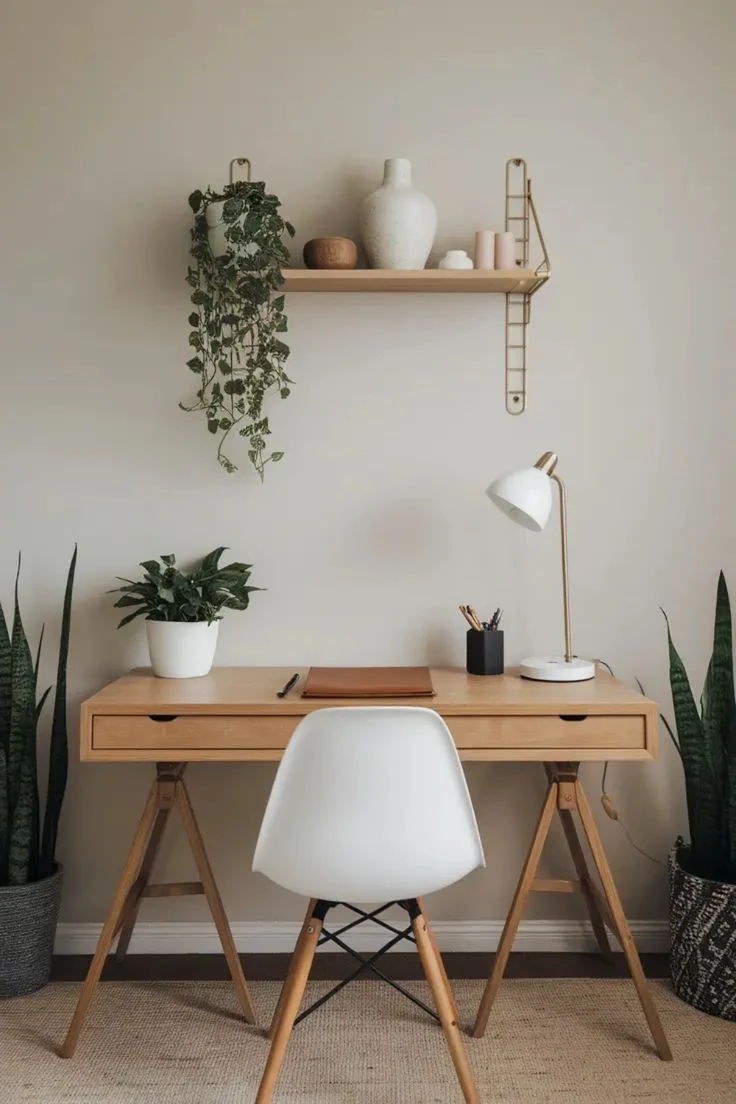
You do not need an entire room to create a productive workspace. An unused corner in your bedroom, living room, hallway, or guest room can become a charming home office with the right arrangement.
Look for an area near a window if possible. Natural light can make a small workspace feel brighter and more inviting. Place a compact desk against the wall and add a comfortable chair that fits the proportions of the space.
To make the corner feel cozy, incorporate warm textures. A small rug can visually define the workspace, while a soft cushion or upholstered chair can add comfort. Add a small plant, framed artwork, or a pinboard above the desk to personalize the area.
If you are working with limited space, choose furniture with built-in storage. A narrow desk with drawers can keep office supplies organized without making the area feel crowded. Floating desks are another smart option for extremely small spaces.
For a cohesive look, coordinate your office corner with the surrounding room. If your living room features warm wood and cream tones, use similar colors in your workspace. This helps the office feel intentionally designed rather than like an object placed randomly in the room.
3. Try a Warm and Inviting Color Palette
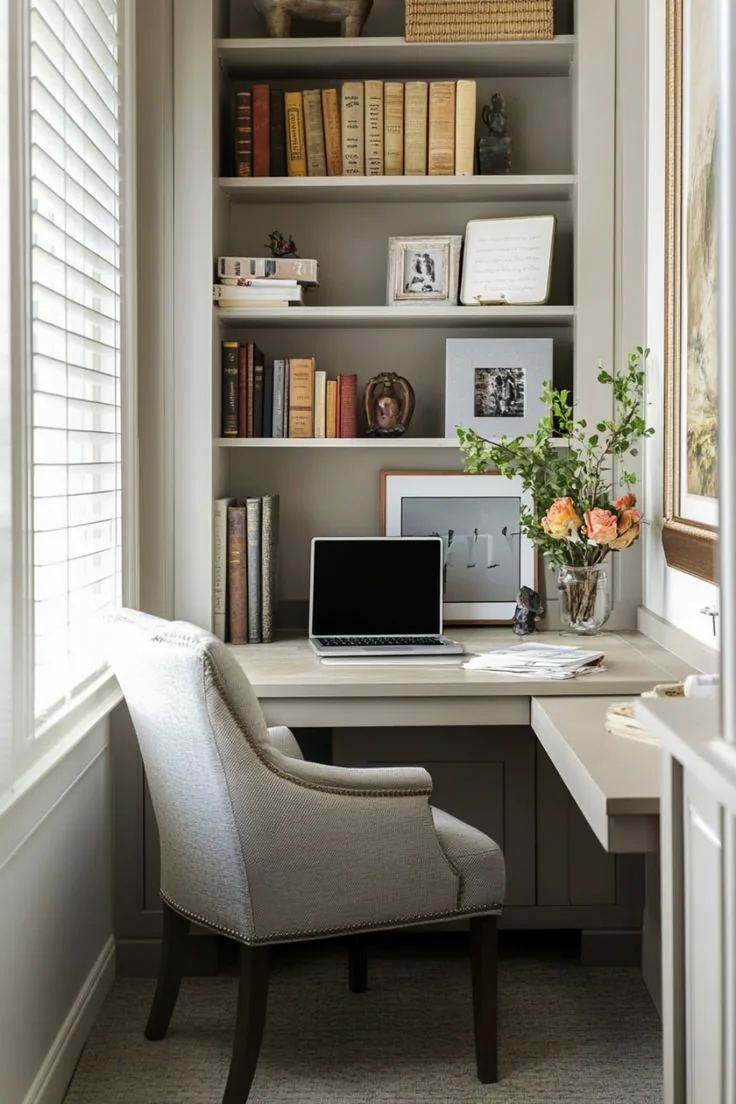
Color can dramatically influence the mood of your workspace. While bright white offices can feel fresh and modern, adding warmer tones can make the room feel more comfortable and welcoming.
Consider shades such as creamy white, warm beige, soft brown, muted sage, dusty blue, terracotta, or olive green. These colors can create a sophisticated backdrop without becoming distracting.
If you prefer a neutral office, use different textures to create depth. Pair a beige wall with a light oak desk, woven basket storage, linen curtains, and a textured rug. This layered approach prevents the room from feeling flat.
For a more dramatic look, consider painting one accent wall in a deeper shade. Charcoal gray, forest green, navy blue, or chocolate brown can create a sophisticated focal point behind your desk.
Wallpaper is another way to introduce personality. A subtle botanical print, geometric design, or textured wallpaper can make a statement without overwhelming the room.
Remember that your office should reflect how you want to feel while working. Soft neutrals can encourage calm, while deeper colors can create a cozy and sophisticated atmosphere. If you enjoy creative energy, consider adding small amounts of brighter colors through artwork and accessories.
4. Build a Stylish Home Office With Open Shelving
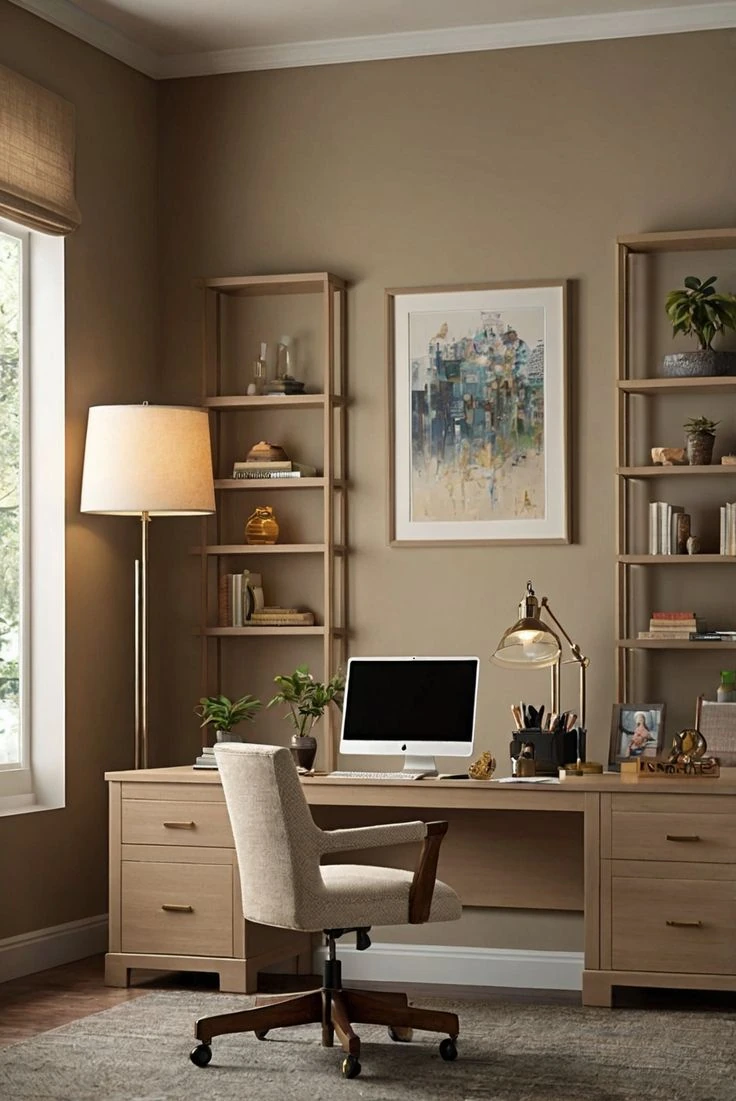
Open shelving is both practical and decorative, making it a popular choice for modern workspaces. It gives you easy access to books, documents, office supplies, and decorative items while creating an opportunity to display your personality.
Install two or three floating shelves above your desk to maximize vertical space. Arrange items in a balanced way instead of filling every inch. Mix practical storage with decorative pieces for a more curated appearance.
For example, you could place books in small stacks, add a ceramic vase, display a framed print, and use attractive storage boxes for smaller supplies. A trailing plant can also soften the straight lines of the shelves.
If you prefer a more organized appearance, use matching baskets or containers. This creates visual consistency and helps prevent open shelving from becoming cluttered.
Shelving can also be used to establish a specific design style. Light wood shelves work beautifully in Scandinavian and minimalist offices, while dark wood can add warmth to traditional or moody interiors. Black metal brackets can complement industrial spaces.
One important tip is to avoid overloading your shelves. Leave some empty space between objects so the overall arrangement feels intentional and breathable.
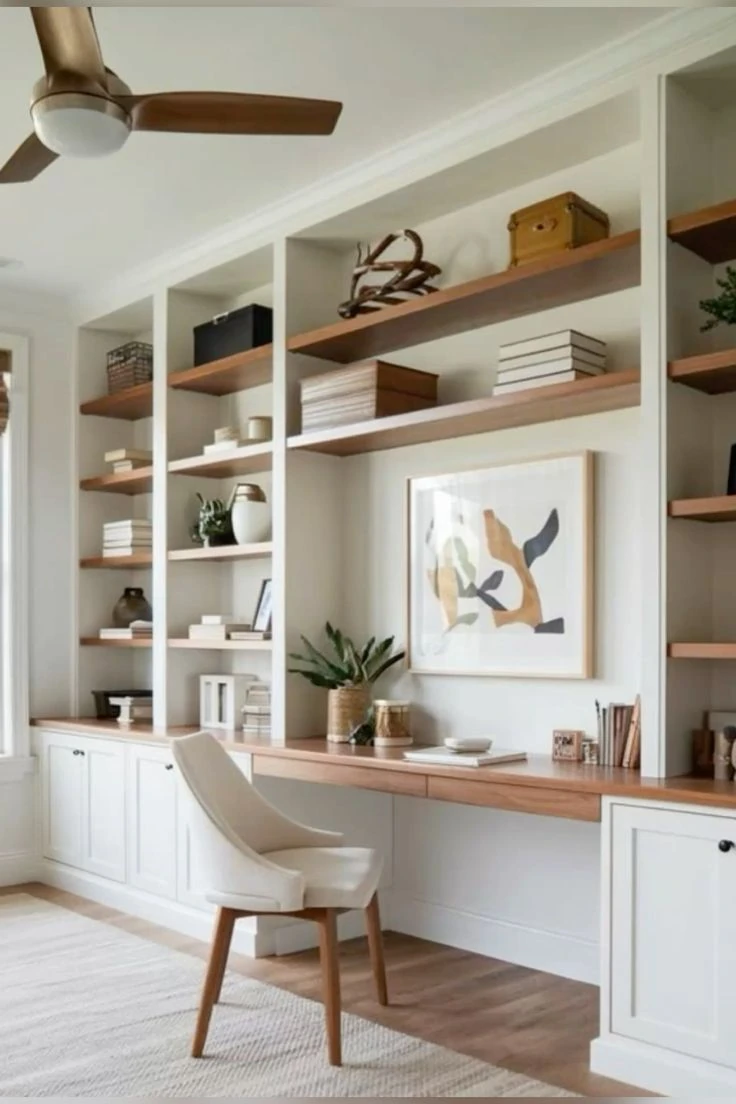
5. Add a Statement Wall Behind Your Desk
The wall behind your desk is one of the easiest areas to transform. Since it is often visible during video calls, creating an attractive background can make your workspace feel more polished.
One option is to create a gallery wall using framed artwork, photography, or inspirational prints. Choose frames in similar colors for a cohesive look, or mix different styles for a more eclectic atmosphere.
If you prefer a cleaner aesthetic, hang one oversized piece of artwork above your desk. A large abstract painting can instantly become the focal point of the room.
Wall molding is another sophisticated option. Simple rectangular molding painted in the same color as the wall can add architectural interest without being overly decorative. For a contemporary look, pair molding with a bold paint color.
A pegboard is perfect for people who need functional organization. You can use it to hang headphones, stationery, calendars, notes, and small accessories. Choose a wooden pegboard for a warm natural feel or a painted version to match your office palette.
If you frequently attend virtual meetings, keep the background visually balanced. Avoid placing too many distracting objects directly behind your chair. Instead, create a backdrop that looks organized and reflects your personal style.
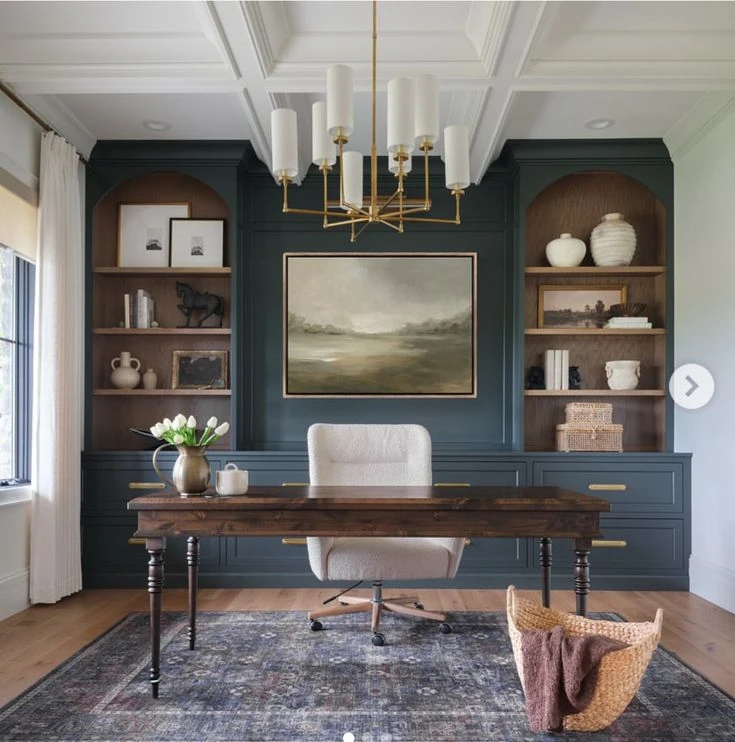
6. Choose the Right Desk and Comfortable Chair
A beautiful office is not truly successful if it is uncomfortable. Since you may spend several hours at your desk, choosing ergonomic furniture should be a priority.
Your desk should provide enough room for your computer and essential work materials without feeling oversized for the room. Measure your available space before purchasing furniture.
For small offices, a compact writing desk can be sufficient. If you need more workspace, consider an L-shaped desk or a larger rectangular desk. A standing desk can also be useful if you want the flexibility to alternate between sitting and standing.
Your chair is equally important. Look for one that provides adequate support and allows you to maintain a comfortable working posture. Adjustable height and proper back support can make long work sessions more comfortable.
Aesthetics matter, too. Fortunately, ergonomic chairs are available in a wide variety of designs. Choose one that complements your office rather than looking out of place.
If your style is more traditional, consider an upholstered office chair in a neutral fabric. For a modern workspace, a sleek task chair may work better. A wooden chair can look beautiful but may require an additional cushion for extended use.
Think of your desk and chair as the foundation of your workspace. Once these pieces are right, you can build the rest of the design around them.
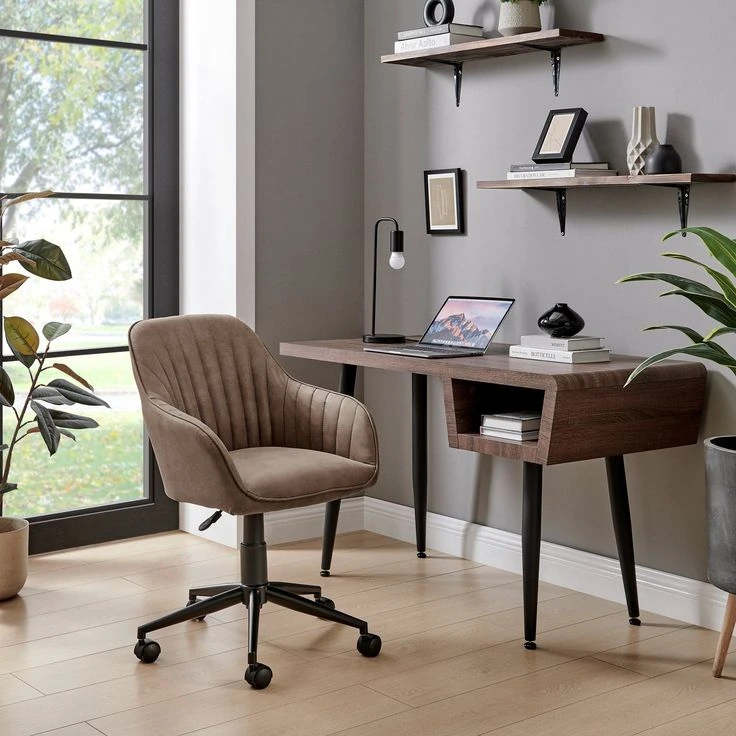
7. Bring Nature Into Your Workspace
Plants are an easy way to make a home office feel more alive. They introduce color, texture, and a natural element that can soften an otherwise technology-heavy environment.
If your office receives plenty of natural light, consider placing a larger plant beside your desk. A tall plant can fill an empty corner and add visual height to the room.
For smaller spaces, choose compact plants for shelves or desktops. If you do not have a green thumb, low-maintenance varieties or realistic artificial plants can provide a similar decorative effect.
You can also incorporate nature through botanical artwork, woven baskets, wood furniture, and natural fibers. These elements work particularly well in modern organic, Scandinavian, and bohemian-inspired offices.
Try placing a small plant next to your monitor or adding a hanging planter near a window. Just make sure plants do not interfere with your workspace or create unnecessary clutter.
Natural materials can also make the office feel warmer. A wooden desk paired with a woven basket and a linen curtain creates a relaxed environment that feels less corporate and more personal.
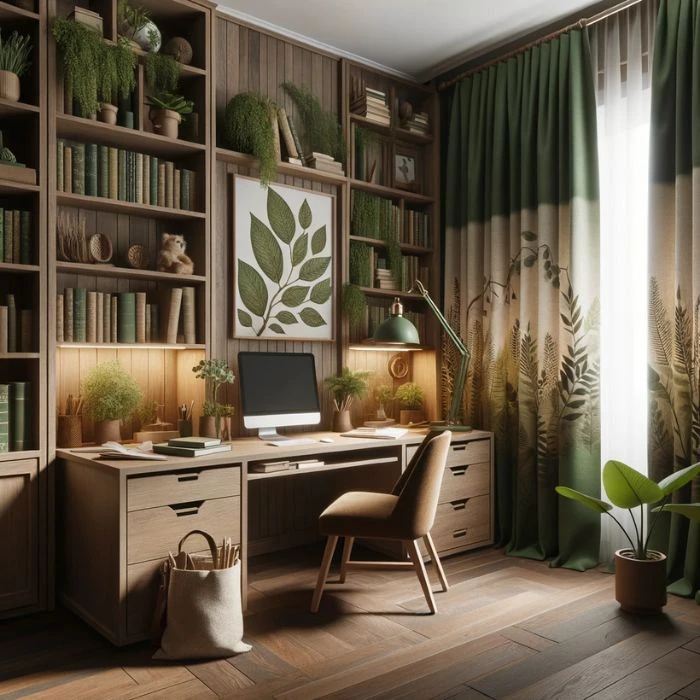
8. Make Small Home Office Ideas Work Harder
A small room can still become a highly functional office if every inch is used thoughtfully. The key is to prioritize furniture and storage that serve multiple purposes.
A floating desk is a great choice for a narrow wall. It provides a dedicated workspace while leaving the floor open, making the room feel larger.
Vertical storage is another excellent solution. Instead of spreading storage across the floor, install shelves that extend upward. Tall bookcases can hold office supplies, books, and decorative objects without using much floor space.
Consider furniture that can be folded away when your workday ends. A wall-mounted desk can function as a workspace during the day and disappear visually when closed.
If your office is located in a bedroom or living room, use furniture to create a visual boundary. A bookcase can separate the workspace from the rest of the room while providing valuable storage.
Mirrors can also make small offices appear brighter and more spacious. Place one near a window to reflect natural light throughout the room.
The most important principle is to avoid overcrowding. A small office should contain only what you genuinely need. When you have less space, thoughtful organization becomes even more important.
9. Create a Creative and Personalized Workspace
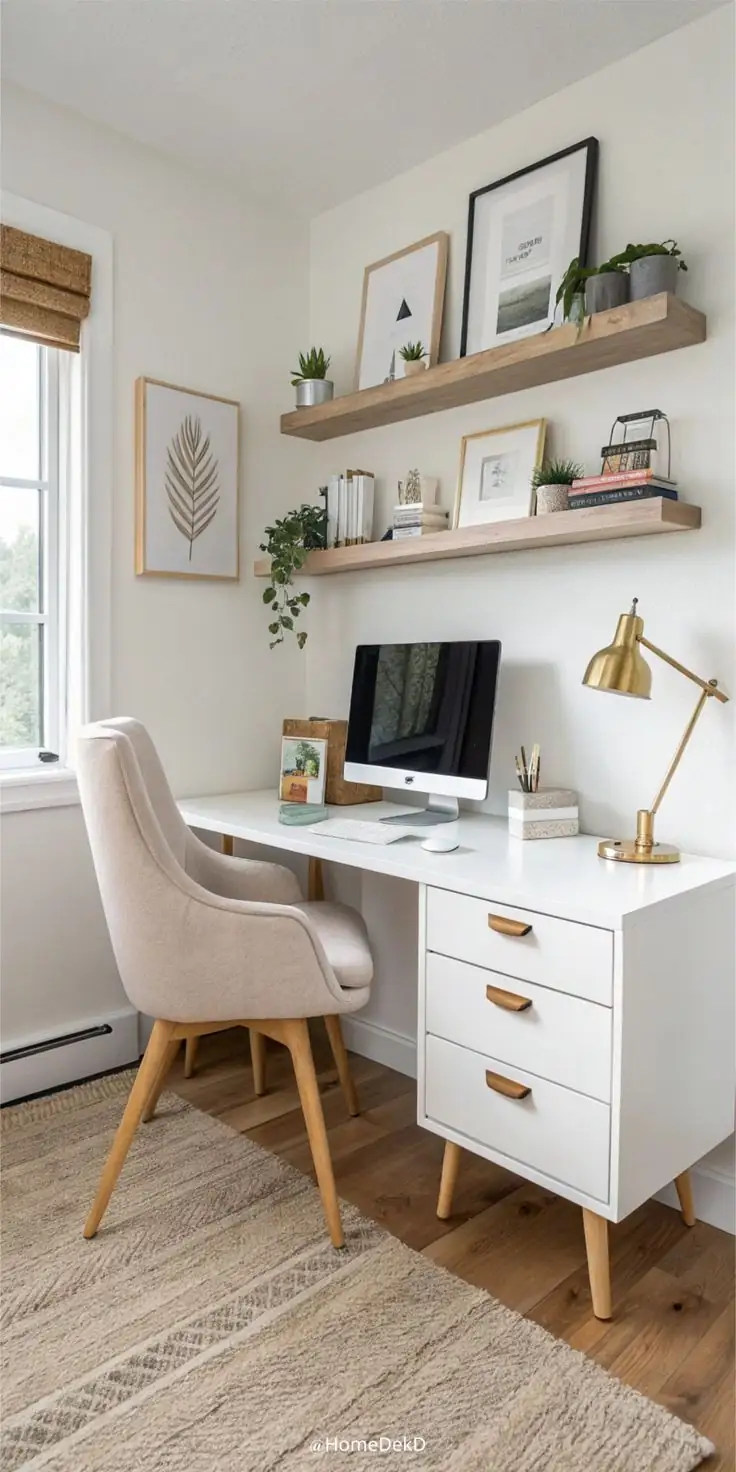
Your home office should not feel like a generic corporate cubicle. Adding personal touches can make the space more inspiring and enjoyable.
Think about the things that motivate you. Perhaps you love travel, art, photography, fashion, books, or nature. Use these interests as inspiration for your office decor.
A mood board can be a fun addition to a creative workspace. Pin photographs, color swatches, quotes, sketches, or project ideas where you can see them throughout the day.
You can also display meaningful objects such as souvenirs, handmade ceramics, or family photographs. These details give your office a sense of identity.
If you work in a creative profession, consider dedicating part of your workspace to inspiration. A large corkboard, magnetic board, or framed grid can provide a flexible place to display ideas.
Lighting can also contribute to creativity. In addition to overhead lighting, add a decorative desk lamp or wall sconce. Warm ambient lighting can make the room feel inviting when you work in the evening.
The best creative offices combine functionality with personality. Your workspace should support productivity while also making you feel excited to sit down and begin your work.
10. Design a Sophisticated Home Office With a Timeless Look
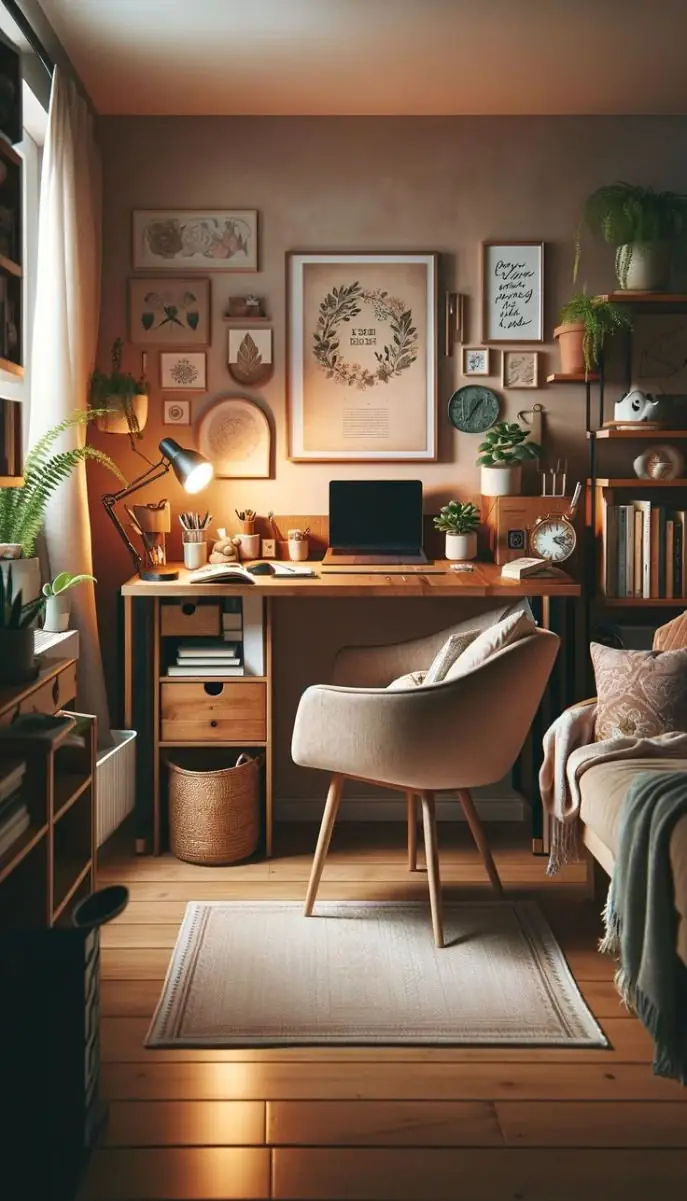
If you want your office to feel elegant and refined, focus on timeless materials, balanced proportions, and carefully selected accessories.
A classic wood desk can serve as the centerpiece of the room. Pair it with a comfortable upholstered chair and sophisticated lighting. Brass or brushed metal accents can add a subtle touch of luxury.
Choose a restrained color palette such as cream, warm white, walnut brown, charcoal, or deep green. These shades create a sophisticated foundation that is unlikely to feel outdated quickly.
For the walls, consider classic artwork, subtle wallpaper, or decorative molding. A large framed print above the desk can create a polished focal point.
Storage should be stylish as well as functional. Use closed cabinets to hide clutter and display only your favorite decorative pieces. Leather desk accessories, elegant stationery, and a beautiful lamp can elevate the overall appearance.
A timeless office does not need to be overly formal. You can soften the look with a textured rug, greenery, or comfortable textiles. The goal is to create a space that feels sophisticated but still welcoming.
This style is particularly effective if your home office is located in a visible area of your home. A well-designed office can blend seamlessly with the rest of your interior rather than looking like a purely functional workspace.
How to Make Your Home Office More Productive
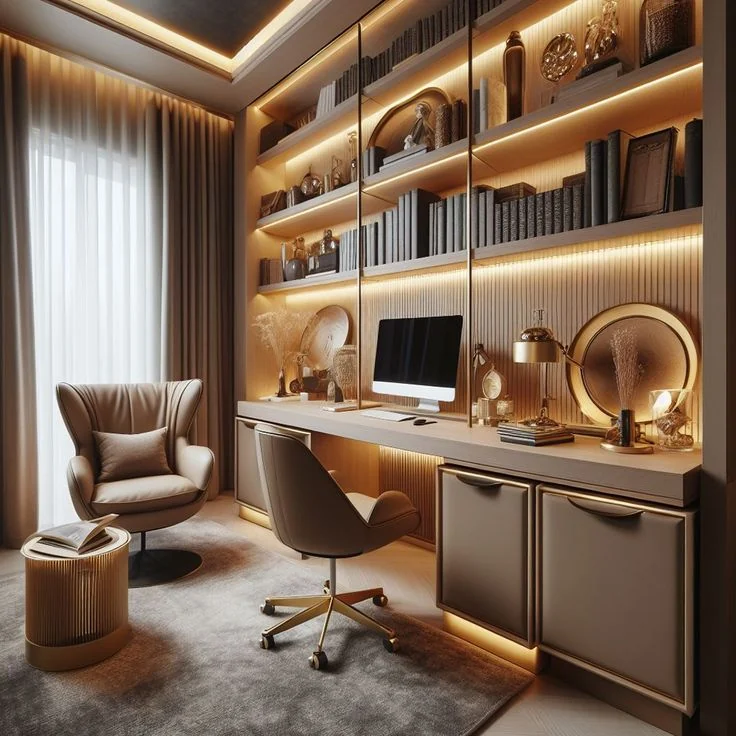
Beautiful design is important, but a successful workspace should also help you work efficiently. Once you have chosen your style, consider the practical details that will make your daily routine easier.
Start by organizing your desk according to how you work. Keep frequently used items within easy reach and store less-used supplies in drawers or cabinets.
Cable management can instantly improve the appearance of your office. Use cable clips, sleeves, or boxes to keep cords organized and out of sight.
Lighting should also be a priority. Natural light is ideal during the day, but you should also have adequate artificial lighting for cloudy days and evening work. A desk lamp can provide focused illumination while reducing eye strain.
Keep your computer screen positioned at a comfortable height and distance. If you use a laptop for long periods, consider a laptop stand with a separate keyboard and mouse.
Finally, create a simple end-of-day routine. Before finishing work, clear your desk, organize loose papers, and prepare what you need for the next morning. This small habit can help your workspace remain calm and organized.
Final Thoughts
Creating a beautiful and functional home office does not require a huge budget or an entire room. Whether you have a dedicated office, a small corner, or a compact apartment, thoughtful design choices can transform your workspace.
From minimalist furniture and cozy office corners to statement walls, open shelving, natural elements, and personalized decor, there are countless ways to create an environment that suits your lifestyle. The best workspace is one that balances comfort, organization, and personality.
When planning your office, begin with the essentials: a comfortable desk, supportive chair, good lighting, and practical storage. Then build your design around your favorite colors, materials, and decorative details.
Use these 10 Home Office Ideas & Inspiration as a starting point and adapt them to your own needs. Your workspace should ultimately make your daily routine easier while giving you a place where you feel focused, comfortable, and inspired.