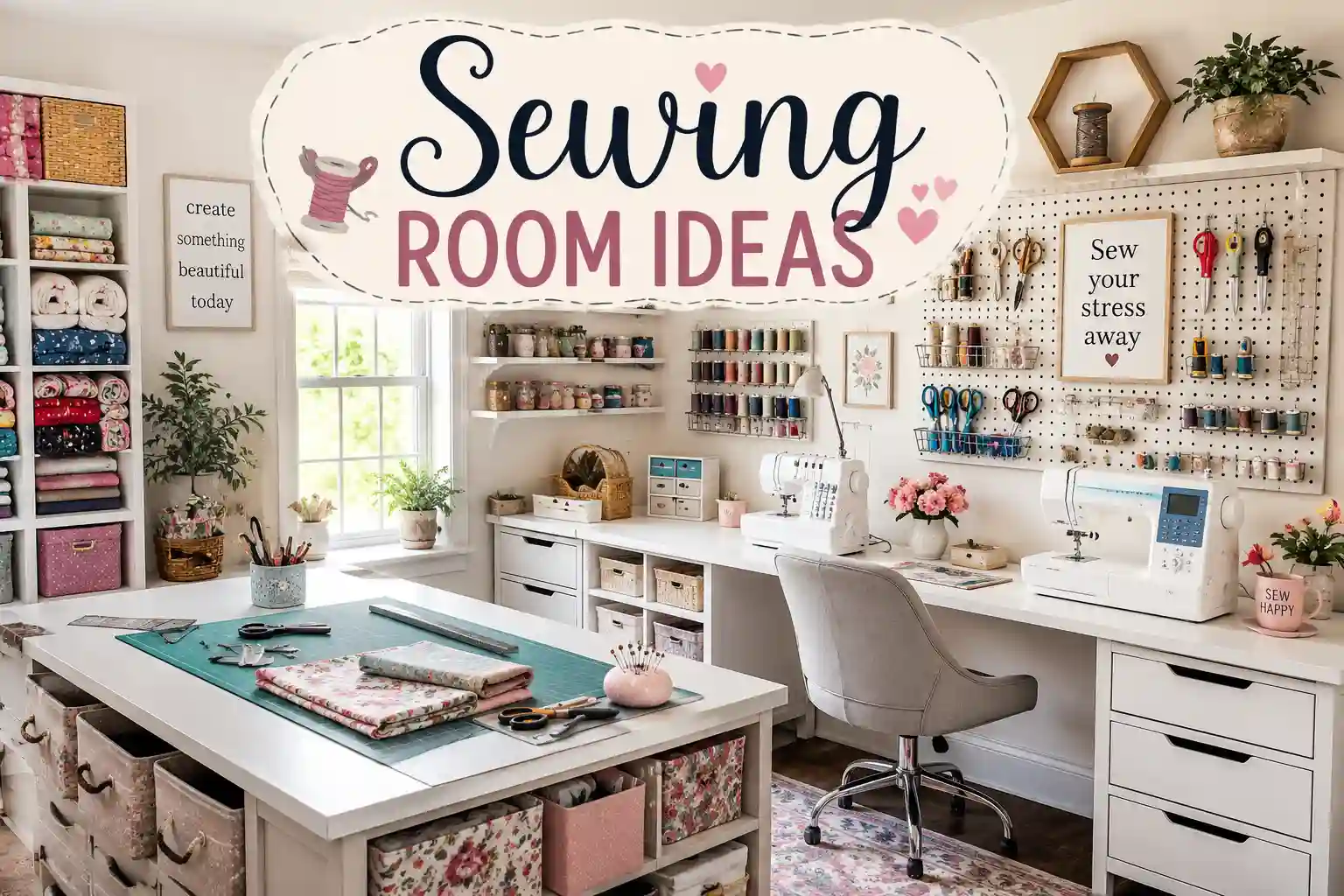
A dedicated sewing room can transform the way you work on creative projects. Whether you sew professionally, enjoy quilting as a hobby, or love creating handmade clothing and home décor, having an organized and inspiring space makes every project more enjoyable. The right setup can improve productivity, reduce clutter, and help you keep all your tools and supplies within easy reach.
If you have a large craft room or just a small corner to work with, these 10 Sewing Room Ideas will help you design a space that is practical, stylish, and tailored to your needs. From storage solutions and lighting tips to décor inspiration and workspace layouts, these ideas will help you create the sewing room of your dreams.
Why a Well-Designed Sewing Room Matters
A sewing room is more than just a place to keep your sewing machine. It is a creative workspace where ideas come to life. A thoughtfully designed room can:
- Improve workflow and efficiency
- Keep supplies organized and accessible
- Reduce stress caused by clutter
- Provide inspiration for creative projects
- Make sewing more comfortable and enjoyable
No matter your budget or room size, a few smart design choices can make a huge difference.
1. Create a Dedicated Sewing Workstation
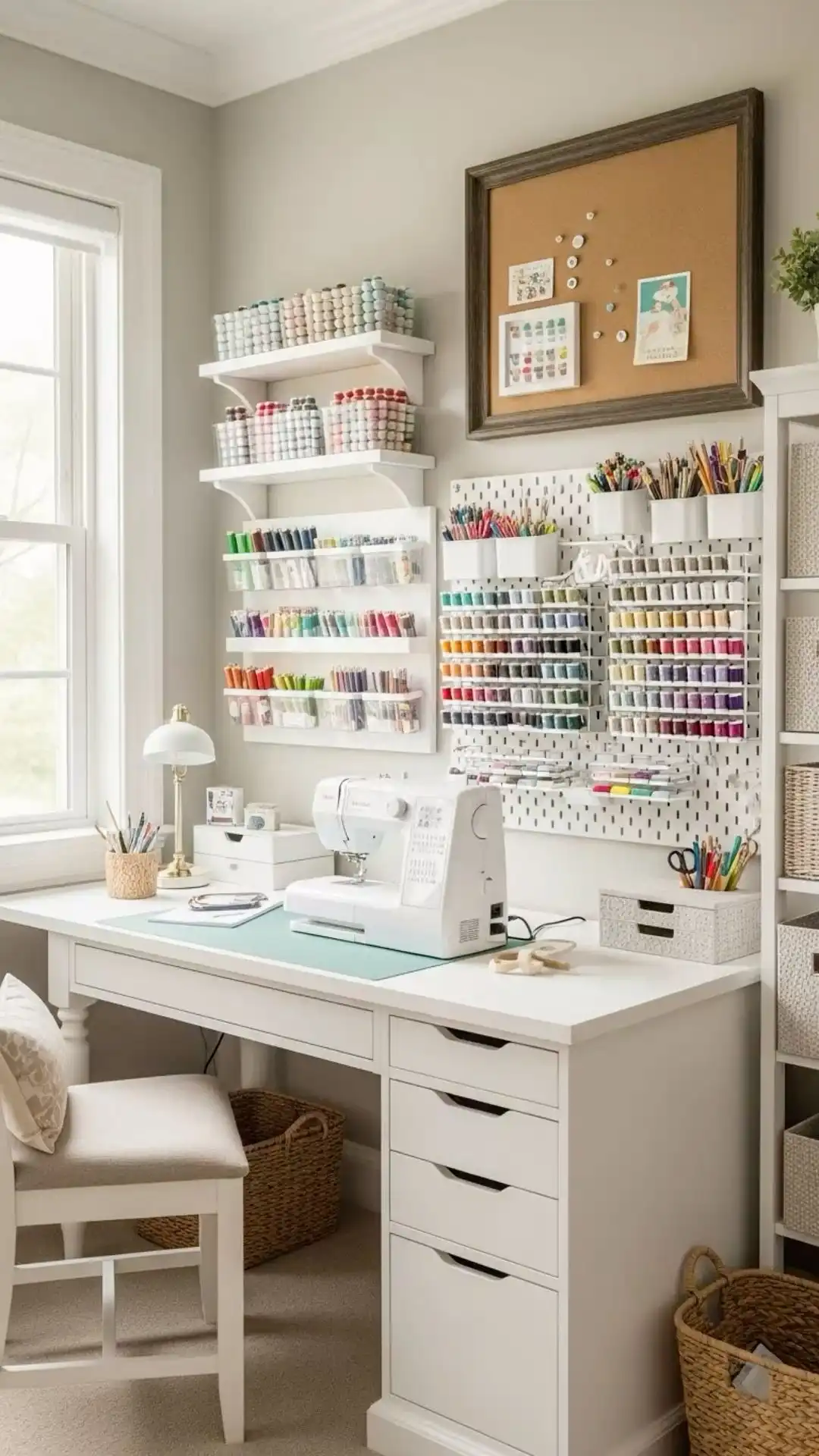 The centerpiece of any sewing room is the workstation. This is where most of the sewing magic happens, so it deserves special attention.
Choose a sturdy table that can comfortably support your sewing machine and provide enough space for fabric handling. If possible, select a table with built-in drawers or shelves for extra storage.
Tips for the Perfect Workstation
- Position your sewing machine at a comfortable height.
- Leave room on both sides of the machine for fabric support.
- Use a comfortable chair with proper back support.
- Keep frequently used tools nearby.
A dedicated workstation helps establish an efficient workflow and makes your sewing sessions much more enjoyable.
2. Maximize Vertical Storage
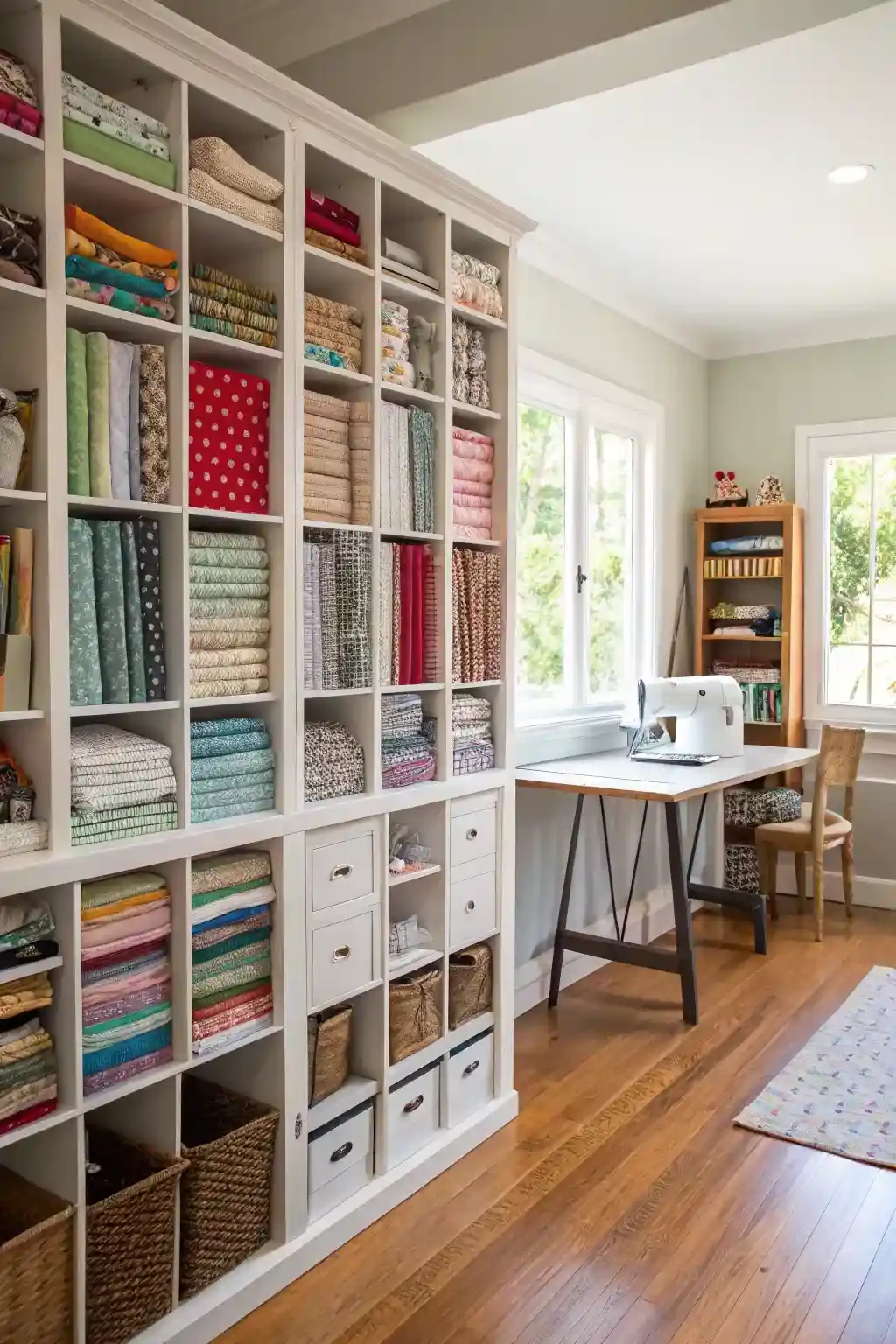 One of the best sewing room organization strategies is utilizing wall space. Sewing supplies can quickly take over a room, so vertical storage is essential.
Install shelves, pegboards, or wall-mounted organizers to keep tools visible and easy to access.
What to Store Vertically
- Scissors
- Rotary cutters
- Thread spools
- Measuring tapes
- Rulers
- Fabric rolls
- Sewing patterns
Pegboards are particularly useful because they can be customized as your storage needs change over time.
3. Add a Large Cutting Table
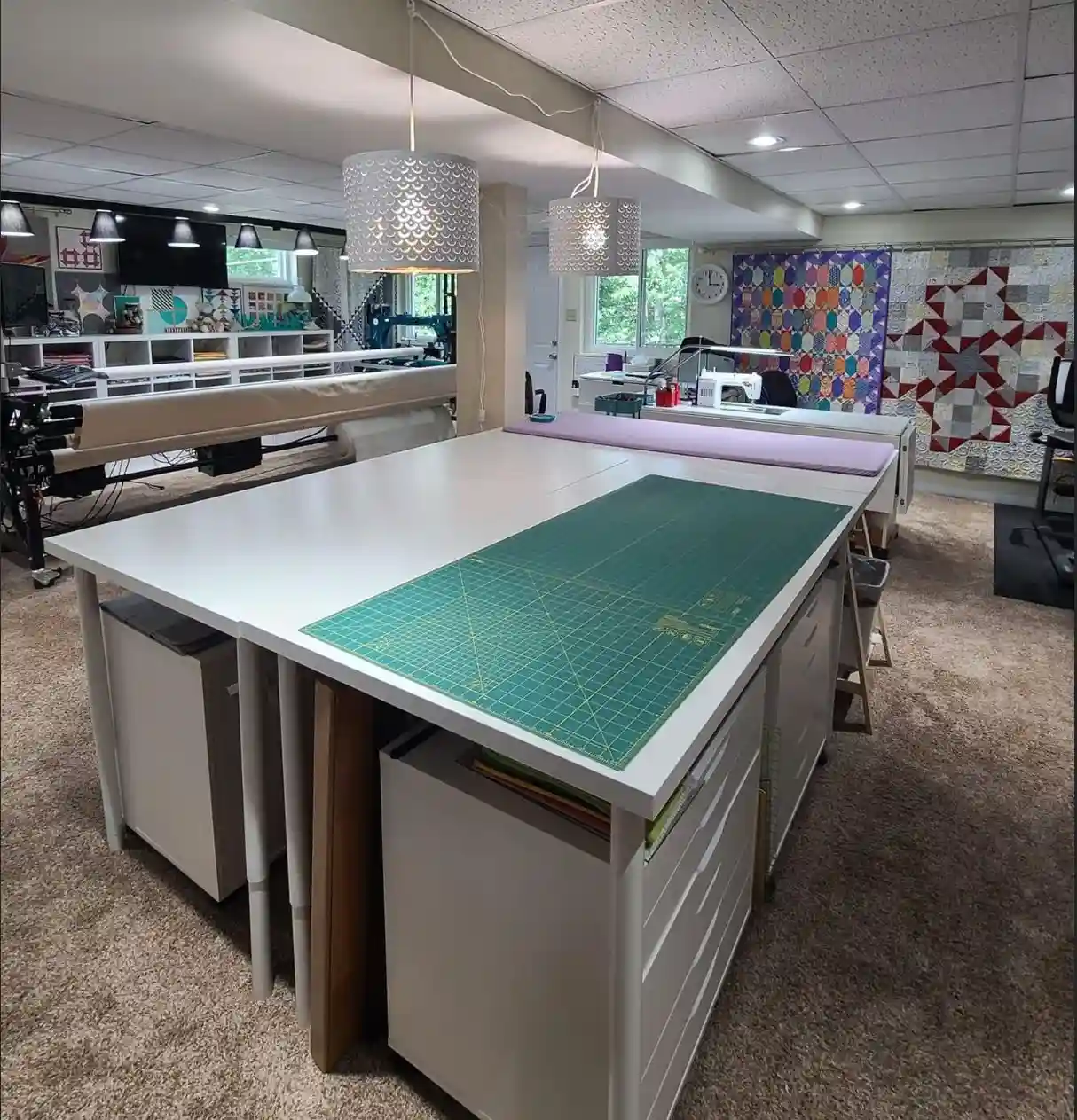 Cutting fabric on the floor can be uncomfortable and inefficient. A dedicated cutting table makes sewing projects easier and more enjoyable.
Ideally, your cutting table should be waist-high to reduce back strain. If space allows, place it in the center of the room to provide access from all sides.
Benefits of a Cutting Table
- Easier fabric measurements
- Better cutting accuracy
- Less physical strain
- Additional workspace
For smaller sewing rooms, consider a foldable table that can be stored away when not in use.
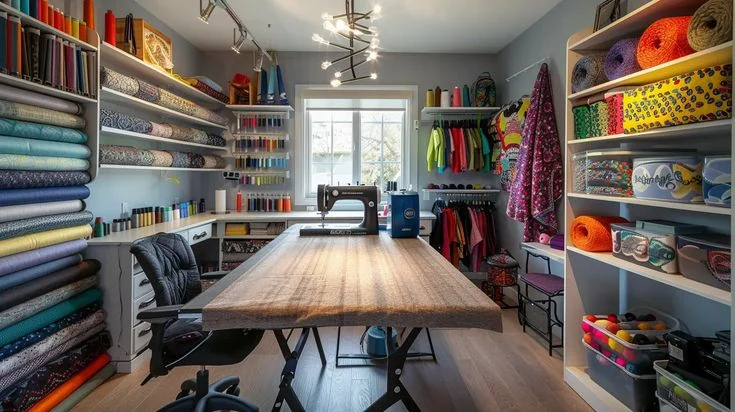
4. Organize Fabric by Color and Type
 Fabric collections can quickly become overwhelming if not properly organized. Sorting fabrics by color, texture, or project type helps you find what you need quickly.
Open shelving works particularly well for displaying fabric while adding visual interest to the room.
Fabric Storage Ideas
- Clear plastic bins
- Cube storage units
- Open shelves
- Fabric bolts
- Labelled baskets
Color-coordinated fabric displays create a boutique-style appearance while keeping materials organized.
5. Use Bright and Layered Lighting
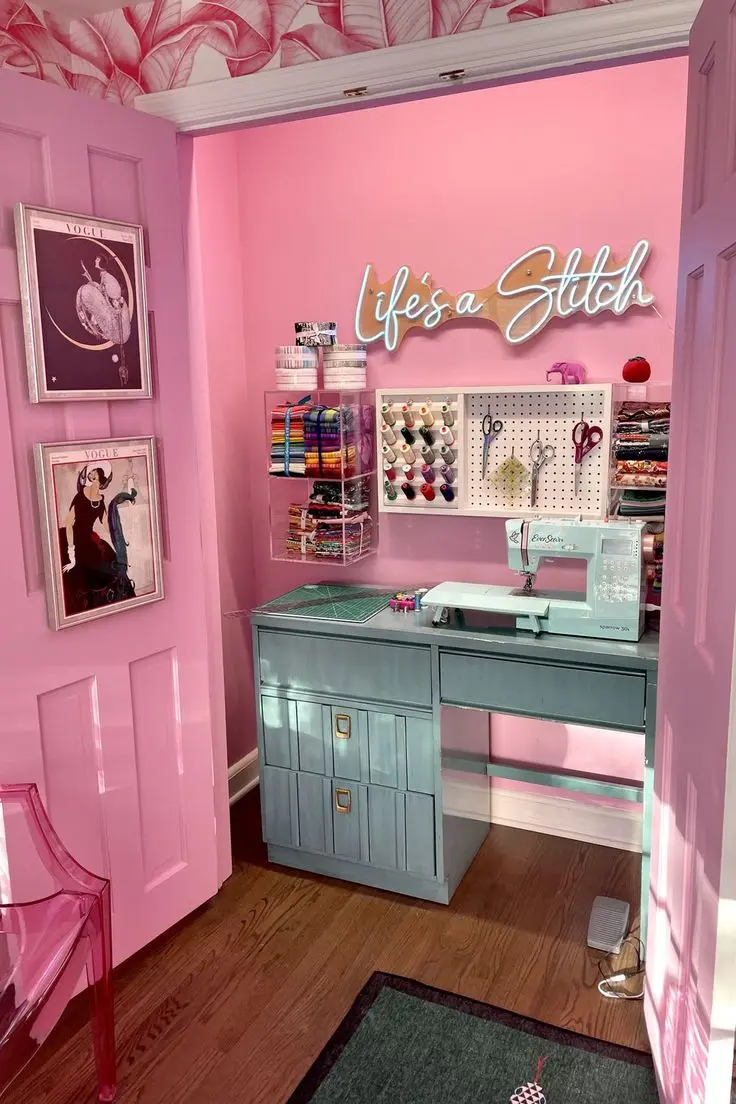 Good lighting is essential for sewing. Detailed tasks require excellent visibility to ensure accuracy and reduce eye strain.
A combination of natural light and artificial lighting creates the ideal sewing environment.
Best Lighting Options
- Overhead ceiling lights
- Adjustable desk lamps
- LED task lighting
- Under-shelf lighting
- Natural window light
Position your workstation near a window whenever possible. Natural light helps you see true fabric colors and creates a pleasant atmosphere.
6. Design a Small Sewing Room with Smart Solutions
Not everyone has an entire room dedicated to sewing. Fortunately, small spaces can still be highly functional.
A compact sewing room requires careful planning and efficient storage.
Small Sewing Room Tips
- Use fold-down tables
- Choose furniture with hidden storage
- Install floating shelves
- Use rolling carts
- Store supplies vertically
Even a closet, spare bedroom corner, or unused nook can become a productive sewing area with the right setup.
Small Space Success
Many sewists create beautiful mini sewing studios in apartments and small homes. The key is maximizing every inch while maintaining organization.
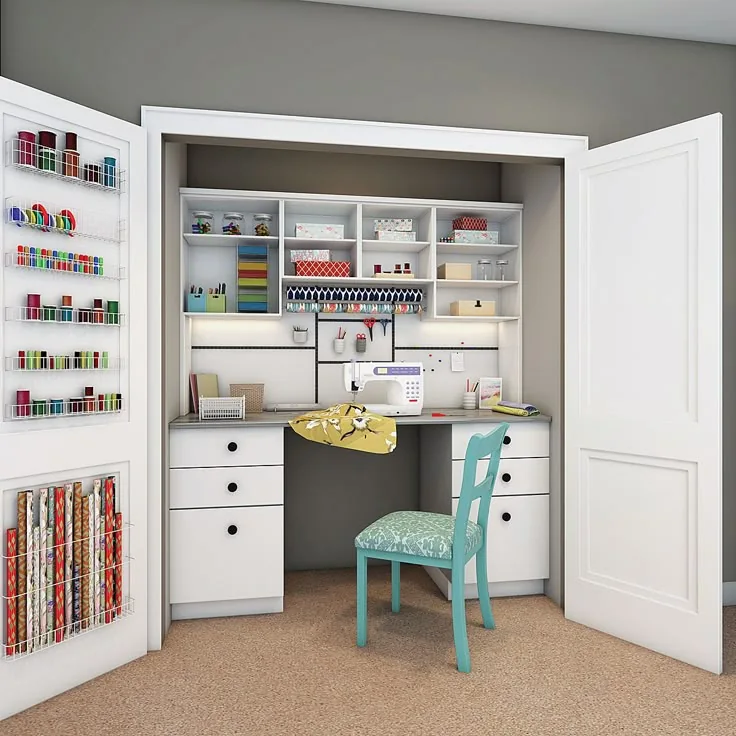
7. Incorporate Stylish Sewing Room Décor
A sewing room should be functional, but it should also reflect your personality and creativity.
Decorating your sewing space can increase motivation and make time spent there more enjoyable.
Sewing Room Décor Ideas
- Framed vintage sewing patterns
- Inspirational quotes
- Decorative storage jars
- Colorful fabric displays
- Handmade wall art
- Decorative pin cushions
Choose colors that inspire creativity. Soft pastels create a calming atmosphere, while bright colors add energy and excitement.
Create a Theme
Some popular sewing room themes include:
- Vintage sewing studio
- Modern minimalist craft room
- Farmhouse-inspired workspace
- Colorful creative studio
- Scandinavian-inspired design
A cohesive theme can make the room feel polished and inviting.
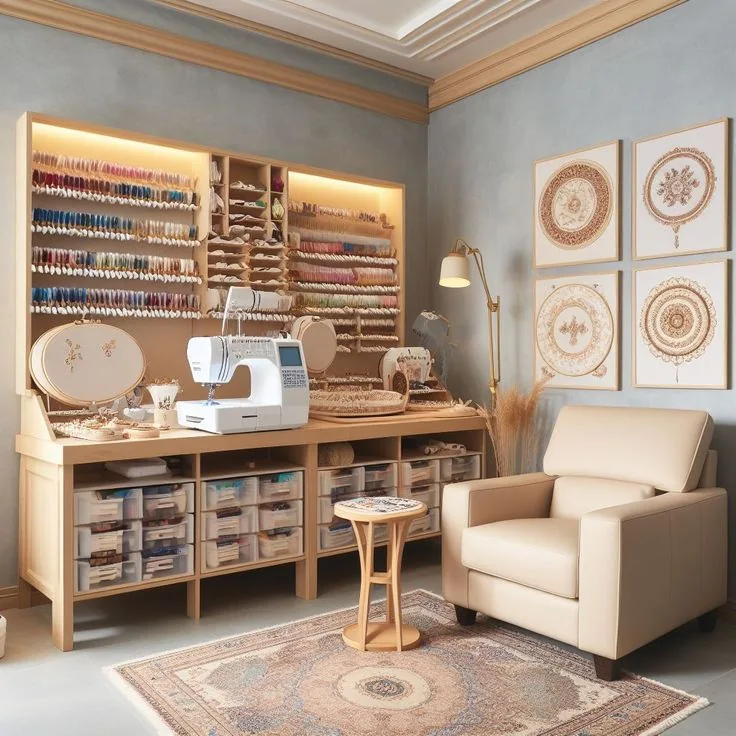
8. Add Rolling Storage Carts
Rolling carts are one of the most versatile storage solutions for sewing rooms.
These mobile organizers allow you to keep supplies close while working and move them out of the way when needed.
What to Store in Rolling Carts
- Thread collections
- Sewing notions
- Pins and needles
- Fabric scraps
- Cutting tools
- Current project supplies
Rolling carts are particularly useful for multi-purpose rooms where flexibility is important.
Benefits of Mobile Storage
- Easy access
- Improved organization
- Flexible layout options
- Space-saving design
Look for carts with multiple tiers to maximize storage capacity.
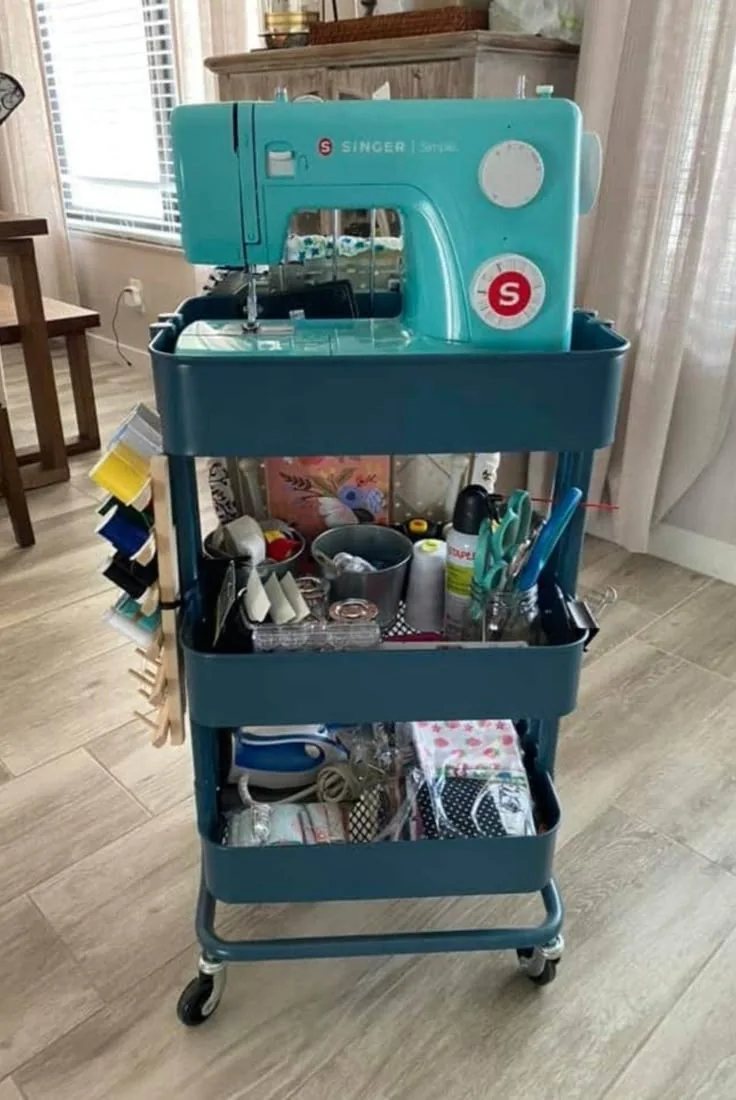
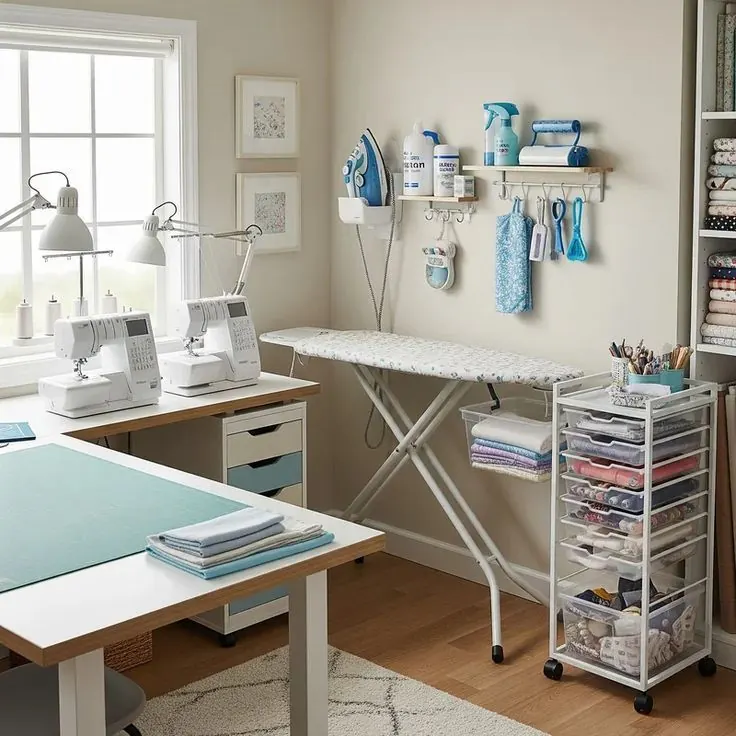
9. Create a Pressing and Ironing Station
An ironing station is often overlooked when planning a sewing room, but it is an essential component of an efficient workspace.
Pressing fabric during construction helps create professional-looking results.
Ideal Ironing Station Features
- Foldable ironing board
- Heat-resistant storage area
- Nearby electrical outlet
- Steam iron storage
- Pressing tools organizer
If space permits, dedicate a permanent area to pressing. This prevents constant setup and teardown.
Why Pressing Matters
Proper pressing:
- Improves garment construction
- Creates crisp seams
- Enhances finished projects
- Saves time during assembly
Having a dedicated pressing station streamlines the entire sewing process.
10. Create a Project Planning Zone
The final idea among these 10 Sewing Room Ideas is creating a dedicated planning area.
Creative projects often involve sketches, measurements, patterns, inspiration photos, and notes. Having a space specifically for planning can improve project management.
Planning Zone Essentials
- Corkboard or inspiration board
- Calendar
- Notebook storage
- Pattern organization system
- Whiteboard for project tracking
This area helps keep ideas organized and ensures projects stay on schedule.
Inspiration Board Ideas
Display:
- Fabric swatches
- Design sketches
- Color palettes
- Fashion inspiration
- Project photos
- Sewing goals
An inspiration board keeps creativity flowing and serves as a visual reminder of future projects.
Essential Sewing Room Organization Tips
Regardless of your room size or design style, organization is key.
Label Everything
Labels make it easy to locate supplies quickly. Consider labeling:
- Fabric bins
- Pattern boxes
- Thread storage
- Tool drawers
- Notion containers
Store Similar Items Together
Group related supplies to create an intuitive workflow.
Examples include:
- All cutting tools in one area
- Thread near the sewing machine
- Fabric stored together
- Pressing supplies near the ironing station
Declutter Regularly
Set aside time every few months to sort through supplies and remove items you no longer use.
Regular decluttering prevents your sewing room from becoming overwhelming.
Best Color Schemes for Sewing Rooms
Color can significantly impact the feel of your workspace.
Soft and Relaxing
- White
- Light gray
- Beige
- Pale blue
These colors create a calming environment ideal for focused work.
Bright and Creative
- Yellow
- Coral
- Turquoise
- Pink
Bold colors stimulate creativity and energy.
Elegant and Modern
- Charcoal gray
- Black accents
- White cabinetry
- Natural wood tones
This combination creates a sophisticated and timeless look.
Budget-Friendly Sewing Room Makeover Ideas
Creating a beautiful sewing room does not have to be expensive.
Affordable Upgrades
- Paint existing furniture
- Use thrifted storage containers
- Install inexpensive floating shelves
- Repurpose bookshelves
- Create DIY organizers
Many stunning sewing rooms are built gradually over time with thoughtful and affordable improvements.
Common Sewing Room Mistakes to Avoid
Ignoring Lighting
Poor lighting can make sewing difficult and tiring.
Choosing Style Over Function
Beautiful décor is important, but functionality should always come first.
Lack of Storage Planning
Without adequate storage, clutter quickly takes over.
Overcrowding the Space
Leave enough room to move comfortably between work areas.
Forgetting Workflow
Arrange your room to support a logical sequence:
- Fabric storage
- Cutting area
- Sewing station
- Pressing area
- Finishing zone
This workflow saves time and improves efficiency.
Final Thoughts on 10 Sewing Room Ideas
Designing the perfect sewing room is about balancing beauty, organization, and functionality. Whether you have a spacious craft room or a compact sewing corner, thoughtful planning can transform your creative space into an inspiring and productive retreat.
These 10 Sewing Room Ideas provide practical solutions for every type of sewing enthusiast. By incorporating smart storage, proper lighting, comfortable workstations, and personalized décor, you can create a space that supports your creativity and makes every project more enjoyable.
Start with one or two improvements, then gradually build your dream sewing room over time. With the right setup, your sewing space can become one of the most rewarding and inspiring areas in your home.