
If you love sewing, having a dedicated sewing room can completely transform your creativity and productivity. Whether you have a small corner in your home or a full craft room, the right design can make sewing easier, more organized, and more enjoyable. From clever storage solutions to stylish décor, there are countless ways to design a space that inspires you every time you sit down at your sewing machine.
In this guide, we will explore 10 Sewing Room Ideas that combine functionality, organization, and aesthetics. These ideas work for both small sewing spaces and larger craft studios, helping you design a sewing room that fits your needs and style.
1. Create a Dedicated Sewing Station
 One of the most important elements of a sewing room is a comfortable and functional sewing station. This is where you will spend most of your time, so it needs to be practical and ergonomic.
Choose a sturdy table that can support your sewing machine without shaking. A large tabletop gives you enough room to handle fabric while sewing. If possible, consider an adjustable table so you can maintain good posture during long sewing sessions.
Good lighting is also essential. Place your sewing table near a window to take advantage of natural light. You can also add a bright desk lamp to reduce eye strain.
To make your sewing station more efficient, keep frequently used tools like scissors, pins, measuring tape, and thread within arm’s reach. Wall-mounted organizers or small containers work perfectly for this.
2. Add Smart Storage Solutions
 Every sewing enthusiast knows how quickly fabric, thread, patterns, and tools can pile up. Smart storage is one of the most useful 10 Sewing Room Ideas to keep everything organized.
Use shelves, cabinets, and drawers to store your supplies neatly. Clear storage bins are especially helpful because you can easily see what’s inside without opening them.
Fabric can be folded and stored vertically like books on a shelf. This method not only saves space but also makes it easier to browse your collection.
You can also use labeled boxes to separate different materials such as cotton, linen, and quilting fabrics. This makes it easier to find what you need for each project.
3. Install a Pegboard Wall Organizer
 A pegboard wall is a simple yet powerful way to organize sewing tools. It allows you to hang frequently used items where you can see them easily.
Pegboards are perfect for holding scissors, rulers, rotary cutters, measuring tapes, thread spools, and small baskets. You can arrange the hooks and holders however you like, creating a customized storage system.
Another benefit of pegboards is that they keep your work surface clutter-free. Instead of searching through drawers, everything is visible and easy to access.
To make your pegboard more attractive, paint it in a color that matches your sewing room theme.
4. Design a Cutting Table Area
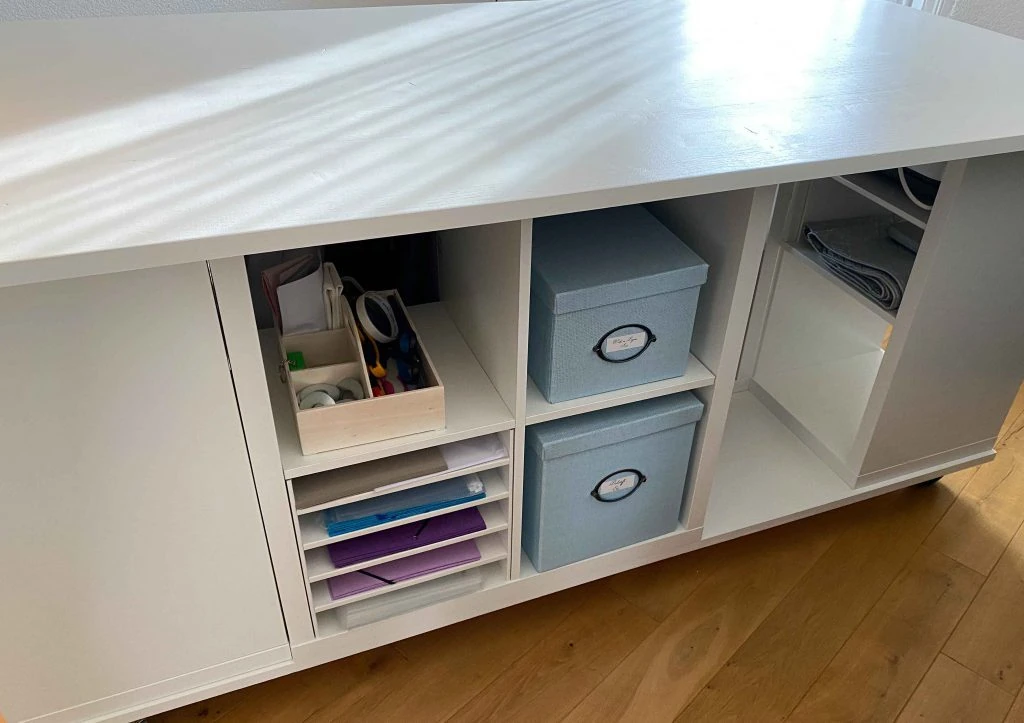 A proper cutting area can make sewing projects much easier. Many people cut fabric on the floor or a small table, but having a dedicated cutting station improves accuracy and comfort.
Choose a large table with enough space to spread out fabric. Ideally, the table should be at waist height so you don’t have to bend down while cutting.
You can also add a self-healing cutting mat to protect the table and make cutting more precise. Some sewing enthusiasts use foldable tables so they can save space when the cutting station is not in use.
If your sewing room is small, consider using a multipurpose table that works for both sewing and cutting.
5. Use Wall Shelves for Fabric Display
 If you have a beautiful fabric collection, why hide it in drawers? Open wall shelves allow you to display your fabrics while keeping them organized.
Fold fabrics neatly and arrange them by color to create a visually appealing display. This not only makes your sewing room look stylish but also helps you quickly choose fabrics for new projects.
Glass jars can also be used to store buttons, zippers, and other small sewing accessories. These jars add a decorative touch while keeping everything visible.
This idea is perfect for people who want their sewing room to feel creative and inspiring.
6. Create a Cozy Inspiration Corner
 Sometimes creativity needs a little boost. A small inspiration corner can help spark new ideas for your sewing projects.
You can add a corkboard or inspiration board where you pin fabric samples, sketches, patterns, and photos. This visual board acts as a creative reference whenever you start a new project.
Add a comfortable chair or small sofa where you can sit and plan your designs. A cozy rug and warm lighting can also make the space more relaxing.
Many creative professionals find that a calm and inspiring environment improves their productivity and creativity.
7. Organize Thread with Creative Displays
 Thread storage is one of the biggest challenges in any sewing room. Spools can easily become tangled or lost if not organized properly.
A wall-mounted thread rack is a simple and effective solution. It keeps all your threads visible and prevents them from rolling around in drawers.
You can also arrange thread colors in a gradient pattern for a beautiful decorative effect. Some sewing enthusiasts even frame their thread racks like artwork.
Drawer organizers are another option for storing thread spools neatly if you prefer a cleaner look.
8. Incorporate Multi-Functional Furniture
 If you have limited space, multi-functional furniture can help you create a practical sewing room without clutter.
For example, you can use a desk that doubles as a sewing table and workspace. Storage ottomans can hold fabric or tools while also providing extra seating.
Foldable tables, rolling carts, and stackable storage bins are excellent for small sewing rooms because they can be moved or stored easily.
These flexible furniture solutions allow you to adapt your sewing room as your projects and storage needs change.
9. Improve Lighting for Precision Work
 Sewing requires careful attention to detail, so proper lighting is essential.
Natural light is the best option, so try to position your sewing area near a window. However, additional lighting is still necessary, especially for evening work.
Consider using adjustable task lamps that can be directed toward your sewing machine or cutting table. LED lights are a popular choice because they are bright and energy-efficient.
You can also install under-shelf lighting to illuminate your workspace without taking up desk space.
Better lighting not only improves accuracy but also reduces eye strain during long sewing sessions.
10. Decorate Your Sewing Room with Personality
 Your sewing room should reflect your personal style and creativity. Decorative touches can make the space feel welcoming and motivating.
You can decorate the walls with framed patterns, sewing-themed artwork, or handmade quilts. Colorful storage boxes and fabric displays can also act as décor.
Plants are another great addition because they bring freshness and life into the room. Even a small indoor plant can make the space feel more relaxing.
Soft elements like curtains, rugs, and cushions can also make your sewing room feel cozy and comfortable.
When you enjoy the environment you work in, it becomes easier to stay inspired and productive.
Final Thoughts
Designing a sewing room doesn’t require a large space or an expensive renovation. With the right layout, smart storage solutions, and a touch of creativity, you can create a sewing room that is both functional and inspiring.
These 10 Sewing Room Ideas show that even small changes like adding better lighting, installing wall storage, or organizing your fabric collection can dramatically improve your sewing experience.
Whether you are a beginner who enjoys occasional DIY projects or a passionate seamstress working on complex designs, a well-designed sewing room can help you stay organized, motivated, and creative.
Start with one or two of these ideas and gradually build the sewing space of your dreams. With time, your sewing room will become a place where creativity flows and beautiful handmade projects come to life.