10 Kitchen Functionality Ideas
A kitchen is more than just a place to cook meals it’s the heart of the home where daily routines unfold, family conversations happen, and creativity comes alive. A well-designed kitchen should not only look beautiful but also function effortlessly, supporting your lifestyle and making everyday tasks easier. Whether you have a compact apartment kitchen or a spacious open-plan layout, improving functionality can dramatically change how the space feels and performs.
In this comprehensive guide, we’ll explore 10 kitchen functionality ideas that focus on efficiency, comfort, organization, and smart design. These ideas are practical, adaptable to different kitchen sizes, and suitable for both renovations and simple upgrades. By the end of this article, you’ll have a clear roadmap for transforming your kitchen into a space that works as hard as you do.
1. Optimize the Kitchen Work Triangle

The kitchen work triangle is a classic design principle that connects the three most important areas of the kitchen: the sink, the stove, and the refrigerator. When these elements are positioned efficiently, movement becomes smoother and tasks feel less tiring.
An optimized work triangle reduces unnecessary steps, improves workflow, and makes cooking more enjoyable. Ideally, the distance between each point should be neither too short nor too long, allowing easy access without overcrowding. In smaller kitchens, this might mean compact spacing, while larger kitchens may benefit from clearly defined zones that still maintain balance.
If a traditional triangle isn’t possible due to layout constraints, consider adapting the concept into functional zones. For example, a prep zone near the sink, a cooking zone around the stove, and a storage zone near the refrigerator can achieve the same efficiency. The key is to minimize crossing paths and keep frequently used items within arm’s reach.
2. Maximize Storage with Smart Cabinet Solutions

Storage is one of the biggest challenges in any kitchen, regardless of size. Functional kitchens prioritize smart storage solutions that make every inch count. Instead of relying solely on standard cabinets, consider upgrades that improve accessibility and organization.
Pull-out drawers, deep storage units, corner carousels, and vertical dividers can significantly increase usable space. These solutions allow you to see everything at a glance, reducing clutter and wasted time searching for items. Tall cabinets that extend to the ceiling are especially effective for storing infrequently used appliances or pantry goods.
Another functional approach is customizing storage based on your habits. If you bake often, dedicate a cabinet to baking tools and ingredients. If you cook daily meals, keep pots, pans, and utensils close to the stove. Thoughtful storage design ensures your kitchen supports how you actually use it.
3. Improve Countertop Workspace

Countertop space plays a critical role in kitchen functionality. Insufficient workspace can make cooking stressful, while well-planned surfaces improve efficiency and comfort. Start by evaluating how you use your countertops throughout the day.
If space allows, consider extending countertops or adding a kitchen island. An island can serve multiple purposes, including food prep, casual dining, storage, and even housing appliances. In smaller kitchens, fold-down or pull-out countertop extensions provide extra workspace without permanently occupying space.
Keeping countertops clutter-free is just as important as having enough surface area. Store small appliances in cabinets or appliance garages to maintain clear prep zones. A clean, open countertop instantly makes a kitchen feel more functional and visually appealing.
4. Create Efficient Kitchen Zones

Zoning is a modern approach to kitchen design that focuses on organizing the space based on tasks rather than layout alone. Instead of thinking in terms of cabinets and appliances, think about how different activities flow throughout the kitchen.
Common kitchen zones include food storage, preparation, cooking, cleaning, and serving. Each zone should have the tools, appliances, and storage it needs nearby. For example, the prep zone should include cutting boards, knives, mixing bowls, and easy access to the sink.
Efficient zoning reduces back-and-forth movement and helps multiple people use the kitchen at the same time without getting in each other’s way. This approach is especially useful in family homes and open-concept kitchens where traffic flow matters.
5. Upgrade Lighting for Better Visibility
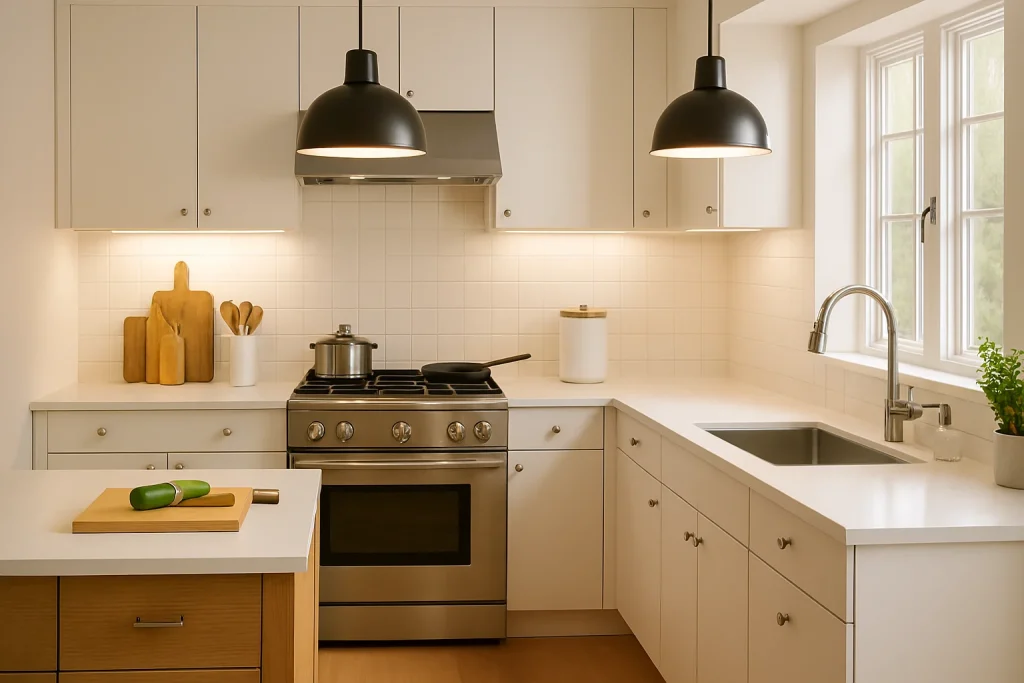
Lighting is often overlooked, yet it has a major impact on how functional a kitchen feels. Poor lighting can make tasks harder and even unsafe, while well-planned lighting enhances both usability and atmosphere.
A functional kitchen uses layered lighting. Ambient lighting provides overall illumination, task lighting focuses on work areas like countertops and sinks, and accent lighting adds depth and style. Under-cabinet lighting is particularly effective for illuminating prep spaces without casting shadows.
Natural light should also be maximized whenever possible. Large windows, glass doors, or light-reflecting surfaces can brighten the space and reduce reliance on artificial lighting during the day. A well-lit kitchen feels more open, efficient, and welcoming.
6. Choose Functional Appliances and Layouts
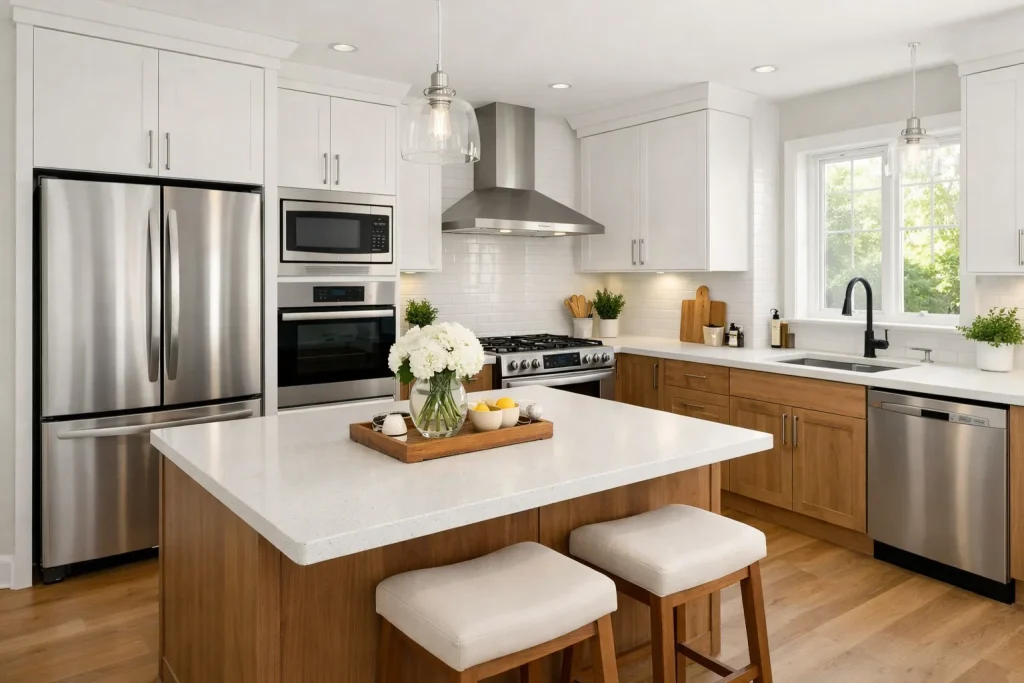
Appliances are central to kitchen functionality, but bigger or more advanced doesn’t always mean better. The most functional kitchens choose appliances that fit the space, meet daily needs, and integrate smoothly into the layout.
Built-in appliances create a streamlined look and improve movement, especially in smaller kitchens. Energy-efficient models not only save money but also often come with smart features that improve usability. Consider appliance placement carefully dishwashers near the sink, ovens at ergonomic heights, and refrigerators with enough clearance for doors to open fully.
The goal is to reduce strain and make daily tasks easier. When appliances are positioned logically and sized appropriately, the kitchen feels intuitive and comfortable to use.
7. Incorporate Easy-to-Clean Materials

A functional kitchen should be easy to maintain. Choosing the right materials can save time and effort while keeping the space looking fresh. Surfaces that resist stains, scratches, and moisture are especially important in high-use areas.
Quartz countertops, ceramic tiles, and high-quality laminates are popular choices for their durability and low maintenance. Backsplashes that are easy to wipe clean protect walls and add visual interest without adding cleaning challenges.
Flooring also plays a role in functionality. Slip-resistant, durable materials such as porcelain tile or vinyl plank flooring provide safety and comfort, especially in busy households. Easy-to-clean materials support a kitchen that stays functional over time.
8. Improve Accessibility and Ergonomics

A truly functional kitchen considers the comfort and safety of everyone who uses it. Ergonomic design reduces strain, improves accessibility, and makes the space more inclusive.
Simple adjustments like installing drawers instead of lower cabinets, using soft-close hardware, and choosing comfortable handle styles can make a big difference. Countertop heights can be adjusted to suit different users, and pull-down shelving systems make upper cabinets easier to access.
For households with children, seniors, or individuals with mobility challenges, accessibility becomes even more important. Thoughtful ergonomic design ensures the kitchen remains practical and enjoyable for years to come.
9. Add Multi-Functional Features

Multi-functional elements are key to maximizing kitchen usability, especially in smaller spaces. These features allow one area or element to serve multiple purposes without compromising comfort or efficiency.
Kitchen islands with built-in storage, seating, and appliances are a great example. Similarly, breakfast bars, rolling carts, and expandable tables provide flexibility for different activities throughout the day.
Multi-functional design encourages adaptability. Whether you’re hosting guests, working from home, or preparing family meals, these features allow the kitchen to evolve with your needs.
10. Maintain Organization with Simple Systems

Even the best-designed kitchen can feel dysfunctional without proper organization. Simple systems help maintain order and ensure everything has a place.
Drawer dividers, labeled containers, spice racks, and pantry organizers keep items visible and accessible. Regularly decluttering and reassessing storage needs helps prevent overcrowding and inefficiency.
An organized kitchen saves time, reduces stress, and makes cooking more enjoyable. When every item has a designated place, daily routines become smoother and more satisfying.
Bringing It All Together
Improving kitchen functionality doesn’t always require a full renovation. Small, thoughtful changes can have a significant impact on how the space works and feels. By focusing on layout, storage, lighting, materials, and organization, you can create a kitchen that supports your lifestyle and enhances everyday living.
The ideas shared in this guide are designed to be flexible and adaptable, whether you’re working with a compact kitchen or a large open-plan space. Functionality is about making the kitchen work for you your habits, your routines, and your needs.
As you plan your upgrades, prioritize what matters most to you. Whether it’s better storage, improved workflow, or easier maintenance, each improvement brings you closer to a kitchen that is both beautiful and highly functional.
A well-functioning kitchen isn’t just a design goal it’s an investment in comfort, efficiency, and enjoyment that you’ll appreciate every single day.